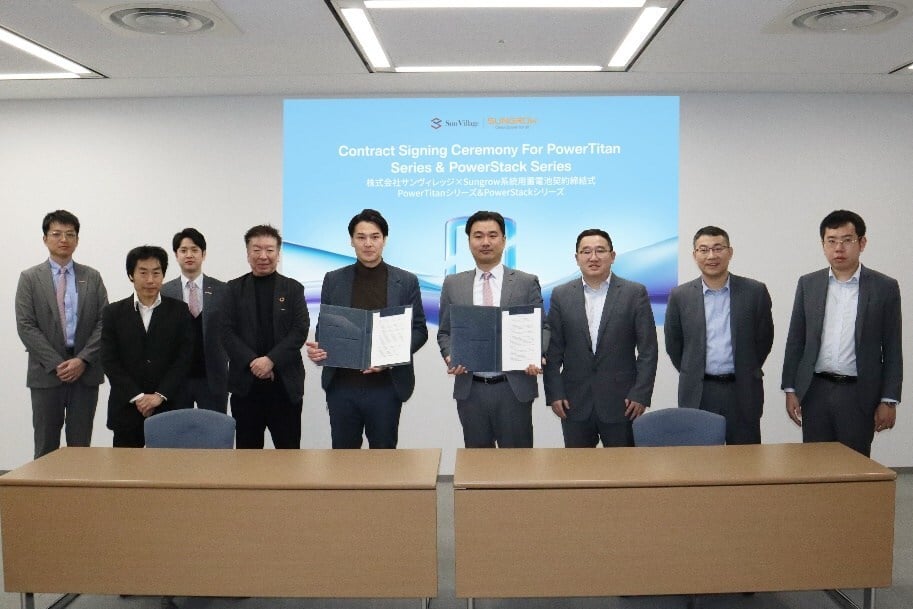
Sungrow has agreed to supply ‘approximately’ 500MWh of battery energy storage system (BESS) technology to Sun Village, a Japanese solar PV project developer.
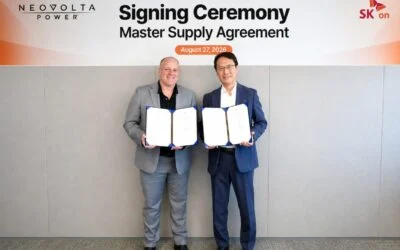
The energy storage arm of Chinese solar PV inverter manufacturer Sungrow signed a contract with Sun Village at a ceremony in Japan’s capital, Tokyo, last week during Smart Energy Week. The annual event encompasses the PV Expo, a solar industry gathering.
Sungrow will supply utility-scale and commercial and industrial (C&I) BESS equipment for Sun Village projects across Japan. Founded in 2012, the developer, which counts major Japanese conglomerate Marubeni among its investors and partners, specialises in unsubsidised post-feed-in tariff (post-FiT) solar PV plant development but expanded into the battery storage sector last year.
In Japan’s nascent energy storage market, participants can stack revenues earned from wholesale, capacity and balancing markets. However, due to a lack of revenue certainty from this mix of merchant and contracted revenues, some subsidy and incentive schemes have been introduced to enable a higher level of comfort for investors.
Try Premium for just $1
- Full premium access for the first month at only $1
- Converts to an annual rate after 30 days unless cancelled
- Cancel anytime during the trial period
Premium Benefits
- Expert industry analysis and interviews
- Digital access to PV Tech Power journal
- Exclusive event discounts
Or get the full Premium subscription right away
Or continue reading this article for free
With Japan targeting a 36-38% share of renewable energy in its generation mix by 2030 and carbon neutrality by 2050, the government identified support for and promotion of energy storage as a key pillar of the Green Transformation Act announced in 2021.
This was followed by the Ministry of Trade, Energy and Industry (METI) publishing a national battery storage strategy a year later, which highlighted the important roles BESS could play in decarbonisation, enhancing the integration of renewables and adding stability to the grid.
There are now direct subsidies available from the Japanese government for grid-scale battery storage, as well as the Long-Term Decarbonisation Auction (LTDA), a government-backed capacity market that awarded 1.67GW of contracts to batteries and pumped hydro in its inaugural staging last year. Regulations were adapted in 2022 to allow participation in the JEPX, the country’s biggest power pool market.
The Tokyo metropolitan government has also introduced a subsidised procurement scheme, which will support projects not just in the Tokyo area but also the wider Kanto region, including the six prefectures neighbouring Tokyo, overseen by a fund managed by UK-headquartered BESS investor-developer Gore Street Capital and Japanese conglomerate Itochu. Gore Street said in Q3 last year that it had completed the first fundraising round for its joint venture with Itochu.
Japan has fundamental need for storage, coupled with ability to stack revenues
At a panel discussion about the Japanese storage market, held at last year’s Energy Storage Summit Asia in Singapore, Shunsuke Kawashima, from Itochu’s BESS business unit, said that due to new electricity demand growth projected from sources like AI and data centres, the government has forecast an increase in electricity demand between 35%-50% compared to today’s levels by the 2050 carbon neutral target date.
Panellists agreed that there is a fundamental need for energy storage, which will drive the market forward but noted some challenges that lie in the way (Premium access).
Nick Morley, technical lead for developer Eku Energy, which is currently building its first grid-scale project in Japan, noted that grid connection wait times can be lengthy. Mahdi Behrengrad of Pacifico Energy warned that while subsidies and regulatory support may be in place today, as with other countries, energy transition can be a highly politicised area of public discussion, presenting some risk.
Nonetheless, as Morley pointed out, there can be “multiple commercialisation pathways” available for battery assets, which makes Japan an attractive market.
The deal with Sun Village covers Sungrow’s PowerTitan Series liquid-cooled BESS for grid-scale applications. It comes pre-assembled with integrated DC/DC converters in a modular design to support parallel connections and system expansion.
Sungrow will also supply its PowerStack units, the company’s C&I BESS solution. PowerStack also uses liquid-cooling technology and is pre-assembled to eliminate the need for battery handling on site as well as a modular design.
Sungrow also noted in a release that both products feature a three-tier overcurrent protection mechanism at the battery pack, rack and power conversion system (PCS) level, along with advanced fire safety and thermal runaway prevention measures.
On the latter note, Sungrow is among the growing number of BESS integrators to have conducted large-scale fire testing (LSFT) on its units. Last year the company burned four 5MWh PowerTitan 2.0 lithium iron phosphate (LFP) enclosures in a test overseen by standards and certification agency DNV in front of an audience of invited stakeholders.
Sungrow celebrated ten years in the Japanese solar PV and storage markets last November. Meanwhile, partner Sun Village’s BESS projects to date include three identically sized 1.9MW/7.5MWh sites awarded through the Tokyo metropolitan government scheme in the prefectures of Saitama and Gunma, announced as the developer entered the energy storage market in February last year.
Sun Village said then that it was targeting the deployment of 250 BESS projects across Japan, each 2MW/8MWh and totalling 500MW/2,000MWh.