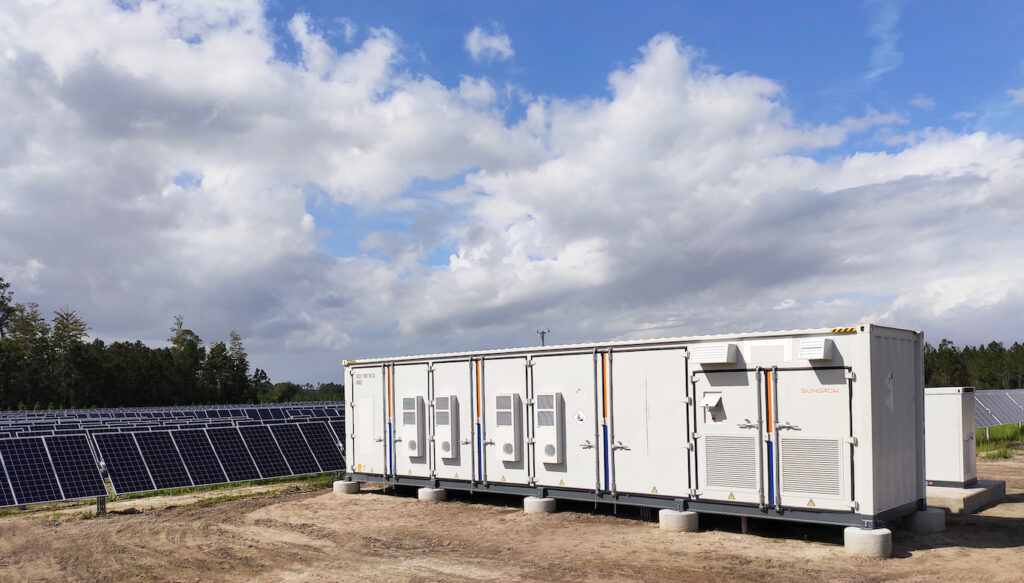
Global PV inverter manufacturer and energy storage solutions provider Sungrow will supply equipment including battery storage to eight solar microgrid projects in Lebanon.
Sungrow has signed deals with undisclosed local partners for what will be the first utility-scale microgrids to be built in the Middle Eastern country, it said yesterday.
Cumulatively, the projects add up to 12.4MW of PV generation capacity and 14MW/24.9MWh of battery energy storage system (BESS) technology. Sungrow will provide both PV inverters and BESS, with the company’s integrated energy storage solutions including power conversion system (PCS) as well as the batteries.
Due to come online in the fourth quarter of this year, the projects are the largest of their type in Lebanon to date, but follow Sungrow having already worked on 20 smaller projects of similar scope in the Lebanese market since entering it last September.
Try Premium for just $1
- Full premium access for the first month at only $1
- Converts to an annual rate after 30 days unless cancelled
- Cancel anytime during the trial period
Premium Benefits
- Expert industry analysis and interviews
- Digital access to PV Tech Power journal
- Exclusive event discounts
Or get the full Premium subscription right away
Or continue reading this article for free
The microgrids will be installed at local businesses to power daily operations, with the country’s electricity supply situation in crisis for years, made worse amid economic difficulties caused by factors including the COVID-19 pandemic.
According to various reports, many Lebanese people only get electricity from the grid for up to about three hours a day. Most power comes from fossil fuels, with growing dependence on private generators which are also powered with imported fossil fuels. Inflation of the costs of electricity as well as water and gas hit almost 600% year-over-year in the middle of 2022.
Sungrow’s manager for the Levant region and Yemen, Zaid Al-Helo, said projects such as the microgrids are enabling local businesses and facilities to gain energy independence and decarbonise their operations. Lebanon, with around 300 days of sunshine a year, “is a perfect place to install solar projects,” Al-Helo said.
The solar and batteries will mean recipients of the microgrids can reduce their draw of electricity from the grid at peak times, while also protecting them from the worst impacts of disruptions to the grid and mitigating the electricity supply crisis.
Read further Energy-Storage.news coverage of the off-grid market segment here.