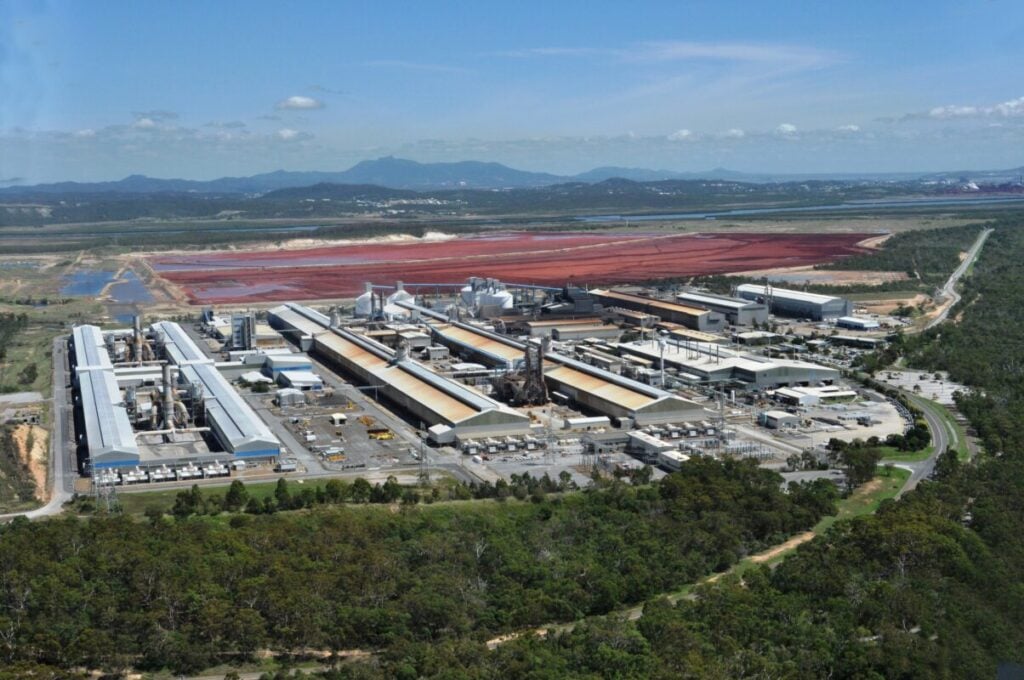
An AU$2 billion (US$1.4 billion) partnership between Rio Tinto, the Queensland government, and the Commonwealth government is set to transform Central Queensland’s energy grid and secure the future of Australia’s second-largest aluminium smelter beyond 2040.
The agreement will see the Commonwealth and Queensland governments each commit AU$1 billion over ten years to support the Boyne aluminium smelter at Gladstone, while Rio Tinto will underwrite close to AU$7.5 billion in new renewable energy generation and transmission infrastructure.
Combined, the deal could unlock almost AU$9.5 billion in total investment and represents one of Australia’s most significant industrial decarbonisation commitments, with renewables firmed with battery energy storage systems (BESS) emerging as the linchpin technology enabling the transition.
Under the partnership, Boyne Smelters Limited, in which Rio Tinto holds a 73.5% stake, will continue aluminium production beyond the completion of its current power contract in 2029, through to at least 2040.
Try Premium for just $1
- Full premium access for the first month at only $1
- Converts to an annual rate after 30 days unless cancelled
- Cancel anytime during the trial period
Premium Benefits
- Expert industry analysis and interviews
- Digital access to PV Tech Power journal
- Exclusive event discounts
Or get the full Premium subscription right away
Or continue reading this article for free
The smelter, which has operated since 1982, supports 1,000 direct jobs at the Boyne Island site and a further 2,000 indirect jobs across the Gladstone region. Rio Tinto’s three production assets in Gladstone, the Boyne smelter, Yarwun alumina refinery, and Queensland Alumina refinery, together account for around 3,000 jobs.
Jérôme Pécresse, Rio Tinto’s Aluminium & Lithium chief executive, said the partnership would ensure Boyne remains internationally competitive while supporting Queensland’s energy system transformation.
“As fossil fuels become increasingly expensive, this investment, combined with the power purchase agreements we have already signed, positions Boyne to be among the world’s first aluminium smelters underpinned by solar and wind power,” Pécresse said.
“It also ensures heavy manufacturing like aluminium smelting can continue in Gladstone for the long term and preserves one of the few fully integrated aluminium value chains in the world.”
Renewable energy buildout underpins smelter’s future
Rio Tinto has now contracted more than 2.8GW of renewable energy capacity and over 600MW of storage across five Queensland projects since January 2024.
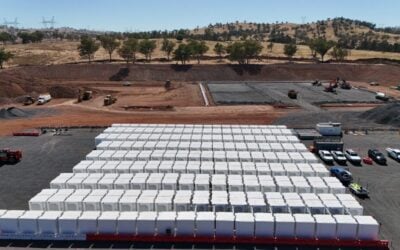
The portfolio includes European Energy’s 1.1GW Upper Calliope solar project, the 1.1GW Bungaban wind project, and the Smoky Creek & Guthrie’s Gap solar and battery hybrid delivering 540MW of generation capacity paired with 2,160MWh of storage.
Most recently, Rio Tinto agreed to offtake 40% of Lightsource bp’s Lower Wonga solar and battery hybrid project near Gympie, equivalent to 112MWac of solar capacity with approximately three hours of associated battery storage.
When combined with the 2.2GW of wind and solar power purchase agreements Rio Tinto announced for its Gladstone operations in 2024, these agreements secure more than 2.8GW of future renewable energy in Queensland.
Commonwealth Minister for Industry and Innovation Tim Ayres described the announcement as exemplifying the Future Made in Australia initiative.
The deal arrives at a moment when Queensland’s attractiveness to renewable energy investors has declined following policy shifts under the Crisafulli government, which took office in 2024.
Queensland, once the leader in renewable energy investment across Australia’s states, has seen investor confidence drop as renewables and energy storage projects wrestle with stricter regulations.
The state government has enshrined strict planning rules for solar PV, wind and energy storage into law, creating additional hurdles for project development that have contributed to uncertainty in the investment environment.
Against this backdrop, the AU$2 billion government commitment provides crucial certainty for both Rio Tinto’s renewable energy buildout and the smelter’s long-term viability.
Queensland Minister for Natural Resources and Mines Dale Last emphasised the strategic importance of maintaining sovereign manufacturing capability.
“At a time when supply chain disruptions are being felt across the globe, this investment is needed now more than ever to safeguard Queensland’s sovereign manufacturing capabilities, and to build national resilience and international competitiveness,” Last said.