This article has been updated with information from Stor-Energy regarding the durations of the Columboola West and East BESS. Rather than the previously suggested durations of 10 hours and 5 hours mentioned in the EPBC Act application, it has been confirmed that these systems will be designed with flexible configurations, allowing for durations of up to 4 hours and 8 hours, respectively.
Australia-based battery energy storage system (BESS) developer, owner and operator Stor-Energy has announced plans to build a 1,449MWh 10-hour duration BESS.
In an application to Australia’s Environment Protection and Biodiversity Conservation (EPBC) Act, the developer unveiled plans to build two BESS in Queensland: a 150MW/1,449MWh, which was suggested to be an 10-hour duration system, alongside a 400MW/1,950MWh suggested 5-hour duration BESS.
Stor-Energy has told Energy-Storage.news that the two BESS configurations differ from what is suggested in the EPBC Act application. These will be split between a West and East BESS with durations of 4 hours and 8 hours, respectively.
Try Premium for just $1
- Full premium access for the first month at only $1
- Converts to an annual rate after 30 days unless cancelled
- Cancel anytime during the trial period
Premium Benefits
- Expert industry analysis and interviews
- Digital access to PV Tech Power journal
- Exclusive event discounts
Or get the full Premium subscription right away
Or continue reading this article for free
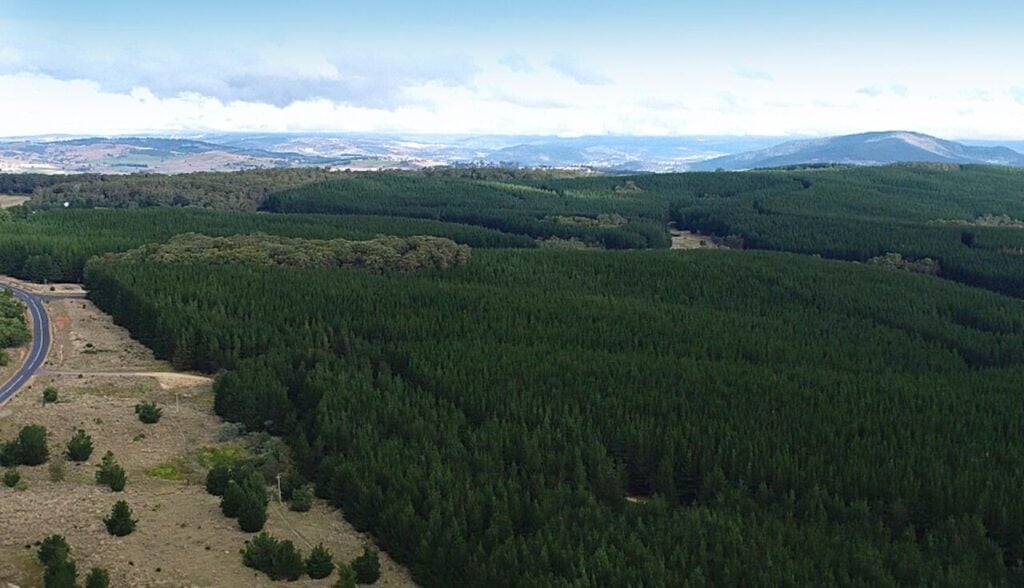
Two BESS are proposed for the rural town of Columboola, with one situated to the east and the other to the west.
Columboola is located in Queensland’s Western Downs region, approximately 322km northwest of the state capital, Brisbane. The town is named after Columboola Creek, an Aboriginal term meaning “plenty of white cockatoos,” a type of parrot native to Australia.
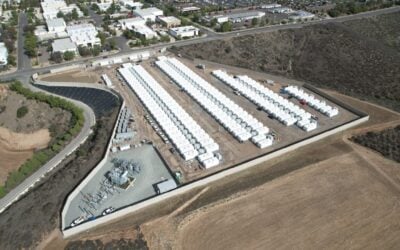
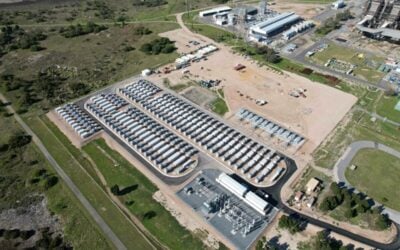
Columboola West, the 1,950MWh BESS, will comprise 536 battery enclosures, with space for 202 more for capacity replenishment over the system’s lifetime. Meanwhile, Columboola East, a 1,449MWh BESS, will feature 400 battery enclosures, with no augmentation if the full duration is built out. The total project area spans 99.14 hectares.
Planning approval will be sought in early 2026, and construction is proposed to commence in the second quarter of 2026. Construction is expected to take approximately 21 months.
The south-western sections of the proposed project area are currently used for domestic livestock grazing.
Powerlink owns the eastern section and northern corner of the project site, where the existing Columboola Substation is located. An underground transmission line will connect the two BESS to the Columboola Substation.
Project could have ‘significant impact’ on Koala habitat
The EPBC Act, administered by the federal government, aims to protect nationally threatened species and ecological communities. Approval must be received before a project can be developed.
Controversially, the project’s development will require the removal of 26.96 hectares of potential Koala foraging habitat, a species that has been listed as endangered since February 2022. Stor-Energy told Energy-Storage.news that no Koalas have been identified in this region’s habitat; however, the EPBC Act application is to determine whether the proposed project could impact the species.
As noted in the EPBC Act application, under the Commonwealth’s Significant Impact Guidelines, a project that “adversely affects habitat critical to the survival of this species will have a significant impact.”
However, Stor-Energy has proposed an offset area to help address the loss of this Koala habitat. It added that it is “taking a precautionary approach to any impacts on the surrounding environment.”
This is not the first time Koala habitats could impact the size of an energy facility. Our sister site PV Tech reported in October last year that Spanish solar PV developer X-Elio had to shrink the proposed project size of a 350MW solar-plus-storage site due to the impact it could have on habitats for endangered and vulnerable species, including Koalas, Grey Snakes, and Squatter Pigeons.
The proposed Columboola BESS will also be located close to Hana Financials’ 162MW Columboola PV plant, which has often been amongst the top performing utility-scale solar PV power plants in terms of AC capacity factor this year.
Readers of Energy-Storage.news may remember that Stor-Energy was acquired by HMC Capital, an ASX-listed asset manager, last year. It formed plans for HMC to assemble a 15GW development portfolio across the energy value chain, including wind, solar, battery energy storage, biofuels, and emerging technologies.
Plans submitted for 2,000MWh wind-plus-storage site in New South Wales
Meanwhile, developers Someva Renewables and Mainstream Renewable Power have submitted plans for a 500MW wind-plus-storage project, which features a 500MW/2,000MWh co-located BESS, to the EPBC Act.
The Sunny Corner Wind Farm is being pursued via a joint venture established between the two developers. It is proposed in the Sunny Corner State Forest, which is managed by the Forestry Corporation of NSW.
The Corporation has already granted the joint venture a permit to investigate an onshore wind power plant at Sunny Corner.
Sunny Corner is located just west of the Blue Mountains, between the small towns of Lithgow and Bathurst. The proposed site would feature up to 80 wind turbine generators with a top height of 285 meters and a hub height of 185 meters.
It will connect to the National Electricity Market (NEM) via a dedicated transmission line to Mt Piper substation.
At the time of this reporting, no details on the 4-hour duration of the BESS had been announced. The wind site would have a lifetime of 30 years.
Wind-plus-storage in Australia’s EPBC Act
Several wind-plus-storage sites have been submitted to the EPBC Act in recent months, with developers turning to hybridisation to optimise the power plant’s variable renewable energy generation.
For instance, developer Squadron Energy, which is owned by one of Australia’s wealthiest people, Andrew “Twiggy” Forrest via the family’s investment vehicle Tattarang, submitted plans for a 1,000MWh wind-plus-storage project in New South Wales to the EPBC Act in March 2025.
Bookham Wind Farm, which proposes a 594MW wind generation site coupled with a 250MW/1,000MWh 4-hour duration BESS, was proposed for the rural locality of Bookham, nestled within the Yass Valley Shire, around 316km southeast of Sydney.
More recently, Spain-based renewable energy firm Acciona Energía submitted plans for a wind-plus-storage site featuring up to 800MWh to the EPBC Act.
The Tall Tree Wind Farm is being proposed south of Meredith in Victoria’s Golden Plains Shire region. It is located 94km west of the state capital, Melbourne, and is within the proposed Central Highlands Renewable Energy Zone (REZ).
Spanning a 5,135-hectare site, the project would include up to 53 wind turbine generators alongside a co-located BESS of up to 800MWh. Little detail on the BESS has been revealed at the time of reporting, but it will be located in the centre of the site.
Our publisher, Solar Media, will host the Battery Asset Management Summit Australia 2025 on 26-27 August in Sydney. You can get 20% off your ticket using the code ESN20 at checkout.