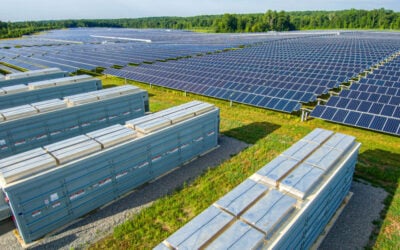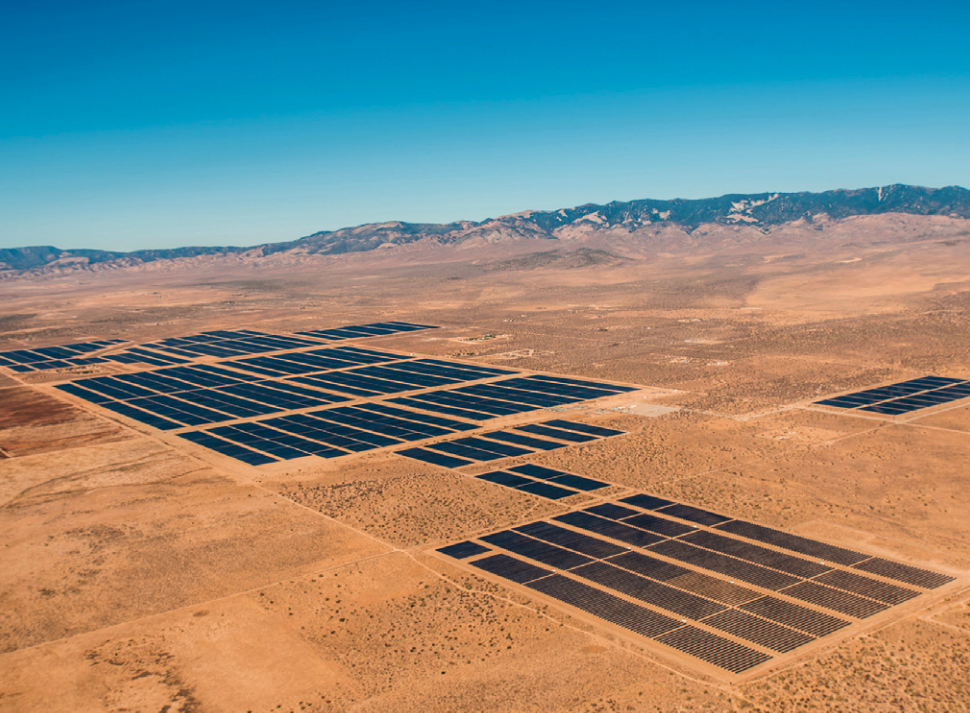
Southern Power has turned two four-hour battery energy storage systems (BESS) totalling 640MWh at two of its solar facilities in California online.
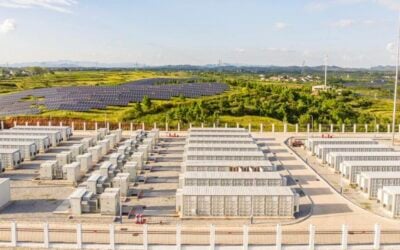
The Garland Solar Facility Battery Storage in Kern County (pictured) is a 88MW/352MWh BESS while the BESS at Tranquillity Solar Facility in Fresno now has a 72MW/288MWh of storage capacity. The solar parks both have a maximum output of 205MW and have been operational since 2015/16.
The resource adequacy capacity benefits of both BESS are being sold under a 20-year power purchase agreement (PPA) to Southern California Edison (SCE), one of the California’s big three investor-owned utilities along with SDG&E and PG&E. SCE also has a PPA for the electricity and renewable energy credits (RECs) from Garland.
The Resource Adequacy programme is designed to ensure load-serving entities in California have sufficient capacity to meet their peak load with a 15% reserve margin as a buffer to prevent outages. It needs to be delivered in four-hour blocks, often during evening peaks, making four-hour systems increasingly common.
Try Premium for just $1
- Full premium access for the first month at only $1
- Converts to an annual rate after 30 days unless cancelled
- Cancel anytime during the trial period
Premium Benefits
- Expert industry analysis and interviews
- Digital access to PV Tech Power journal
- Exclusive event discounts
Or get the full Premium subscription right away
Or continue reading this article for free
Rosendin Electric built the sites while Mitsubishi Power Americas supplied the equipment and will service the project under a 20-year service agreement. Powin Energy Corporation supplied the batteries.
A spokesperson for Southern Power confirmed to Energy-storage.news that the two projects are true solar-plus-storage rather than just colocation sharing a grid connection.
“The batteries at Garland and Tranquillity are charged by the PV solar sites (no grid charging is intended). The energy from the batteries is discharged to the grid,” they said.
The storage additions to the solar facilities were first announced a year ago, as reported on by Energy-storage.news. The battery and solar parks mentioned both count AIP Management and KKR as investors (KKR inherited the stake through its acquisition of Global Atlantic Financial Group last year).
At the time of the announcement in February, Southern Power president Bill Grantham said the colocated solar and storage projects would be the two of the first such projects to operate in the California market. In this week’s commissioning announcement, however, he only said it would be the first for the utility itself.
Another massive colocated project, the Edwards Sanborn Solar-plus-Storage with a 2,445MWh BESS, is due to come online in 2022 and 2023.
The California ISO grid had 2,607MW of battery storage connected as of January 31, 2022, the last figures available, around 6% of its stated resource adequacy net qualifying capacity.
This story was updated after publication with a clarification from Southern Power on the solar-plus-storage configuration of the projects.