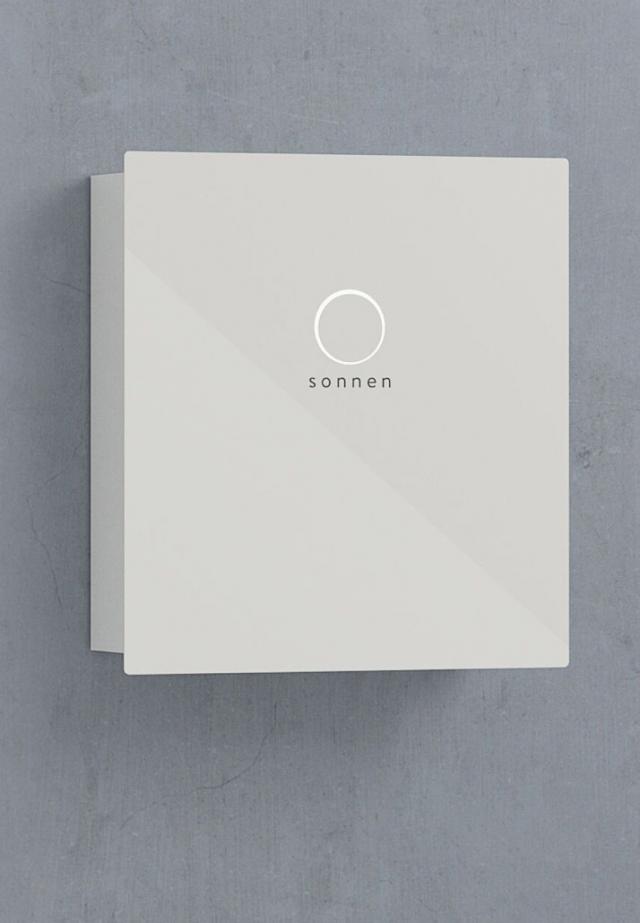
Sonnen is looking to sign up 2,000 Australian customers this year for SonnenFlat, where households sign up to pay a monthly ‘flat rate’ for power while their batteries are used to benefit the local grid.
Sonnen, Germany’s leading energy storage system maker for private households, announced this week a partnership with Australian solar installer Natural Solar, which has until now only been offering Tesla Powerwalls among available energy storage battery systems to its customers.
Demand has grown for energy storage by 1,000% in the past year and a half in Australia, due to rising energy costs, Natural Solar CEO Chris Williams said in explaining why the installer had expanded its offerings to include Sonnen’s systems.
Similarly, at this year’s Intersolar Europe / ees Europe show in Munich in June, Sonnen global head of sales and marketing Philipp Schröder told Energy-Storage.News that Australia was of interest with its high penetration of rooftop PV, frequency electricity price ‘spikes’ and a liberalised market structure.
Try Premium for just $1
- Full premium access for the first month at only $1
- Converts to an annual rate after 30 days unless cancelled
- Cancel anytime during the trial period
Premium Benefits
- Expert industry analysis and interviews
- Digital access to PV Tech Power journal
- Exclusive event discounts
Or get the full Premium subscription right away
Or continue reading this article for free
With SonnenFlat, Sonnen is attempting to take on utilities directly in a way that the US’ highly regulated market would not currently allow. Customers pay a monthly fee of between AUS$30 (US$22.80) and AUS$50, depending on the size of their home and generation capacity of their solar array. They are then able to access as much electricity as they need to meet their demand, including drawing from the grid. Sonnen is then able to use the capacity of their system hosts’ batteries to respond to grid operator demands to balance power on the network, accruing the revenues needed to cover rises in customer electricity prices.
After launching the service in Germany in September 2016, Sonnen CEO told Energy-Storage.News that through offering frequency regulation services to transmission network operators Sonnen could create around US$550 of economic value per customer each year.
Home economics
In Australia, Sonnen claims householders could save AUS$3,000 from their electricity bills each year by joining SonnenFlat – which requires additional outlay for the battery and other integrated hardware on top of the monthly fee. Assuming an average electricity consumption of around 10,000kWh per year for a three person household in Australia, currently paying around AUS$3,400 a year for utility power, the company claims SonnenFlat at a AUS$40 monthly rate could see a payback for the system of five to six years.
In other words, SonnenFlat works by aggregating and integrating thousands of Sonnen systems into a network or fleet to create a virtual power plant. This is in contrast to SonnenCommunity, the Germany company’s other main networked offering, where Sonnen system owners can ‘pool’ their electricity and trade it peer-to-peer.
Via Sonnen’s Australian office, Germany-based communications director Mathias Bloch told Energy-Storage.News that the company is expecting to sign up 2,000 users to SonnenFlat this year. He said the only significant difference between launching the service in Germany and Australia was that electricity prices and feed-in tariffs (FiTs) vary across the different Australian states and territories, which is not as applicable to Germany’s market. At Intersolar Europe / ees Europe Philipp Schröder said the company is currently selling around 200 units per month Down Under. Sonnen’s European virtual power plant, covering Germany, Italy, Austria and Switzerland is already serving 100,000 customers with electricity.
Schröder said that the technology to enable SonnenFlat – and some other of Sonnen’s advanced business models – is based around smart metering of each flow of electrons and consequently logging each transaction.
In a press release for the Australia launch, Schröder likened the simplicity of SonnenFlat to a mobile phone payment plan.
“Households are struggling under ever changing and ever rising power bills, and instead we are offering to pay those charges in exchange for a flat charge. It is like a mobile phone plan. Our SonnenFlat plan will allow households to plan their finances and save thousands of dollars a year in power charges.”
Centred around a lithium-iron-phosphate battery that comes with a 10 year warranty for over 10,000 charge and discharge cycles, meaning it can be charged and discharged three times a day, more than many rival systems, Sonnen claims. Systems are available from 2kWh up to 16kWh, sized in 2kWh increments.