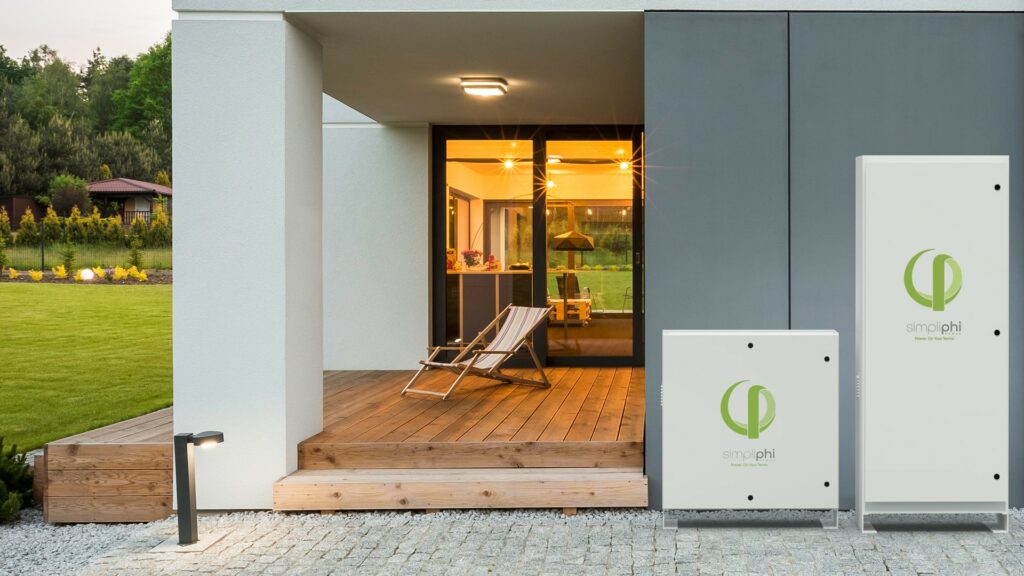
California-headquartered distributed battery energy storage provider SimpliPhi Power has been bought by Briggs & Stratton, a company best known for its gasoline engines and portable generators.
Briggs & Stratton said the acquisition will accelerate its expansion into the energy storage market. SimpliPhi has been making and selling battery storage systems for the portable, residential and commercial & industrial (C&I) markets for over 10 years.
Evolving from a business which started out providing mobile and portable power solutions to movie sets, its products are based solely on lithium iron phosphate (LFP) chemistry batteries, controlled using the company’s own energy management system (EMS) technology.
“This acquisition quickly establishes a strong position for Briggs & Stratton in the high-growth energy storage system market,” Briggs & Stratton CEO and president Steve Andrews said.
Try Premium for just $1
- Full premium access for the first month at only $1
- Converts to an annual rate after 30 days unless cancelled
- Cancel anytime during the trial period
Premium Benefits
- Expert industry analysis and interviews
- Digital access to PV Tech Power journal
- Exclusive event discounts
Or get the full Premium subscription right away
Or continue reading this article for free
“The SimpliPhi Power team brings deep application expertise, strong technical support and proven, successful products to the Briggs & Stratton portfolio of power-agnostic products and technology solutions.”
SimpliPhi’s products will continue to be sold through its existing distribution channels as well as through those of its new owner. Two of its main products successfully underwent UL9540A safety testing that was completed at the beginning of this year.
In choosing to offer systems based exclusively on LFP batteries, which do not use cobalt and have a higher operational temperature range than NMC batteries, SimpliPhi’s systems are in the company of the likes of sonnen and Enphase. CEO Catherine Von Burg wrote a Guest Blog for this site recently on how effective distributed battery storage can be as an uninterruptible source of backup power in regions affected by disasters. The company has done a lot of philanthropic and social enterprise work in this regard and is currently working with long-time partner the Footprint Project to send solar-plus-storage mobile microgrids to those affected by power losses after Hurricane Ida in Louisiana.
Recent industry surveys have highlighted the growing interest in battery storage as a backup power source — typically in combination with solar PV — from US consumers and businesses. Briggs & Stratton follows the likes of Generac, one of the country’s biggest diesel generator set manufacturers, into wider participation in the battery storage space.
Read ‘’Technology to make peoples’ lives better’: A decade in battery storage with SimpliPhi Power’, our February 2021 interview with SimpliPhi CEO Catherine Von Burg, here.