Siemens to add battery storage as part of gas power plant overhaul

By John Parnell
May 30, 2019
LinkedIn
Twitter
Reddit
Facebook
Email
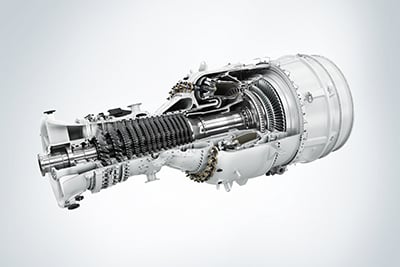
The SGT-800 industrial gas turbine installed at the BASF site. Source: Siemens.

Siemens will install a battery storage system as part of the overhaul of a gas power plant for chemicals giant BASF.

As well as replacing the gas turbines at the industrial power plant in Schwarzheide, Germany, a SIESTART battery system has been installed to provide blackstart capabilities. Siemens will also provide a 15-year service contract.

“Adapting the new gas turbine to the existing plant and carrying out the other necessary renovations require complex individual planning and extensive engineering expertise,” said Thorbjörn Fors, CEO of the Service Distributed Generation and Oil & Gas within Siemens Gas and Power. “Siemens is one of the few suppliers on the market with all the manufacturing and engineering skills needed to reliably implement such a demanding project.”

The battery system will be provided by Fluence, the joint venture between AES and Siemens. The company said BASF will benefit from blackstart capabilities, islanding, if required, and a more reliable power supply.

This article requires Premium SubscriptionBasic (FREE) Subscription

Try Premium for just $1

  • Full premium access for the first month at only $1
  • Converts to an annual rate after 30 days unless cancelled
  • Cancel anytime during the trial period

Premium Benefits

  • Expert industry analysis and interviews
  • Digital access to PV Tech Power journal
  • Exclusive event discounts

Or get the full Premium subscription right away

Or continue reading this article for free

The site at Schwarzheide currently has two gas turbines for power and two Siemens steam turbines providing steam for BASF manufacturing and processing activities. BASF has ordered one efficient 57MW gas turbine, which Siemens says will reduce both costs and carbon.

“We are pleased to work with Siemens for the modernization of our combined cycle power plant. We continue our long-term partnership with this project,” said Jürgen Fuchs, Chairman of the Management Board of BASF Schwarzheide GmbH.
15 September 2026
San Diego, USA
You can expect to meet and network with all the key industry players again in 2025 from major US asset owners, operators, RTOs and ISOs, optimizers, software and analytics providers, technical consultancies, O&M technology providers and more.
15 September 2026
Berlin, Germany
Launching September 2026 in Berlin, Energy Storage Summit Germany is a new standalone event dedicated to Germany’s energy storage market. Bringing together investors, developers, policymakers, TSOs, manufacturers and optimisation specialists, the Summit explores the regulatory shifts, revenue models, financing strategies and technology innovations shaping large-scale deployment. With Germany targeting 80% renewables by 2030, it offers a focused platform to connect with the decision-makers driving the Energiewende and the future of utility-scale storage.

Read Next

March 20, 2026
A new report from the US Energy Storage Coalition (ESC) indicates that the American battery manufacturing sector surpasses 100% of US demand for energy storage systems (ESS) and modules.
March 20, 2026
Energy storage developer and system integrator Energy Vault has released its Q4 and full year 2025 financial results, showing growth credited to entering the AI infrastructure market, expanding projects in Australia and its ‘Asset Vault’ subsidiary.
March 20, 2026
Indian solar PV module manufacturer Saatvik Green Energy is to enter the energy storage market through a newly launched subsidiary.
March 20, 2026
A collaborative team of Australian scientists from CSIRO, the University of Melbourne and the Royal Melbourne Institute of Technology (RMIT) has successfully developed and tested the world’s first proof-of-concept quantum battery system.
March 19, 2026
“When we started back in two years ago, there was a lack of understanding in the market about how the grid-forming inverters operate,” said Ghasem Jahedi, principal grid engineer at AGL.