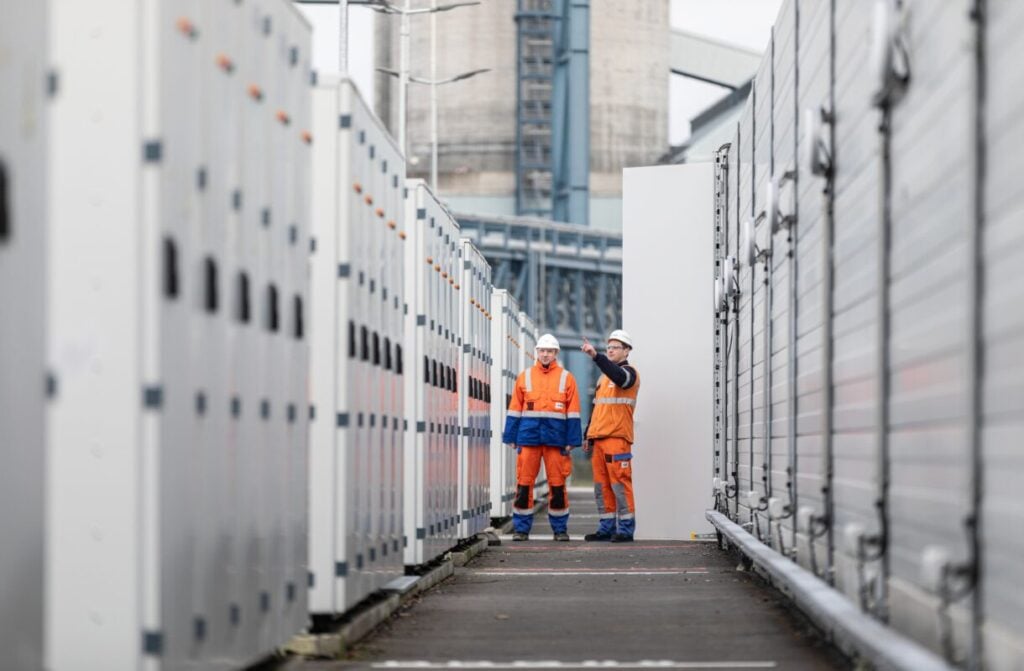
Power firm RWE is about to start building a 400MW/800MWh BESS project in Germany, among the largest in the country to reach the construction stage. In related news, Kyon Energy has connected a 282MWh project to the grid, possibly the largest in the country to reach that milestone.
RWE building Lower Saxony BESS
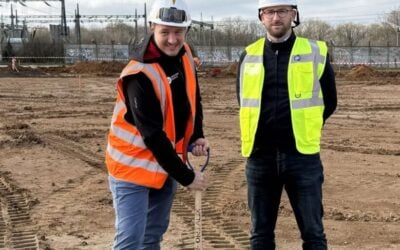
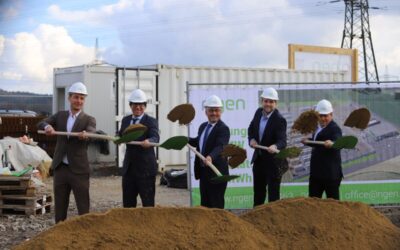
RWE has made a final investment decision (FID) and will start construction activities for the 2-hour large-scale battery energy storage system (BESS) on 2 February, in a few days’ time.
The project is on a site just northeast of the Emsland gas-fired power plant, in Lingen, Lower Saxony. The BESS is scheduled to go into operation in 2028.
It will be made up of 200 lithium-ion BESS units, 100 inverters, over 50 medium voltage transformers and two high-voltage ones. It will connect to the grid via the adjacent Hilgenburg substation, which transmission system operator (TSO) Amprion is building.
Try Premium for just $1
- Full premium access for the first month at only $1
- Converts to an annual rate after 30 days unless cancelled
- Cancel anytime during the trial period
Premium Benefits
- Expert industry analysis and interviews
- Digital access to PV Tech Power journal
- Exclusive event discounts
Or get the full Premium subscription right away
Or continue reading this article for free
The news follows the firm launching construction on a 400MW/700MWh BESS project in Bavaria in October, the largest being built in Germany at the time. Shortly after that, owner-operator Eco Stor started building its own 300MW/700MWh project.
The Lingen project has grid-forming capabilities, which is timely as Germany’s four TSOs recently started procuring inertia services.
Nikolaus Valerius, CEO of RWE Generation SE, said: “While gas-fired power plants step in when wind and solar power fail to supply energy for hours or days, battery facilities primarily bridge short-term gaps or periods of peak load. Our new battery storage facility in Lingen will absorb or feed in power within a few milliseconds, depending on demand. It will thus make an important contribution to grid stability and reliable electricity prices.”
Kyon Energy connects 282MWh
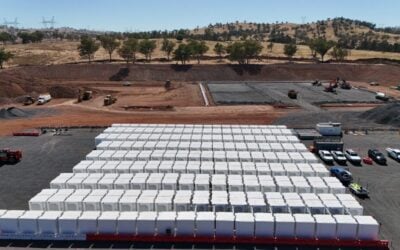
In related news, developer and operator Kyon Energy has connected a 137.5MW/282MWh BESS to the grid in Alfeld, Lower Saxony, via a 110 kV grid connection. The connecting substation is operated by distribution system operator (DSO) Avacon.
The next phases will be system testing and trial operation before full commercial operation, which is scheduled for August 2026.
Although not claimed by Kyon Energy, the project may well be the largest in Germany to have reached that milestone. The largest commercially operating project is Eco Stor’s 103.5MW/238MWh Bollingstedt project in Schleswig-Holstein (while another identically-sized one by the company is coming online this year).
Germany market enters next phase of growth
The launch of these 700MWh/800MWh projects firmly markets Germany’s grid-scale storage market moving into a new era of scale.
Late last year also saw RWE’s peer LEAG enlist suppliers Fluence and HyperStrong for 1GW/4GWh and 400MW/1.6GWh projects, respectively. The firm has been less clear on whether construction has already started on those, though it’s likely that at least ground preparation works have begun.
These projects have built confidence in the industry but there are still numerous regulatory and policy framework challenges in Germany, according to Leandra Boes, director of asset management for owner-operator Green Flexibility. She was speaking to us ahead of the Energy Storage Summit 2026 in London next month.
Boes and other event speakers comments’ were published in our ESN Premium piece yesterday looking at the broader pan-European trends enabling large-scale project deployments, in Germany and across the continent.