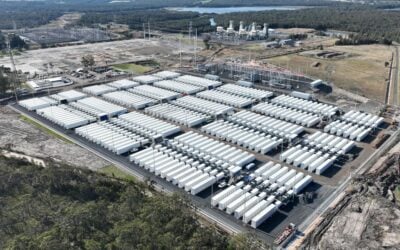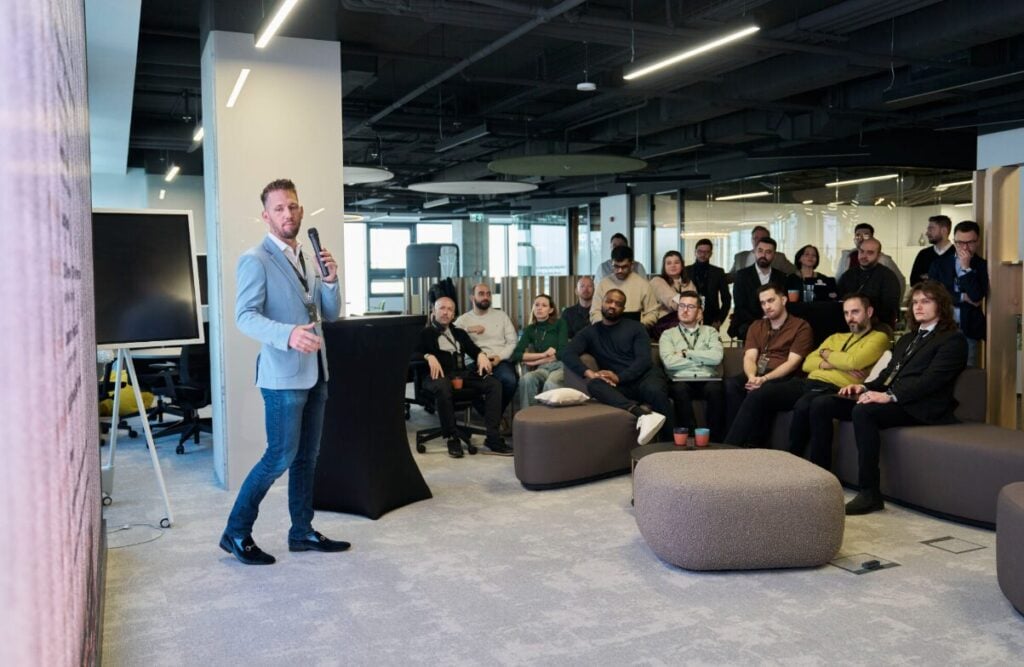
MetaWealth COO Michael Topolinski IV discussed the firm’s first BESS project in Romania, which is partially financed with bonds marketed at retail investors.
While retail investors can get exposure to UK battery energy storage system (BESS) revenues via listed entities like the Gore Street Energy Storage Fund (GSF) and the Gresham House Energy Storage Fund (GRID), battery energy storage system (BESS) project financing being available to them is more rare.
Dutch developer Giga Storage crowfunded €3.6 million (US$4.2 million) with a minimum €500 per investor for a 12MW BESS in 2021.
MetaWealth’s bond issued for its first BESS, a 100MWh project in Dumbrava, Neamț, meanwhile had a minimum ticket size of €25,000.
Try Premium for just $1
- Full premium access for the first month at only $1
- Converts to an annual rate after 30 days unless cancelled
- Cancel anytime during the trial period
Premium Benefits
- Expert industry analysis and interviews
- Digital access to PV Tech Power journal
- Exclusive event discounts
Or get the full Premium subscription right away
Or continue reading this article for free
The firm is an investment platform targeting retail investors which has primarily been active in real estate but has now moved into BESS.
“We are enabling investors to participate in assets they otherwise wouldn’t have access to,” Topolinski said. “That €25,000 is much less than a typical BESS investment would require.”
The first BESS development is being financed through three tranches. The first tranche is a debt project finance facility with senior debt or institutional financing that is still being raised and has seniority over the assets.
The second tranche is purely institutional capital with a minimum ticket of €100,000, with second-rank seniority on the assets and an 18% payout.
The last tranche is for the private investors and has the highest risk profile, not being fully covered by the assets. But, with a higher risk comes a higher return, and the bond pays a 22% fixed interest rate.
The second and third tranches together cover the equity portion of the project and have already been fully raised, while the first tranche is still being negotiated.
“We haven’t seen this in BESS yet: we’ve been offering these instruments for other industries so we had the structure in place already,” Topolinski said.
“Demand for BESS capacity in Romania is becoming much more present. At end-2025 there was 400MWh installed, but the capacity need projected by the state is over 4GWh by end-2030. The Russia-Ukraine conflict drove a clear need for energy independence and security, prompting big investments in renewables and storage, and the Iran conflict is doing the same.”
The firm uses third-party valuators to get a conservative perspective on the business model, and even with that conservative business model he claims a full return on capital in just under three years.
Its first project, and possibly its second, are being built to sell. It has signed a deal with a long-term operator for commissioning the project at the end of 2026. That was part of why it managed to move on raising equity so quickly, Topolinski said. The firm is targeting drawdown on senior debt towards the end of April.
“Speed to market is really important. There are lots of players with authorisation and grid connection but few putting them into execution. We are stepping in as a developer and constructor, buying SPVs at ready-to-build (RTB) ready and grid-connected stage. We’re doing it because speed to market is key,” he added.
The firm’s cost base for the 100MWh project is €16.9 million while the agreed sale is expected to fetch €29.5 million .
“With BESS we have built an energy infrastructure team that is focused on EPC. We are doing project management ourselves but do have an EPC partner providing some support,” he said.
Its suppliers are Chinese: Rept Battero is providing the BESS while Kehua is providing the power conversion system (PCS) equipment. The equipment is paid for and now in production for receiving in Romania in June. The adjoining substation meanwhile is set to be completed in Q3/Q4, meaning the firm is on track for its plans.
Topolinski: “From the perspective we receive from third parties, this is one of the most optimised cost structures in the market today, which has driven the significant interest in it.”
He does concede that while today’s BESS revenues in Romania are high-performing, there will be a compression on those returns in the medium-term. “But we believe we have a structure that provides a cost-optimised operation and a good base revenue model. The market has strong potential.”