Multinational mining corporation Rio Tinto has announced the latest steps in its plan to deploy 1GW of renewable energy for its operations in Pilbara, Australia.
The company said yesterday that it will invest AU$600 million (US$402 million) into large-scale solar PV and battery energy storage system (BESS) technology for its iron ore excavation in the mineral-rich Western Australian region.
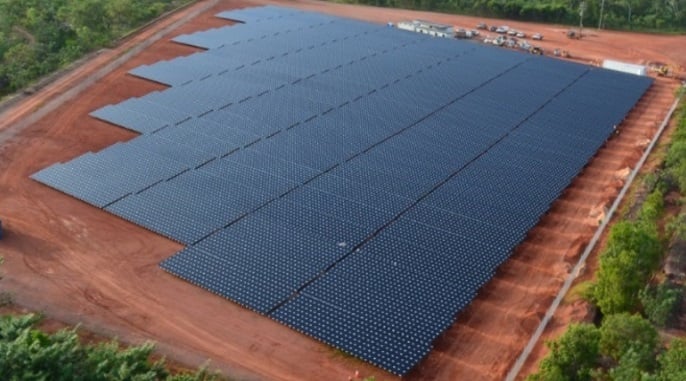
The announced investment will fund the construction of two 100MW solar PV plants, and 200MWh of BESS. That will add to 34MW of solar PV already installed at Rio Tinto’s recently opened Gudai-Darri iron ore mine.
The new resources will be online by 2026, while the mining company’s board has approved investment in another 100MW solar PV plant in the region which will come online a year earlier.
Try Premium for just $1
- Full premium access for the first month at only $1
- Converts to an annual rate after 30 days unless cancelled
- Cancel anytime during the trial period
Premium Benefits
- Expert industry analysis and interviews
- Digital access to PV Tech Power journal
- Exclusive event discounts
Or get the full Premium subscription right away
Or continue reading this article for free
Other companies are investing in green energy in Pilbara as a region with abundant solar and wind resources, coupled with the need to decarbonise mining operations. As well as being polluting, refuelling and maintaining fossil fuel generators at off-grid extraction sites has high costs and challenging logistics associated with it.
In June, bp acquired a 40.5% stake in a green hydrogen project that could see 26GW of combined solar PV and wind generation paired with electrolysers for the production of green hydrogen or ammonia for domestic use and export. The Asian Renewable Energy Hub (AREH) project would be sited in a 6,500-square-kilometre site in the Pilbara region.
In February, Fortescue Metals Group unveiled plans for a 5.4GW renewable energy hub in the region which could include up to 9,100MWh of battery storage, according to planning documents filed with local authorities.
Rio Tinto wants to halve its greenhouse gas (GHG) emissions in Pilbara by 2030, and will invest about AU$3 billion on “installing renewable energy assets as well as transmission and storage upgrades” in the Pilbara by that time, according to the company’s chief executive of its iron ore business, Simon Trott.
“The Pilbara is extremely well-positioned to take advantage of renewable power with land, access to people, and abundant wind and solar resources. Our Pilbara electricity grid is the largest privately-owned grid in Australia, ensuring that we have the initial infrastructure required to enable a transition to renewable energy.”
Indeed, the AU$3 billion Rio Tinto plans to invest on installing a 1GW renewable energy system in the Pilbara is a significant portion of its total planned AU$7.5 billion spend on halfway decarbonisation by the end of this decade.
Last year, the company announced that it would seek 6GW of renewable energy for its operations in Australia, and in June launched a request for proposals (RFP) for developers of large-scale wind and solar in Central and Southern Queensland, seeking up to 4GW of power for aluminium smelting and refining operations.
Energy-Storage.news’ publisher Solar Media will host the 1st Energy Storage Summit Asia, 11-12 July 2023 in Singapore. The event will help give clarity on this nascent, yet quickly growing market, bringing together a community of credible independent generators, policymakers, banks, funds, off-takers and technology providers. For more information, go to the website.