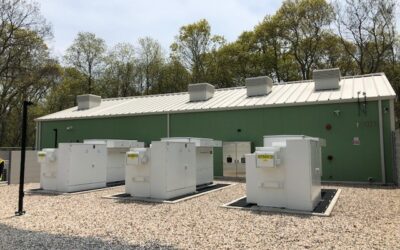
PV Evolution Labs (PVEL), has introduced a Product Qualification Programme (PQP) for energy storage, which “identifies and validates battery-based energy storage solutions for specific applications”.
Launching the PQP to coincide with Intersolar North America, independent test lab for the downstream solar industry PVEL claims to represent over 30GW of “buying power” across 300 customers. Currently offering services for the PV industry including PV module and PV inverter scorecards, the group aims to assist the making of investment decisions through bankability testing and data-driven reports.
One area of particular focus during 2019 for the group was bifacial PV modules, with Solar Media Market Research head Dr Finlay Colville discussing this and other topics in a recent in-depth Q&A with PVEL’s head of its photovoltaic module business, Tristan Erion-Lorico.
“Each test sequence in PVEL’s PQP replaces assumptions about system degradation, performance and reliability with empirical data that can help buyers optimize revenue and energy yield models,” the group wrote in a media release.
Try Premium for just $1
- Full premium access for the first month at only $1
- Converts to an annual rate after 30 days unless cancelled
- Cancel anytime during the trial period
Premium Benefits
- Expert industry analysis and interviews
- Digital access to PV Tech Power journal
- Exclusive event discounts
Or get the full Premium subscription right away
Or continue reading this article for free
“A range of comprehensive reports are generated as part of the PQP, keeping participants up to date on the progress and findings of the testing, mitigating risk and facilitating informed procurement and planning decisions.”
PVEL, along with Lloyd’s of London syndicate Ariel Re (a member of Argo Group), and Beecher Carlson Insurance Services, also launched ‘PV PlantProtect’, a first-of-its-kind risk mitigation and insurance program using technical due diligence best practices to improve solar project economics for developers, sister site PV Tech reported in December 2019.
What the PQP does for (battery) energy storage
Using methodology and experience from similar endeavours in the automotive industry, PVEL looks at product reliability and quality, as well as “evaluation and validation of reliability and performance”, covering energy storage from battery cell level up to system level.
The service therefore also focuses on battery management systems (BMS), perhaps the unsung hero technology suite of the battery storage revolution. PVEL said it aims to “replace assumptions about battery and energy storage system degradation, performance and reliability with empirical data that can help buyers optimise revenue and energy yield models”.
PVEL actually ‘soft-launched’ the energy storage PQP back in 2016, but without holding a formal launch since then, used this year’s Intersolar North America and an expansion of the programme as an opportunity to send out information to press.
Nuvation finds BMS validation in meeting UL standards
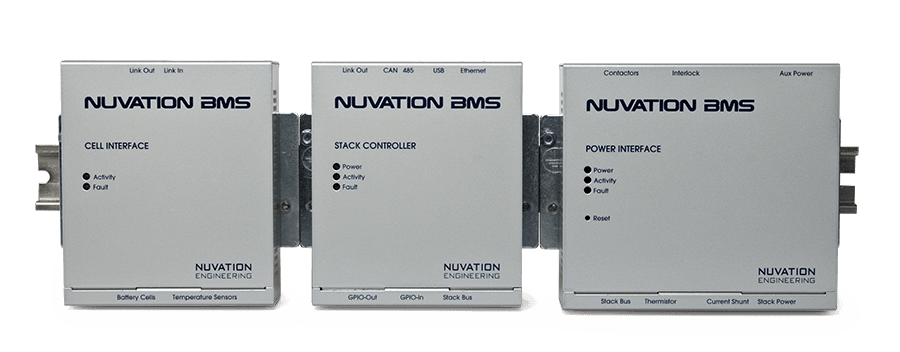
In somewhat related news, technology provider Nuvation said recently that its high voltage BMS has attained certification under UL 1973, for Certifiable Battery Stacks and UL 9540, which is for Certifiable Stationary Energy Storage Systems. The stringent UL testing standards are also among other services offered by PVEL alongside its energy storage PQP.
“One of the key components of UL 1973 battery system certification is the functional safety analysis and testing of the BMS hardware and software. With a ‘UL 1973 Recognised’ BMS like Nuvation’s, this functional safety work has already been done, which may significantly reduce both the technical risk and the monetary cost of certification,” UL’s busines development director for energy systems and e-mobility, Francisco Martinez, said.
“Nuvation Energy’s high-voltage battery management system is the first to obtain UL 1973 Recognition and functional safety certification for use with various battery chemistries, and battery systems with different safety profiles.”
Nuvation CEO Martin Worry said that attaining the UL standards mean that “developers can now choose batteries based solely on performance, availability, and suitability for their target application,” adding that customers could potentially also use the same BMS across “all their products,” reducing the complexity associated with bringing out diverse energy storage system product lines.
This story has been amended from its original form to clarify that PVEL produces the inverter scorecard as well as for PV modules, also noting that the PQP for storage began with a low-key introduction in 2016 but has been significantly expanded for this year.