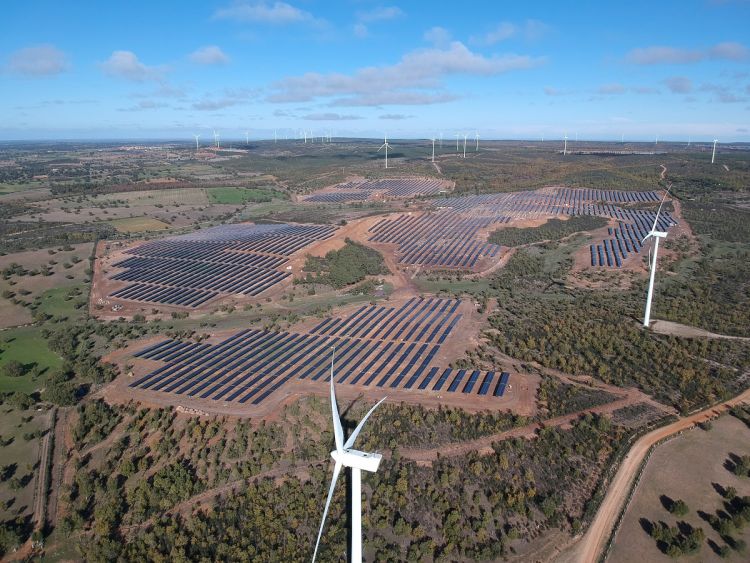
The results of Spain’s auction last week for 3GW of renewables capacity have been widely welcomed by the country’s solar sector, but calls have been made to tweak future auctions to support smaller-scale projects as well as encourage the participation of bids with energy storage.
The heavily oversubscribed auction saw PV bidders pick up 2,036MW of capacity, while 998MW was awarded for wind projects.
The capacity obtained by PV bidders was divided into 66 lots and secured by 27 companies, with an average lot capacity of 30MW, showing the competitiveness in the country’s solar industry, according to trade association UNEF.
Rafael Benjumea, president of UNEF, said the results show the “enormous interest” in developing PV projects in Spain, adding: “The success of the chosen auction model has proven to be a successful formula both for the volume of projects and for the price that has been captured for consumers.” Despite these positives, UNEF is calling for a future auction to have 20% of allocated capacity specifically for installations smaller than 10MW as well as another auction for projects with storage.
Try Premium for just $1
- Full premium access for the first month at only $1
- Converts to an annual rate after 30 days unless cancelled
- Cancel anytime during the trial period
Premium Benefits
- Expert industry analysis and interviews
- Digital access to PV Tech Power journal
- Exclusive event discounts
Or get the full Premium subscription right away
Or continue reading this article for free
The renewables auction was Spain’s first since 2017 and is part of a new government strategy to help the country reach 39GW of installed solar PV by 2030.
While bids were allowed to include storage, the technology didn’t feature. The rules specified that dispatchable solar and wind tariffs would have a 25% market exposure, but winning storage plants would be limited to charging from the renewable project they are paired with, excluding the possibility of charging energy from the grid.
This limitation, together with the requirement that 2MWh of storage would have to be installed for each megawatt of solar and wind, has “raised a lot of criticism among the ranks of European energy storage project developers”, according to Tanguy Poirot, energy storage analyst at consultancy Clean Horizon.
“These two constraints combined with the very short timeline to submit bids and the absence of a dedicated remuneration scheme makes it unsurprising that no storage was awarded,” said Poirot. “If the real purpose of the Spanish government was to make a significative step towards its 2.5GW battery storage target, I would say the auction is quite a fiasco.”
The analyst said it is likely that the auction rules will be altered by the end of the year to allow for a more competitive participation of energy storage, adding: “In any case, Clean Horizon is convinced this is just a positive sign of a government will to promote storage: other opportunities for storage will arise in Spain!”
To read the full version of this story, visit PV Tech.