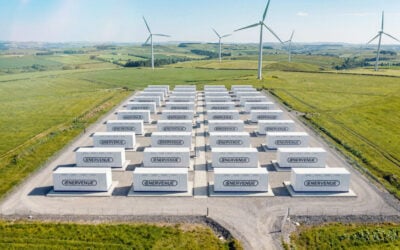
The Governing Board of the Puerto Rico Electric Power Authority (PREPA) has approved renewables developer Polaris Renewable Energy’s battery energy storage system (BESS) standard offer (SO1) agreement.
Polaris received formal written approval on 27 February. However, the agreement’s execution depends on the Puerto Rico Financial Oversight & Management Board (FOMB) granting its approval.
In 2025, Polaris submitted the SO1 agreement to the Puerto Rico Energy Bureau (PREB), revealing it was submitted with a BESS capacity of 71.4MW, comprising two 35.7MW projects.
The commercial operation date is scheduled for Q3 2026, and the SO1 agreement will have a 20-year term starting from that date. Polaris says the system will be located at its Punta Lima wind farm site.
Try Premium for just $1
- Full premium access for the first month at only $1
- Converts to an annual rate after 30 days unless cancelled
- Cancel anytime during the trial period
Premium Benefits
- Expert industry analysis and interviews
- Digital access to PV Tech Power journal
- Exclusive event discounts
Or get the full Premium subscription right away
Or continue reading this article for free
After the SO1 agreement is signed and the BESS project is constructed and fully operational, Polaris will be entitled to receive monthly fixed and performance-based payments from PREPA. These payments compensate for energy storage services, including capacity provision and grid support.
Puerto Rico energy challenges
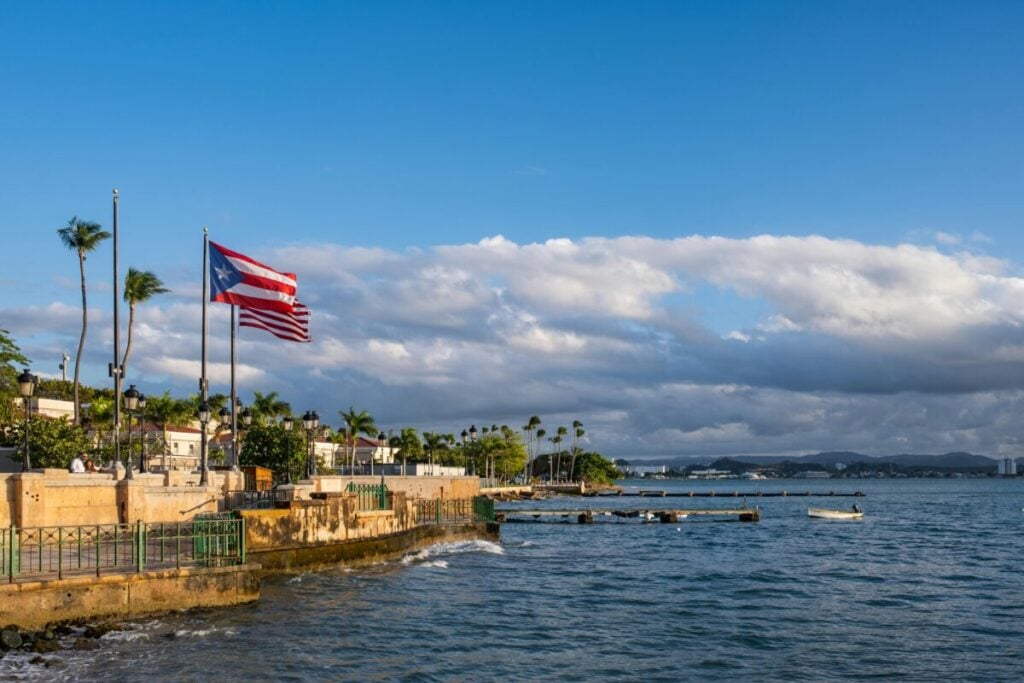
As recently highlighted by Puerto Rican musician Bad Bunny’s Super Bowl LX performance, Puerto Rico has encountered multiple challenges in developing utility-scale energy storage and energy transmission infrastructure on the island.
According to the US Energy Information Administration (EIA), “Even without accounting for electricity interruptions resulting from major events such as hurricanes, customers in Puerto Rico experienced on average 27 hours of power grid interruptions per year between 2021 and 2024.”
The PR100 study, launched in February 2022 with FEMA funding, indicates that Puerto Rico can achieve 100% renewable energy by 2050. However, to reach this target, the territory will need to substantially expand its new power generation infrastructure.
In Puerto Rico, the electric generation, transmission, and distribution facilities managed by PREPA are operated privately by Luma Energy. Both organisations are overseen by the Puerto Rico Electricity Board (PREB).
Luma Energy, a joint venture between ATCO and Quanta Services, assumed control of Puerto Rico’s electricity distribution network in 2020 during the privatisation process that also transferred Genera PR to control its generation.
After Luma took over the island’s transmission and distribution systems on 1 June 2021, power service declined. In September 2021, the US House of Representatives Natural Resources Committee held an oversight hearing, during which Luma CEO Juan Saca said Puerto Rico’s infrastructure would take time to modernise.
In February 2025, Luma revealed plans to establish nine energy interconnection points with Linxon US and its partner AtkinsRéalis Caribe. These will facilitate the integration of over 990MW of clean energy and more than 700MW of energy storage into Puerto Rico’s electric grid.
The SO1 agreement submission from Polaris is part of the Puerto Rico Accelerated Storage Addition Programme (ASAP), which seeks to improve grid reliability throughout the island by adding utility-scale BESS alongside existing power generation facilities.
In 2024, PREB notified Luma Energy that its plan to contract with independent power producers (IPPs) for BESS resources aligned with public power policy. Polaris then announced its intentions after multiple developers failed to execute BESS projects through the ASAP framework.
This led to events in late 2025, where PREB issued a resolution and order requiring PREPA to finish the necessary review process with the FOMB concerning the four final agreements of ASAP.
PREB concluded that Luma’s four final agreement terms for ASAP align with the island’s Energy Public Policy and the Integrated Resource Plan (IRP). While it appears some progress has been made on these four agreements, a complicated chain of communication between the developers, Luma, and PREPA makes matters unclear.
With the recent approval of the SO1 agreement by PREPA, Marc Murnaghan, CEO of Polaris, commented:
“The PREPA Governing Board’s authorisation of the SO1 Agreement marks an important step forward in the development of our battery energy storage initiatives in Puerto Rico. This project further reinforces our commitment to enhancing grid reliability on the island while building on the strategic value of our existing Punta Lima asset.”
Recently, SolarMax Technology’s wholly owned subsidiary, SolarMax Renewable Energy Provider, entered into two engineering, procurement and construction (EPC) agreements for the Yabucoa and Naguabo BESS projects in Puerto Rico.
SolarMax noted that the two BESS projects are designed to improve grid stability and make energy more affordable in Puerto Rico by storing renewable energy for peak demand times. The company also claimed that the facilities are essential components of the region’s overall clean energy strategy and play a crucial role in maintaining grid reliability.
Energy Storage Summit USA will be held from 24-25 March 2026, in Dallas, TX. It features keynote speeches and panel discussions on topics like FEOC challenges, power demand forecasting, and managing the BESS supply chain. ESN Premium subscribers can get an exclusive discount on ticket prices. For complete information, visit the Energy Storage Summit USA website.