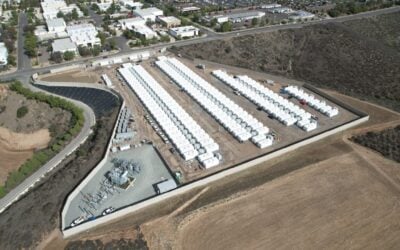
The Puerto Rico Energy Bureau (PREB) has issued a resolution and order requiring the Puerto Rico Electric Power Authority (PREPA) to complete the Accelerated Battery Energy Storage Addition Programme (ASAP).
The resolution and order require PREPA to finish the necessary review process with the Financial Oversight and Management Board (FOMB) concerning the four final agreements of the ASAP.
Implementation and delay of ASAP
In Puerto Rico, the electric generation, transmission, and distribution facilities managed by PREPA are operated privately by Luma Energy. Both entities are overseen by the Puerto Rico Energy Bureau (PREB).
ASAP aims to enhance grid reliability across the island by deploying utility-scale battery energy storage systems (BESS) alongside existing generation facilities.
Try Premium for just $1
- Full premium access for the first month at only $1
- Converts to an annual rate after 30 days unless cancelled
- Cancel anytime during the trial period
Premium Benefits
- Expert industry analysis and interviews
- Digital access to PV Tech Power journal
- Exclusive event discounts
Or get the full Premium subscription right away
Or continue reading this article for free
Under the programme, independent power producers (IPPs) with existing power purchase and operating agreements (PPOAs) with PREPA will install BESS at their sites, “on an accelerated basis,” as stated in PREB documents available on the regulator’s website.
In 2024, PREB informed Luma Energy that its plan to contract with IPPs for BESS resources was consistent with public power policy.
In April 2024, Luma identified Phase 1 projects that could start immediately with minimal costs and no network upgrades, with some developers claiming they could be operational in less than 12 months and contracts expected to be executed by April 2025.
However, in August 2025, the projects remained stalled, with only one developer (Ecoeléctrica) responding to PREPA’s communications to say it was working to complete documentation by September, while three others (San Fermín, Horizon, and Oriana) did not respond at all.
PREB called the delays “extremely concerning” and required all four developers to provide detailed explanations for the lack of responsiveness, emphasising that these projects are crucial for addressing Puerto Rico’s electricity generation shortfall and warning that fines will be imposed if developers don’t comply with the information requests.
PREB issues resolution and order to PREPA
PREB concluded that Luma’s four final agreement terms for ASAP align with the island’s Energy Public Policy and the Integrated Resource Plan (IRP).
As a result, the Bureau approved the four drafts and directed Luma to finalise the contracts, submit them to PREPA’s Governing Board for approval, and demonstrate this process. Furthermore, PREPA was instructed to obtain approval from the FOMB.
On 20 November, Luma submitted final agreements to PREPA’s Board. The private operator asked for these documents to be confidential due to critical infrastructure, sensitive data, and personal information. PREB confirmed Luma’s compliance and granted confidentiality.
PREB clarified that the 1,500MW of battery storage listed in the IRP is a guideline, not a strict cap.
The resolution and order confirmed that this figure is not fixed and can be exceeded; battery projects in development will be assessed regardless of whether they propose more than 1,500MW of storage capacity. PREB also highlighted that any decision to increase or decrease this limit is solely at its discretion.
Because PREB has granted confidentiality to Luma, it is unclear for which participants the agreements have been submitted.
Developers Ecoeléctrica, San Fermín, Horizon, and Oriana have had ongoing communications with Luma. Though, as noted above, San Fermin, Horizon, and Oriana have previously failed to respond to PREPA’s communications.
Additionally, in August, Polaris Renewable Energy submitted a BESS standard offer (SO1) agreement on behalf of PREPA to PREB.
The SO1 agreement is included in the ASAP scheme. When submitted, Polaris appeared to distinguish itself from the other developers who had not delivered BESS projects on the island.
Included in the resolution and order, Commissioner Mateo Santos dissented in part and concurred in part, and stated:
“As I have previously expressed, I do not agree with the pass-through concepts included in the contracts under the ASAP programme, and therefore I dissent on that aspect. However, I concur with the Energy Bureau’s determination regarding the integration of battery energy storage resources.”
Santos continued, “Specifically, I agree with the Energy Bureau’s clarification that the approximately 1,500MW of Battery Energy Storage Resources identified in the Approved IRP’s Modified Action Plan constitutes a guideline rather than a fixed limit. Any final determination on the appropriate level of integration will be made by the Energy Bureau.”