Energy storage projects were under construction across four provinces of China, amounting to 340.5MW of new capacity during the first half of this year in the country, according to the China Energy Storage Alliance (CNESA).
Jiangsu, Henan, Qinghai and Guangdong provinces are host to projects that when finished would almost equal the total cumulative capacity of operational energy storage systems in China, which was 389.4MW as of the end of 2017. CNESA, the trade group, also identified four companies that have been especially prolific in the first half of this year.
One ‘project’, actually consisting of eight separate systems at one site in Jiangsu Zhenjiang adds up to 101MW/202MWh of lithium-ion storage systems on the grid-side of the meter and already went into operation in July. Zhenjiang-based company eTrust Power supplied the largest of the eight systems, a 40MW/80MWh battery. CNESA noted that despite only being around since 2016, eTrust has opened seven manufacturing and R&D centres and been awarded a 52.8MWh battery project in Ontario, Canada.
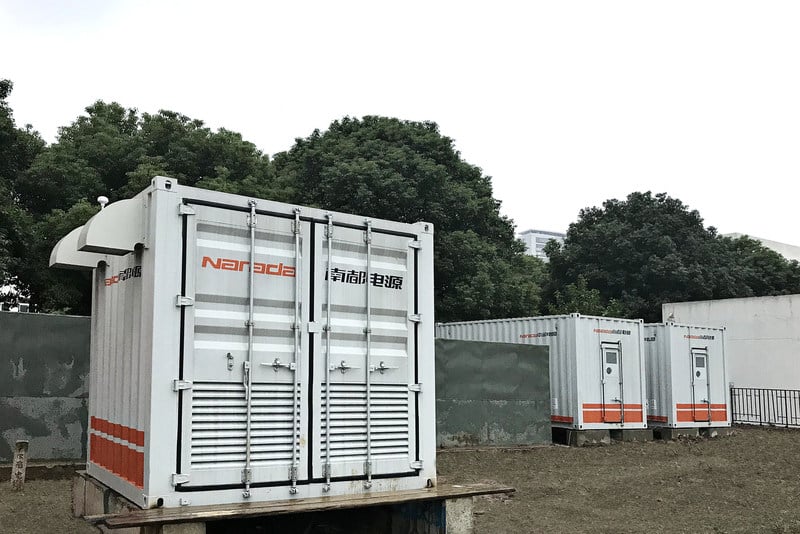
Narada Power, well known outside China for projects in Europe and America, supplied a significant amount of lead-carbon battery storage behind-the-meter in Jiangsu Province. As the Jiangsu Grid Corporation fought to curb peak electricity prices in summer, over 500MWh of Narada’s batteries were put into use. The company is also building up important strategic partnerships in China, including with EV and ‘storage cloud’ initiatives, CNESA said.
Try Premium for just $1
- Full premium access for the first month at only $1
- Converts to an annual rate after 30 days unless cancelled
- Cancel anytime during the trial period
Premium Benefits
- Expert industry analysis and interviews
- Digital access to PV Tech Power journal
- Exclusive event discounts
Or get the full Premium subscription right away
Or continue reading this article for free
There are energy storage systems deployed at thermal plants, which combine thermal generation with batteries that provide frequency regulation services. One company, CLOU Electronics, has already executed 90MW of such projects in China. Several provinces of China are still considering introducing policies that allow energy storage to participate in frequency regulation markets or programmes.
CATL, the EV battery maker known for recently announcing manufacturing facilities in Europe, has also “recently begun exploring” grid-side energy storage, CNESA pointed out. Given the scale of the company already, this ‘exploration’ is unsurprisingly ambitious even from the first, three-stage project. CATL’s Jinjiang Li-ion energy storage project will go from 100MWh to 500MWh to 1000MWh in its respective stages of development. The lithium battery system will provide ancillary services for the local network in Quanzhou city. The company also won a bid to provide a 10MW/20MWh Li-ion system in eastern Zhenjiang.