
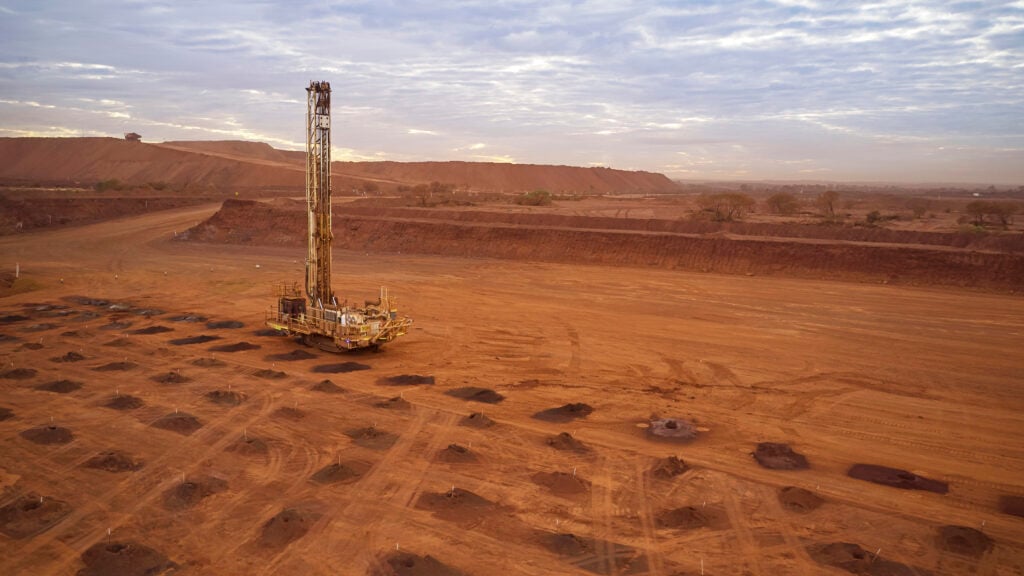
James Costello, CEO of EORA Energy, argues that long-duration vanadium redox flow battery storage is critical to Western Australia’s decarbonisation efforts, particularly for remote mining operations.
Australia stands at a defining moment in its energy transition, in which Western Australia is the state leading the charge ahead.
With vast mineral wealth, globally significant export industries and some of the most remote industrial operations on earth, Western Australia faces a unique decarbonisation challenge, one that cannot be solved by renewable energy generation alone.
The next phase of progress will depend on how effectively energy is stored, dispatched and managed. That is where long-duration energy storage comes to the fore.
Try Premium for just $1
- Full premium access for the first month at only $1
- Converts to an annual rate after 30 days unless cancelled
- Cancel anytime during the trial period
Premium Benefits
- Expert industry analysis and interviews
- Digital access to PV Tech Power journal
- Exclusive event discounts
Or get the full Premium subscription right away
Or continue reading this article for free
Across Western Australia’s mining regions and remote communities, diesel generation remains the backbone of energy supply. It’s reliable, but increasingly expensive, carbon-intensive and exposed to supply chain volatility.
While renewable energy is rapidly expanding, intermittency continues to limit its full potential in off-grid and fringe-of-grid environments. To bridge that gap, scalable, resilient storage solutions are required that can operate in real-world conditions.
Long-duration energy storage (LDES) is not a future concept, but a practical, deployable reality today. In particular, vanadium redox flow battery (VRFB) systems offer a compelling pathway for Western Australia’s unique energy landscape.
Unlike conventional lithium-ion batteries, VRFB systems are designed for long-duration discharge, often exceeding 10 hours, making them ideally suited to stabilising renewable energy generation and reducing reliance on diesel over extended periods. They are also inherently safer, more durable, and capable of operating in extreme temperatures, which is critical for remote Western Australia conditions.
There is a clear and immediate opportunity to improve efficiency and reduce costs across remote operations, and models can deliver a practical solution that can be implemented without operational risk. However, technology alone is not enough. What matters is how it is applied.
One of the biggest barriers to decarbonisation in heavy industry is not a lack of willingness; it is risk. Mining operators cannot afford disruptions to power supply. Any transition must protect operational continuity. That is why a hybrid approach (optimising rather than immediately replacing diesel) is so important.
By integrating long-duration storage behind the meter, alongside existing generation assets, operators can begin reducing diesel consumption from day one. This approach delivers immediate emissions reductions, lowers fuel costs and enhances energy resilience without requiring complex system overhauls. This is a pragmatic pathway and one that aligns commercial realities with sustainability goals.
Importantly, this model also aligns with several of the priorities outlined under the Western Australian Clean Energy Future Fund. The programme is designed to support projects that deliver meaningful emissions reductions, strengthen energy security and demonstrate innovative technologies in real-world applications.
Long-duration energy storage ticks all of these boxes. In remote and fringe-of-grid locations, it can significantly improve the reliability and stability of electricity supply. It enables greater penetration of renewables, supports the electrification of mining and industrial processes and plays a critical role in reducing dependence on diesel generation.
Just as importantly, it creates an opportunity to build new value chains. Vanadium, one of the key inputs for VRFB systems, is a resource in which Australia holds a natural advantage. By linking battery deployment with local processing and manufacturing, states such as Western Australia can move further up the value chain, supporting jobs, regional development and export opportunities in low-emissions technologies.
This aligns with the broader ambition of using clean energy to add value to the State’s mineral resources – an ambition strongly supported by policymakers and the Western Australian government.
There is also a critical social dimension. Many of the regions most impacted by energy transition are also home to Aboriginal communities. Ensuring these communities are genuine participants through employment, ownership opportunities and shared benefits is essential to delivering sustainable outcomes. Energy infrastructure should not just power communities; it should empower them.
The window to accelerate decarbonisation while strengthening economic resilience is open, but it will not remain so indefinitely. Programmes like the Clean Energy Future Fund play a vital role in de-risking early-stage deployment and enabling innovative projects to move from concept to reality.
These projects must be grounded in practical delivery. Western Australia does not need theoretical solutions. It needs technologies that can be deployed at scale, in harsh environments, delivering measurable outcomes in the near term. Long-duration battery storage is one such solution.
By supporting its rollout across mining, industrial and remote energy systems, Western Australia has the opportunity to lead not just nationally, but globally, in the transition to reliable, low-emissions energy.
The foundations are already in place: world-class resources, strong industry capability and a clear policy direction led by the Western Australian government. The next step is to bring these elements together through targeted investment, collaborative partnerships and a shared commitment to innovation.
If all of this comes together correctly, Western Australia will not only decarbonise its own economy, but help power the national transition across the rest of Australia – and internationally as well.
You can find out more about VRFBs on Energy-Storage.news, including an exclusive interview with Perth-headquartered vanadium flow battery company AVESS Energy regarding Western Australia’s 500MWh (10-hour duration) VRFB energy storage project.
About the Author
James Costello is CEO and co-founder of the newly established vanadium flow battery player Eora Energy. The company launched in Australia on 2 April, aiming to deploy VRFB systems across mining operations, data centres and regional infrastructure. Through an international partner network, Eora aims to combine global manufacturing capabilities and deep R&D with 40+ years of Australian innovation via the University of New South Wales, and local leadership, engineering and regulatory expertise.