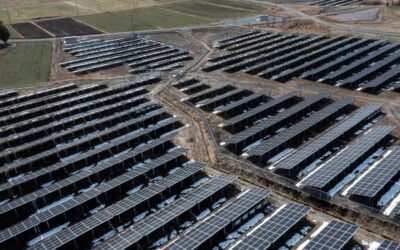
Private equity firm Partners Group has invested in ‘green flexibility’, a BESS platform in Germany, with an initial equity commitment of €400 million (US$411 million).
With the equity commitment and complementary debt financing, green flexibility will have over €1 billion to invest in its pipeline of battery energy storage system (BESS) projects in Germany, some of which are already under construction.
The firm specialises in developing and operating large-scale BESS for stabilising the grid and reducing curtailment, and it aims to establish itself as a leading independent flexibility provider (IFP) by monetising its storage capacity through long-term contracts. It said it will benefit from growth trends in Germany, which now has 100GW of PV online and aims to more than double that by 2030.
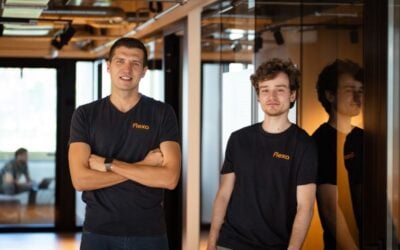
Green flexibility was founded by CEO Christoph Ostermann. He was one of the founders of sonnen, the virtual power plant (VPP) aggregator where he spent ten years until 2021, and is also on the board of numerous Germany clean energy technology firms including solar PV manufacturer 1KOMMA5 and flexibility services provider Esforin.
Try Premium for just $1
- Full premium access for the first month at only $1
- Converts to an annual rate after 30 days unless cancelled
- Cancel anytime during the trial period
Premium Benefits
- Expert industry analysis and interviews
- Digital access to PV Tech Power journal
- Exclusive event discounts
Or get the full Premium subscription right away
Or continue reading this article for free
Commenting on the deal, Ostermann said: “Long-term reliability, the highest safety standards, and the
best technology are critical—because the energy transition needs stability and dependability. And for this, we have assembled the most experienced team in the market.”
The firm’s commercialisation strategy appears similar to that which is conventional in the Dutch market, where BESS projects are rented out in slices to different parties to use that flexibility (explained in a recent Premium article).
Shift in profile of owner-operators in German BESS market
The announcement speaks to an evolution and maturation in the types of companies driving the deployment of large-scale BESS projects in Germany.
When Energy-Storage.news did a deep-dive into the German BESS market in 2022, the main companies that had deployed or were building large-scale BESS were legacy utilities and independent power producers (IPPs) like RWE and LEAG. A big challenge highlighted by one market source back then was simply a lack of companies investing in and building BESS.
Since then, clean energy developer-operators like Gore Street Capital, Aquila Clean Energy, Nofar Energy have entered the market while new, BESS specialists like green flexibility, Eco Stor, and Terralyr have entered the scene too. Eco Stor has been around for several years, but only recently shifted to owning its own operational projects, having mainly done engineering, procurement and construction (EPC) previously.
The German market is also evolving in numerous other ways. In a recent post on LinkedIn post, system integrator Fluence’s Lars Stephen pointed to the first GWh-scale projects soon coming online, 4-hour systems coming to market, saturating still not hitting the market and DSOs increasingly opting for BESS as four major trends for 2025.