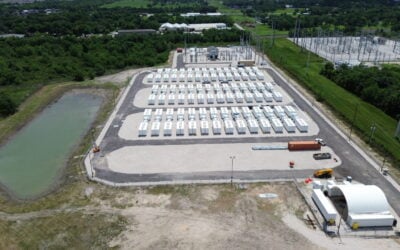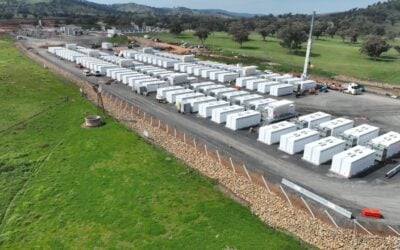
US renewable energy company Ormat Technologies has won a tender for 15-year tolling agreements for two energy storage facilities with a combined capacity of 300MW/1,200MWh.
The tolling agreements were awarded by the Israeli Electricity Authority for projects developed in partnership with Allied Infrastructure. Ownership of the two projects will be split 50/50 between Allied and Ormat.
The companies are in advanced stages of obtaining the interconnection for the two projects, and the necessary land use permits ahead of starting construction. Commercial operation date (COD) is expected in 2028. The tolling agreement includes an option for termination of the initial contract and move to participation in the merchant market.
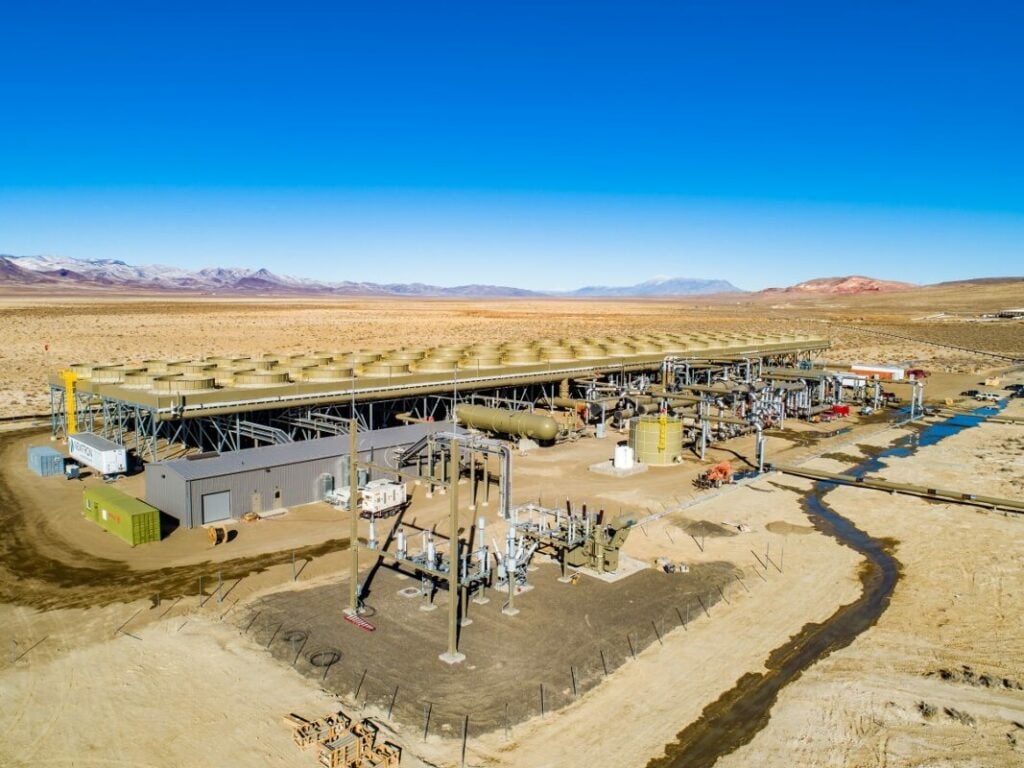
Ormat operated for years primarily as a geothermal energy company but diversified into solar PV and more recently into battery storage, entering the market via the 2017 acquisition of storage developer Viridity Energy for around US$35 million.
Try Premium for just $1
- Full premium access for the first month at only $1
- Converts to an annual rate after 30 days unless cancelled
- Cancel anytime during the trial period
Premium Benefits
- Expert industry analysis and interviews
- Digital access to PV Tech Power journal
- Exclusive event discounts
Or get the full Premium subscription right away
Or continue reading this article for free
The company stated in 2022, its aim to become one of the US storage sector’s leaders, with a growth target of between 468% and 502% in megawatts by 2025 in energy storage, while its ambitions for geothermal, a much more difficult sector in which to develop new facilities quickly, is between 21% and 24%.
Recently, Ormat commenced commercial operations for a 20MW/20MWh battery energy storage system (BESS) in New Jersey, a 80MW/320MWh BESS in California’s Central Valley and announced a 15-year energy storage service agreement (ESSA) with SDCP for its 20MW/40MWh BESS project in Los Angeles
Israel has a policy goal of sourcing 30% of its electricity from renewables by 2030. As much as 8GWh of energy storage may be required to enable Israel’s policy aim, although more recent figures from the Israeli Green Energy Association put that at closer to a likely 10GWh of required storage.
In 2023, the Electricity Authority of Israel (PUA) introduced a supplementary tariff for distributed solar PV facilities that use energy storage to manage demand on the grid. The tariff allows, in theory, existing network resources to be used more efficiently, by encouraging the use of energy storage so that solar-generated power can be shifted to night-time hours when demand is low.
It applies to distributed solar generation facilities used for onsite self-consumption and feeding surplus power into the grid. Solar PV and energy storage facilities that share a single metered connection point to the grid are also eligible.
In January 2024, the electricity market in Israel was fully liberalised, lessening government restrictions and in concept, being controlled through supply and demand.
Renewable energy firm Enlight commissioned two solar-plus-storage projects in Israel around the same time, totalling 71MWh of energy storage capacity.
Doron Blachar, CEO of Ormat Technologies said of the tenders: “These energy storage contracts mark the Company’s first owned project in Israel, and we look forward to continuing to work with Allied as Ormat’s capabilities and assets will now help drive Israel’s efforts to achieve its renewable energy and energy continuity goals.”