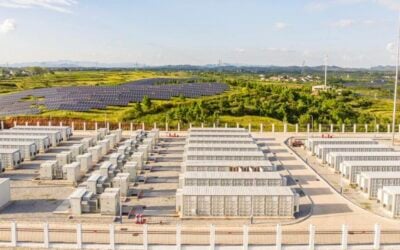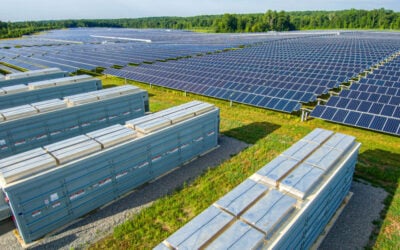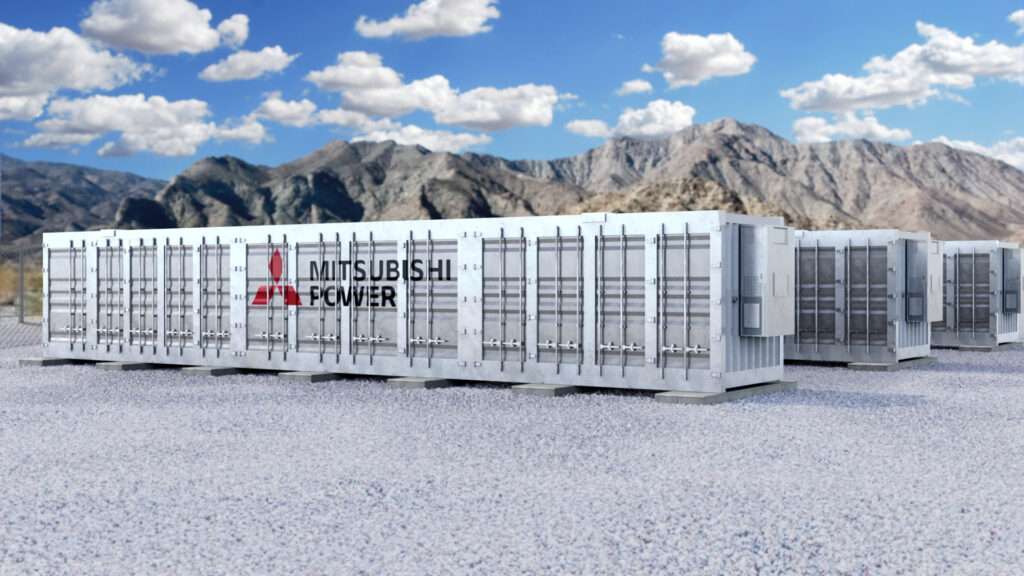
Developer Origis Energy has started building three solar-plus-storage projects in Mississippi, US, with battery energy storage systems (BESS) totalling 150MW supplied by Mitsubishi Power Americas.
The projects are co-owned by the Tennessee Valley Authority (TVA), a Knoxville-headquartered power utility with which Origis has signed power purchase agreements (PPAs) for the planned capacity. Origis will develop, construct and operate the plants.
The first project expected to reach commercial operations is the 150MW/50MW Golden Triangle II solar-plus-storage project, which is forecast to be online in Spring 2024. Golden Triangle I, a 200MW/50MW site is expected online in Summer 2024; both projects are in Lowndes County. The third project – ‘Optimist’ – is a 200MW/50MW solar-plus-storage site in Clay County expected online in mid-2025.
Origis said that the projects represent the largest battery storage portfolio and the largest under-construction solar portfolio in Mississippi.
Try Premium for just $1
- Full premium access for the first month at only $1
- Converts to an annual rate after 30 days unless cancelled
- Cancel anytime during the trial period
Premium Benefits
- Expert industry analysis and interviews
- Digital access to PV Tech Power journal
- Exclusive event discounts
Or get the full Premium subscription right away
Or continue reading this article for free
Around 1.5 million solar modules will be deployed across the sites, with construction support provided by REC. Mitsubishi Power Americas will supply the battery energy storage systems (BESS).
They are most likely the same three totalling 150MW/600MWh that Mitsubishi Power Americas announced it was providing for Origis for projects in the “Southeast US”, back in December last year, reported by Energy-Storage.news at the time.
They will utilise the firm’s Emerald solution, a lithium iron phosphate (LFP) based BESS product with up to six hours’ duration. They will also utilise Mitsubishi Power’s Emerald Integrated Plant Controller, its energy management system (EMS), and its Supervisory Control and Data Acquisition (SCADA) system to control the BESS.
Energy-Storage.news interviewed Mitsubishi Power Americas’ senior VP energy storage Thomas Cornell last year, while its VP business development for the division Mike McManus recently told us the firm was “enthusiastic” about the potential of domesticating production to capture the 10% bonus domestic content adder to the investment tax credit (ITC).