UK needs 80GW of solar and up to 30GW of energy storage to meet net zero targets

September 14, 2020
LinkedIn
Twitter
Reddit
Facebook
Email
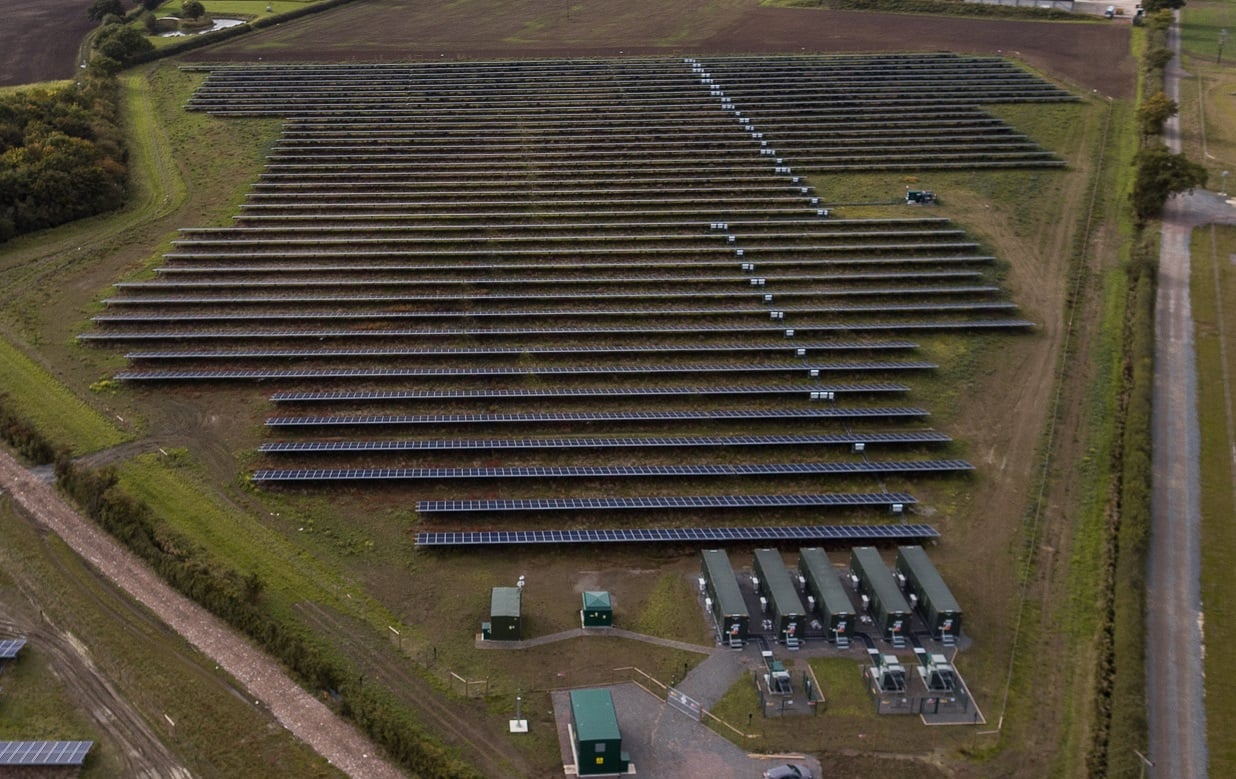
Clayhill, a solar farm with colocated battery storage, developed and built without subsidies in the UK. Image: Anesco.

The UK will need to deploy 80GW of solar to meet net zero according to a new whitepaper from consultancy Atkins.

The white paper looked into the capacity of each generation type needed to meet net zero, as well as the rate of deployment.

It found that 80GW of solar would be needed at a run rate of 2.67GW/yr, however the run rate in 2019 came in at just 0.26GW/yr for solar PV, only 10% of the target outlined by Atkins.

The whitepaper pointed to the 257MW of total new solar capacity in 2019, of which 81.9MW was in large installations. It went on to praise the technology for being simple in engineering terms, having low development costs and responding quickly to changes in the subsidy regime, stating it is possible to accelerate deployment.

This article requires Premium SubscriptionBasic (FREE) Subscription

Try Premium for just $1

  • Full premium access for the first month at only $1
  • Converts to an annual rate after 30 days unless cancelled
  • Cancel anytime during the trial period

Premium Benefits

  • Expert industry analysis and interviews
  • Digital access to PV Tech Power journal
  • Exclusive event discounts

Or get the full Premium subscription right away

Or continue reading this article for free

It also outlined how 15-30GW of battery storage would also be required for net zero, helping to mitigate the intermittency of solar PV as well as wind. According to the whitepaper, more solar is required than wind, with Atkins stating that 75GW of offshore wind at 2.5GW/yr is needed and 20GW onshore wind at 0.67GW/yr.

To read the full version of this story, visit Solar Power Portal.
15 April 2026
Milan Marriott Hotel, Italy
Solarplus Europe 2026 marks the evolution of Europe’s longest-running solar conference, reflecting the industry’s transition from standalone PV to fully integrated solar-plus-storage and hybrid energy systems. Taking place in Milan, the Summit will unite developers, investors, policymakers, and technology leaders to explore how Europe can deliver firm, flexible, and bankable renewable power at scale. With a sharp focus on system integration, storage deployment, hybrid project design, and market-ready business models, Solarplus Europe provides the platform for shaping the next phase of the continent’s solar and clean power build-out.
13 October 2026
London, UK
Now in its second edition, the Summit provides a dedicated platform for UK & Ireland’s BESS community to share practical insights on performance, degradation, safety, market design and optimisation strategies. As storage deployment accelerates towards 2030 targets, attendees gain the tools needed to enhance returns and operate resilient, efficient assets.

Read Next

February 20, 2026
A flurry of BESS project news from big-name players in Western Europe in the run-up to the Energy Storage Summit next week, with Neoen, Statkraft, Zenobē and Infranode moving projects forward in Germany, Ireland, the UK and Denmark. Highlights include a 15-year toll between Drax and Zenobē, and multiple 4-hour duration systems.
February 18, 2026
More needs to be done to cement energy storage’s vital role in European energy resilience, writes Teresa Casacchia, head of storage at Baywa r.e.
February 18, 2026
Australia’s Clean Energy Council has said that 2025 saw as many battery energy storage systems commissioned as in the last 8 years combined.
February 16, 2026
The UK just saw its biggest year of grid-scale battery storage deployments, but planning barriers “threaten to stall momentum,” according to one expert.
February 16, 2026
Vietnam is confronting barriers to energy storage deployment, setting an example for the wider ASEAN region, writes Sunita Dubey.