UK energy storage investor Gresham House ‘optimistic’ despite COVID-19 impact on share price

September 3, 2020
LinkedIn
Twitter
Reddit
Facebook
Email
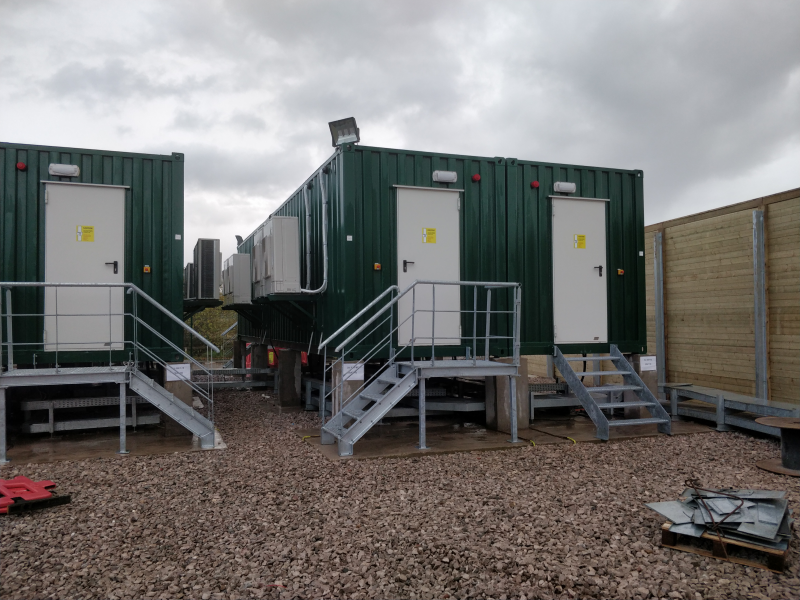
The 49MW Red Scar battery, acquired by Gresham in January as part of its push to grow its portfolio. Image: Gresham House Energy Storage Fund.

Gresham House Energy Storage Fund (GRID), one of two dedicated energy storage investment funds listed on the London Stock Exchange, has seen its Net Asset Value (NAV) per share fall £0.026 (US$0.035) as a result of COVID-19 over the first half of 2020.

According to the company’s half-year results, released 1 September, its NAV was £230 million, or £0.9816 per share. This is flat of a total return basis, and its share price return sits at 4% for the period and 15.6% since its inception. Its weighted average discount rate also remained largely unchanged at 11.1%.

GRID has paid or declared total dividends of £0.035 for January to June, which is an increase of £0.025 from the same period in 2019. It expects dividends to be fully cash covered in 2021.

The company stated that the impact of COVID-19 remained low, and despite some slowdown in connections for a couple of projects it remains optimistic.

This article requires Premium SubscriptionBasic (FREE) Subscription

Try Premium for just $1

  • Full premium access for the first month at only $1
  • Converts to an annual rate after 30 days unless cancelled
  • Cancel anytime during the trial period

Premium Benefits

  • Expert industry analysis and interviews
  • Digital access to PV Tech Power journal
  • Exclusive event discounts

Or get the full Premium subscription right away

Or continue reading this article for free

John Leggate CBE, chair of GRID said it was helping to meet the UK’s “challenge to rapidly expand storage capacity” over the coming years.

To read the full version of this story, visit Solar Power Portal.
13 October 2026
London, UK
Now in its second edition, the Summit provides a dedicated platform for UK & Ireland’s BESS community to share practical insights on performance, degradation, safety, market design and optimisation strategies. As storage deployment accelerates towards 2030 targets, attendees gain the tools needed to enhance returns and operate resilient, efficient assets.

Read Next

February 11, 2026
Germany’s BESS market is booming but is still far behind what it is needed for its energy transition. 2026 will be a key year in this regard with several key regulatory questions potentially clarified, writes energy transition comms executive Frederik König.
February 11, 2026
Netherlands-based iron-air long-duration energy storage (LDES) startup Ore Energy has completed a grid-connected pilot of its 100-hour iron-air LDES system at EDF Lab les Renardières in France.
Premium
February 11, 2026
Owner-operator Fidra Energy came out of virtually nowhere to be building one of Europe’s largest BESS in the UK, the 1.4GW/3.1GWh Thorpe Marsh project. We catch up with CEO Chris Elder, about its strategy and projects but also broader BESS and clean energy financing trends.
February 10, 2026
Energy infrastructure platform Revera Energy has completed an expanded US$150 million credit facility to accelerate development and construction of its battery storage, solar, and green hydrogen project pipeline across Australia and the UK.
February 9, 2026
Europe’s energy storage market has hit a turning point. What was once a scattered, early-phase market featuring pilot projects and daring developers has swiftly evolved into a dynamic, capital-intensive infrastructure sector, writes Wood Mackenzie research associate Cecilie Kristiansen.