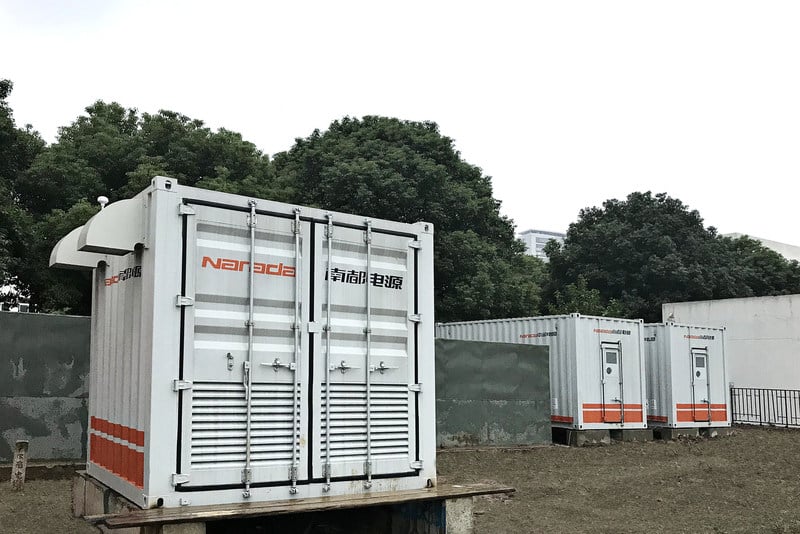
Narada Power, which makes batteries and complete energy storage systems as well as acting as a project system integrator, is establishing a subsidiary for the recycling of lithium-ion batteries.
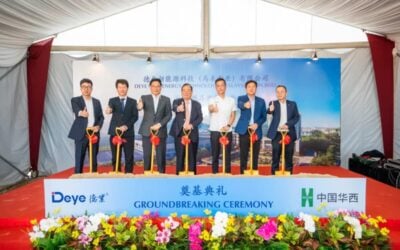
Hangzhou, China-headquartered Narada uses various types of lead acid and lithium batteries in its storage systems, as well as developing other technologies like fuel cells, announced via its Chinese language website last week that it is establishing the subsidiary, Anhui Narada Huabo New Material Technology.
According to Narada, ¥100 million (US$15.07 million) has been invested already in setting up the new company. Anhui Narada Huabo New Material Technology will “carry out lithium recycling and new materials business and to open up the lithium battery industry chain”.
The company said it was important to recycle batteries and materials not just for corporate social responsibility reasons, but as an integral part of creating a sustainable long-term supply chain to the rapidly expanding electric vehicle (EV) and stationary energy storage markets.
Try Premium for just $1
- Full premium access for the first month at only $1
- Converts to an annual rate after 30 days unless cancelled
- Cancel anytime during the trial period
Premium Benefits
- Expert industry analysis and interviews
- Digital access to PV Tech Power journal
- Exclusive event discounts
Or get the full Premium subscription right away
Or continue reading this article for free
While lead-based batteries contain toxic materials, the recycling chain for these more conventional batteries is well-established, with even small household batteries routinely recycled in almost every part of the world.
However, as Energy-Storage.News heard this summer from battery and energy storage expert Dr Mathias Vetter of Fraunhofer ISE, more and more questions are being asked about the sustainability and ecological footprint of lithium batteries. To date the market for advanced batteries has mainly focused on recycling or recovering “expensive additives” like cobalt, most of which is currently sourced from the Democratic Republic of Congo. These efforts have mostly been concentrated in the market for smaller devices, like laptops and mobile telephones.
“But if we are looking now on this mass market [for] stationary applications as well as electro-mobility, we have to see that also we need recycling for the lithium itself and the other additives,” Vetter said.
“It’s still kind of a topic for R&D and we [Fraunhofer and partners] have established programmes in this field, but [it’s] also [a topic for] the industrial sector and I would say it’s only a question of time by which we see recycling capabilities in the market.”
Narada said it hopes to quickly create new business opportunities from recycling, creating new products and services, which could “enhance the company’s core competitiveness and sustained profitability”.