Japanese utility/grid operator Tokyo Electric Power Company (TEPCO) has invested half a million pounds (US$624,000) into UK residential energy storage system provider Moixa.
TEPCO announced last week that it had made the equity investment. Moixa CEO Simon Daniel told Energy-Storage.News today that it was “encouraging” that an international utility was essentially “validating” Moixa’s “hybrid play of mass market system and platform”.
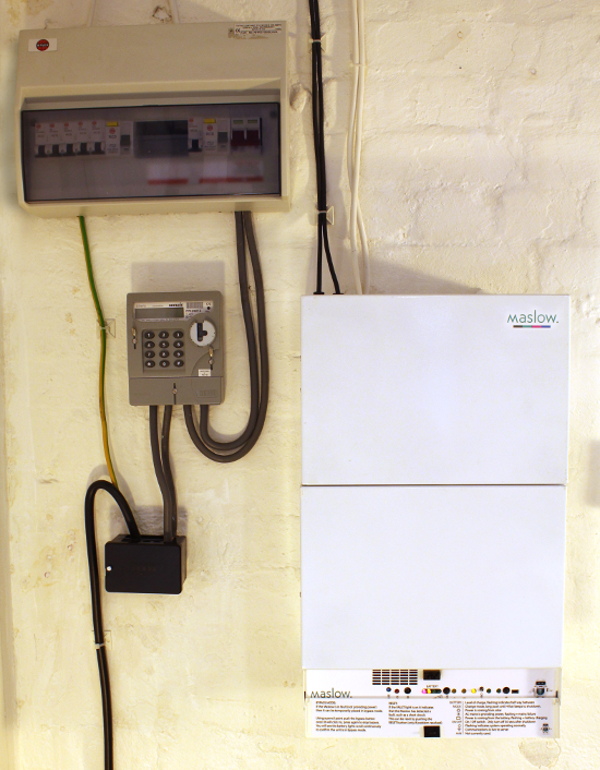
Moixa has sought to differentiate itself in the UK market on two main fronts. The first is that their standard battery storage systems are designed to be easy to mass produce and to install, as well as being smaller (standard 2kWh) than many other storage units. In other words they are cheaper, more mass market devices than, say, Tesla’s Powerwall. In a 2015 guest blog for Energy-Storage.News, Daniel blogged on why Moixa felt the optimal system for the UK would combine 1.6kWp of solar with 2kWh of energy storage.
Secondly, Moixa, through its GridShare programme and other pilots, is already aggregating the capabilities of fleets of units to provide grid services. The company reached 1MWh of connected systems in one network, across 500 units, in 2015 and has been participating in numerous trials and pilot projects since.
Try Premium for just $1
- Full premium access for the first month at only $1
- Converts to an annual rate after 30 days unless cancelled
- Cancel anytime during the trial period
Premium Benefits
- Expert industry analysis and interviews
- Digital access to PV Tech Power journal
- Exclusive event discounts
Or get the full Premium subscription right away
Or continue reading this article for free
TEPCO’s Hirokazu Yamaguchi said the UK tech company joins the utility’s “modest but growing portfolio of innovative startups”.
“Moixa has developed a robust battery storage and smart energy-sharing platform. We look forward to gaining hands-on experience for the benefit of our customers,” Yamaguchi, who is TEPCO’s general manager for global innovation and investments, said.
TEPCO is one of Japan’s 10 regional power companies. The country’s electricity supply has been the preserve of those companies for decades, with each of them also responsible for the operation and upkeep of the grid in their respective service areas. “Unbundling” transmission and distribution from generation is the ultimate aim of currently ongoing electricity market liberalisation efforts in Japan, which should give consumers better choices of energy provider. Japan was until recently the third largest solar market in the world – recently overtaken by India – and many domestic solar manufacturers including Panasonic, Toshiba and Sharp make their own residential energy storage systems to sell in Japan.