Huawei launches LG Chem-compatible residential smart energy system in Australia

By Mark Osborne
February 1, 2018
LinkedIn
Twitter
Reddit
Facebook
Email
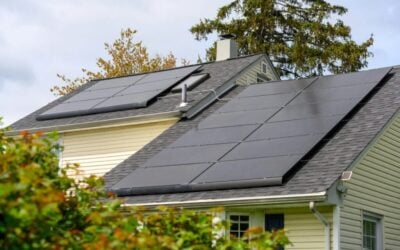
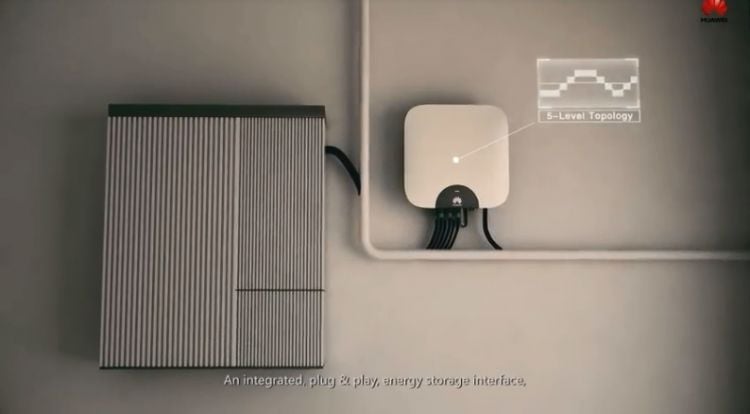
Huawei’s FusionHome solution, with connected LG Chem battery on left. Image: Huawei.

Chinese electronics and engineering company Huawei, which also manufacturers inverters for solar PV systems, is starting the supply of its FusionHome Smart Energy Solution, providing solar-plus-storage capabilities to the Australian residential market during the first quarter of 2018.

Huawei’s FusionHome Smart Energy Solution was officially launched in June 2017 at Intersolar Europe and is compatible with LG Chem’s lithium stationary energy storage batteries.

Steven Zhoutao, General Manager for Huawei’s Smart PV Business Residential Solution, says: “We believe we will contribute our expertise to the residential market, better develop the residential solar technology and provide strong support for a sustainable development and technical advancements of the global PV market.”

Huawei has focused on string inverters used in utility-scale and commercial and industrial applications until the debut of its first residential product offering last year, which has since undergone rigorous testing and refinements before the product is to be rolled-out across many key residential markets across the world.

This article requires Premium SubscriptionBasic (FREE) Subscription

Try Premium for just $1

  • Full premium access for the first month at only $1
  • Converts to an annual rate after 30 days unless cancelled
  • Cancel anytime during the trial period

Premium Benefits

  • Expert industry analysis and interviews
  • Digital access to PV Tech Power journal
  • Exclusive event discounts

Or get the full Premium subscription right away

Or continue reading this article for free

17 March 2026
Sydney, Australia
As we move into 2026, Australia is seeing real movement in emerging as a global ‘green’ superpower, with energy storage at the heart of this. This Summit will explore in-depth the ‘exponential growth of a unique market’, providing a meeting place for investors and developers’ appetite to do business. The second edition will shine a greater spotlight on behind-the-meter developments, with the distribution network being responsible for a large capacity of total energy storage in Australia. Understanding connection issues, the urgency of transitioning to net zero, optimal financial structures, and the industry developments in 2026 and beyond.

Read Next

January 6, 2026
An energy storage subsidiary of Waaree Energies has raised INR10 billion (US$110.9 million) for a planned manufacturing plant in India.
January 6, 2026
The Australian Energy Regulator (AER) has confirmed that 244 community battery energy storage systems (BESS) are now connected to the country’s distribution networks.
January 6, 2026
Technology provider Dalian Rongke Power (Rongke Power) and infrastructure developer China Three Gorges Corporation (CTG) have brought online the world’s first gigawatt-hour-scale flow battery energy storage project.
January 6, 2026
In this blog, Kashish Shah, market development manager at Wärtsilä Energy Storage, argues that Australia’s complex battery storage market makes full-scope integration the most viable path for successful project delivery.
January 6, 2026
Atmos Renewables and Potentia Energy have secured financing packages for their Australian renewables and energy storage portfolios.