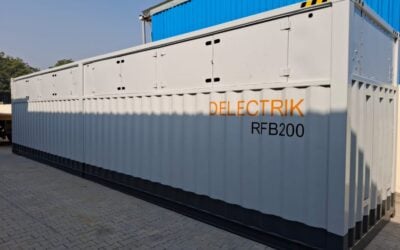
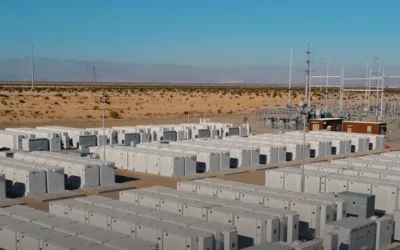
Battery storage has dominated the outcome of the National Grid’s 200MW Enhanced Frequency Response (EFR) tender, with the technology to be used for balancing services at grid scale for the first time in the UK.
National Grid received bids from 37 providers which were whittled down to just eight tender winners. The majority of the bids were for battery assets and of the 64 unique sites taking part, 61 are for this technology, while just two are for demand reduction and one from thermal generation.
The winning tenders have been awarded to:
EDF Energy Renewables (40MW)
Try Premium for just $1
- Full premium access for the first month at only $1
- Converts to an annual rate after 30 days unless cancelled
- Cancel anytime during the trial period
Premium Benefits
- Expert industry analysis and interviews
- Digital access to PV Tech Power journal
- Exclusive event discounts
Or get the full Premium subscription right away
Or continue reading this article for free
Vattenfall (22MW)
Low Carbon – two projects (10MW & 40MW)
E.ON UK (10MW)
Element Power (25MW)
RES (35MW)
Belectric (10MW)
Contracts have been awarded on a four year term which National Grid says will give providers the certainty that they need to develop the technology.
Cordi O’Hara, director of UK System Operator, National Grid said: “We are constantly looking to the future to understand how we can make the most of the energy available to us. This project is at the very core of our Power Responsive work, to balance the Grid by the most efficient means possible, saving money and energy.
“These awards show that we can work with industry to bring forward new technology and I believe storage has much to contribute to the flexible energy system of tomorrow. This is the beginning of an exciting new chapter for the industry.”
The EFR tender was developed to bring forward new technologies to provide sub-second response solutions to system volatility, improving on the previous fastest frequency response which could be delivered in under ten seconds.
This enhanced ability to control variations in frequency almost immediately is expected to result in reduced costs of approximately £200 million and streamline services to make them as efficient as possible, meaning reduced costs for the end consumer.
The speed of response is also critical to counteracting the loss of system inertia, which relates to how well the grid resists changes and is affected by increased levels of renewables on the grid.
This is an ongoing story with more coverage to follow.