Covering the energy storage market has been an interesting – if occasionally bumpy – ride so far and we can expect it to be an even more vibrant and action-packed space from here on in. From the top five most-read news stories to some great interviews via our regular guest blogs, we’ve rounded up some highlights from our year.
In the second part of his exploration of the areas of the world taking a lead in supporting the deployment of storage, Andy Colthorpe looks at Germany, Japan and Puerto Rico.
Parallels are frequently drawn between the nascent energy storage business and solar 10 years ago – that it needs strong policy direction to take off. Andy Colthorpe profiles some of the areas emerging as world pioneers in supporting the deployment of storage.
The growth of technologies such as PV and storage will hit utility company revenues to the tune of US$130 billion a year within a decade, according to a study published yesterday by management consultancy Accenture.
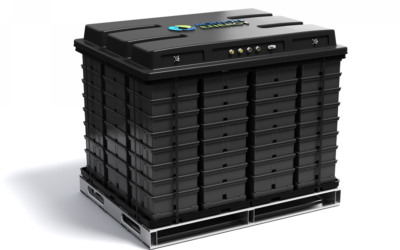
Energy storage specialist Imergy Power Systems has announced that its vanadium flow batteries will be used at a “smart micro-grid” demonstration project hosted by the US Navy.
The increased growth in urbanisation is putting a strain on our energy, transportation, water, buildings and public spaces, so solutions need to be found which are ‘smart’, i.e. both highly efficient and sustainable on the one hand, as well as generating economic prosperity and social wellbeing on the other.
Imergy Power Systems, the California-based energy storage specialist, has received an order for four of its ESP5 vanadium flow batteries from Hawaiian renewables firm, Energy Research Systems.
US battery and energy storage system manufacturer Aquion Energy has closed a US$36.8 million financing round, which it will use for purposes including scaling up production and deploying storage projects internationally.
US utility company Southern California Edison (SCE) has announced that it will procure 261MW of grid-connected storage capacity from a handful of suppliers, after a competitive solicitation process.