Four projects have been selected in Peninsular Malaysia’s first programme to build large-scale battery energy storage system (BESS) facilities.
Bidders were shortlisted from 28 applications received by the Southeast Asian country’s Energy Commission (Suruhanjaya Tenaga, ST) in the inaugural Malaysia Battery Energy Storage System (MyBeST) programme competitive solicitation, which launched in November 2024.
ST was seeking four grid-connected BESS projects to award, each of 100MW/400MWh for an aggregate 400MW of power output and 1,600MWh energy storage capacity under the auction programme, to be commissioned in 2027.
Shortlisted bidders are as follows:
Try Premium for just $1
- Full premium access for the first month at only $1
- Converts to an annual rate after 30 days unless cancelled
- Cancel anytime during the trial period
Premium Benefits
- Expert industry analysis and interviews
- Digital access to PV Tech Power journal
- Exclusive event discounts
Or get the full Premium subscription right away
Or continue reading this article for free
- A consortium of Blueleaf Energy and Universal Peak
- A consortium of ERS Energy and Gamuda Berhad
- ERS Energy
- Leader Energy
Shortlisted bids were announced on 19 December 2025, with ST noting that the country’s largest competitive open bidding programme for grid-scale BESS attracted “strong interest”.
While details of bids were not disclosed in an energy commission statement, ST did note that each of the four bidders proposed a different battery technology supplier. This would provide an opportunity to assess the “suitability, actual performance and operational characteristics of a diversity of BESS configurations under Peninsular Malaysia’s distinct grid and climatic conditions.”
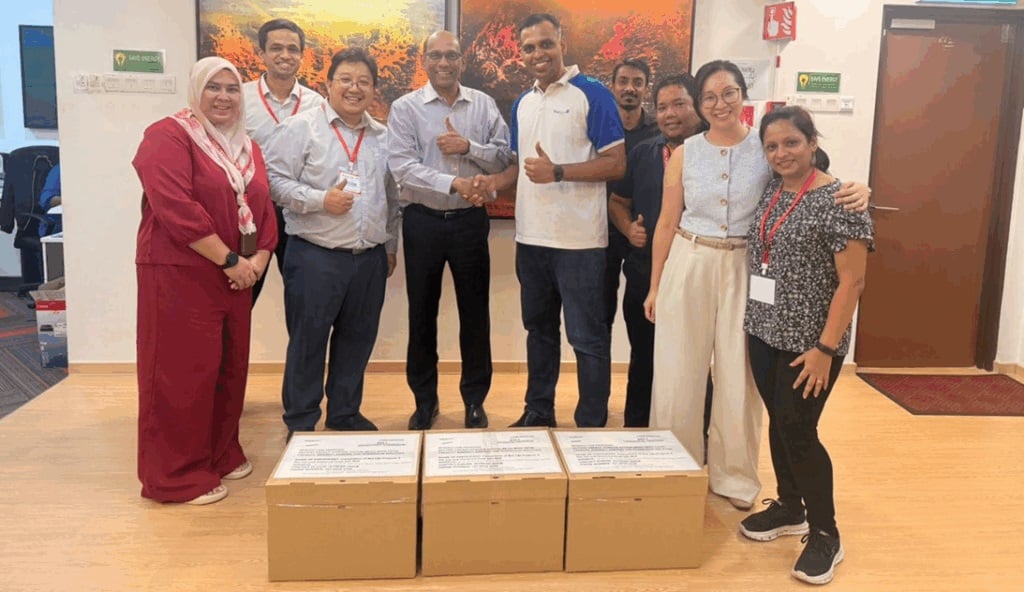
Raghuram Natarajan, CEO of Blueleaf Energy, a Singapore-headquartered renewable energy developer owned by a Macquarie Asset Management-managed fund, said the company’s consortium with Malaysian electrical solutions provider Universal Peak was “honoured to be selected by the Energy Commission for this landmark programme.”
Each bidder will build, own and operate their project and Blueleaf Energy noted in an announcement on 6 January that the BESS facilities will be able to provide diverse applications, including frequency regulation, energy shifting and peak demand management.
The MyBeST programme is being run in alignment with Malaysia’s 2023 National Energy Transition Roadmap (NETRA). Under the policy, Malaysia targets 70% installed renewable energy capacity by 2050, by which time the country could achieve net zero emissions.
The policy is also designed to attract inward investment from multinational companies into renewable energy development. Malaysia also has designs on becoming an exporter of renewable energy generation to neighbouring countries across the ASEAN region. One example of this is a planned 4GW solar PV complex with 5.12GWh of energy storage, which the World Bank recently committed to investing in.
Malaysia is adding grid stability ahead of renewable energy
Experts at energy research consultancy Aurora wrote in a primer on its website in June 2025 that MyBeST comes as Malaysia’s power sector is at a pivotal stage of transition, with 2.5GW of solar PV installed in Peninsular Malaysia by mid-2025 creating operational challenges to a grid which was originally designed for centralised, dispatchable generation.
In fact, although the adoption of variable renewable energy (VRE) has not yet reached a tipping point at which issues such as grid congestion, generation curtailment and supply-demand timing mismatches are causing widespread instability on the network, Aurora’s David Thoo and Patrick Tan said Malaysia is making a strategic shift to get ahead of the curve.
Although ST has not to date publicly released the official list of interconnection points for the four new BESS facilities, Aurora identified five Malaysian states with a high concentration of solar PV capacity awards through government programmes.
These could be useful indicators of where battery storage can offer the greatest value to the system and utilisation rates, due to the locational stress the hundreds of megawatts of new solar will introduce, Thoo and Tan wrote.
Malaysia’s first large-scale BESS project, also of 100MW/400MWh, was inaugurated late last year in Sabah, a state in the Malaysian part of Borneo, which, unlike Peninsular Malaysia, has a much smaller grid and base of dispatchable generation (through gas) resources to rely on.
In related news, Malaysia-headquartered ‘scalable technology and financial architecture platform’ company VCI Energy said earlier this week that it has entered a strategic collaboration with Chinese battery storage and new energy tech company Tianneng for the development of solar-plus-storage projects.
VCI Energy said on 5 December that it has appointed Tianneng as engineering, procurement and construction (EPC) and financing partner for up to 250MW of solar PV integrated with up to 800MWh of BESS, beginning with a project in Malacca, Malaysia.