“We need to allow the technology to show us what the most cost effective solution for is 10-20-hour duration energy storage is”, managing director of Adaptogen Capital James Mills says.
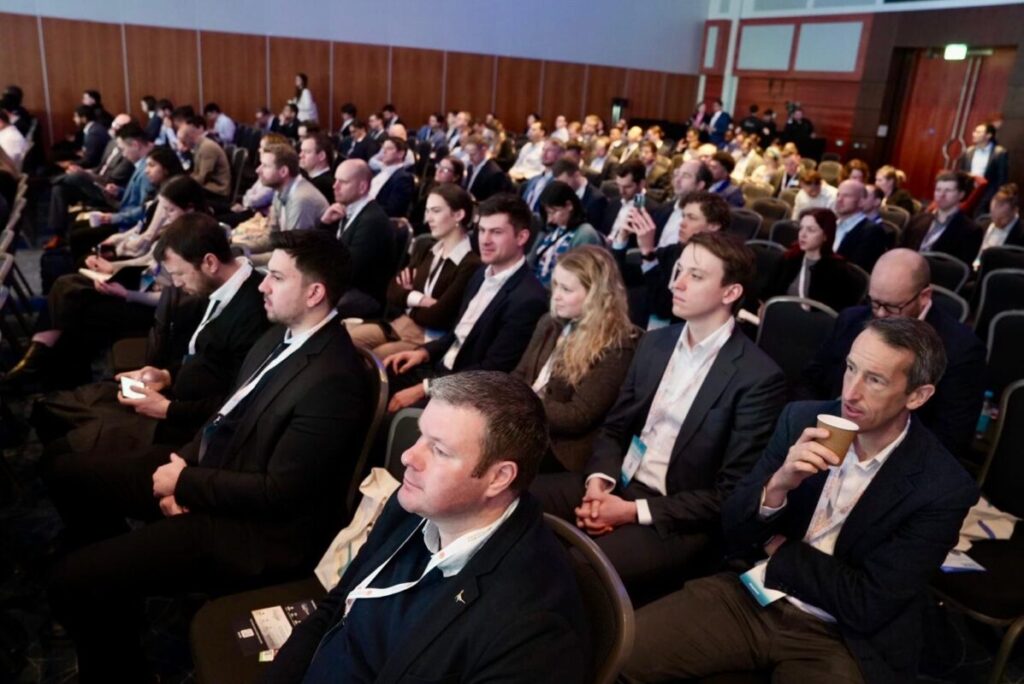
Speaking on a panel at the Energy Storage Summit in London today, Mills said that in the long term, storage and batteries are the “only way” to solve the “massively complex” green grid due to be established by 2040.
While governments are currently primarily focused on the clean power targets set for 2030, continuing on to meet legally binding 2050 carbon reduction targets will require significant battery storage deployment, the panel agreed.
Paul Wakely, head of strategic network development at the UK’s National Energy System Operator (NESO), said batteries are important “in all time scales—it is now part of our daily life in the energy system”.
Try Premium for just $1
- Full premium access for the first month at only $1
- Converts to an annual rate after 30 days unless cancelled
- Cancel anytime during the trial period
Premium Benefits
- Expert industry analysis and interviews
- Digital access to PV Tech Power journal
- Exclusive event discounts
Or get the full Premium subscription right away
Or continue reading this article for free
Florent Xavier, director of R&D partnership, valorization and transformation for French transmission operator Réseau De Transport D’Electricité (RTE), said flexibility to enable security of supply is the “main one” in France, where over 5GW flexibility is needed to support the network by 2030.
Meanwhile, David Noronha, head of future networks & strategic offshore planning for Irish grid operator EirGrid, said in Ireland long-duration energy storage (LDES) is crucial to supporting the network of the future, but for all storage it “boils down to location”; the impact storage brings is “dependent on its location in the network”.
This was also the opinion of Andy Willis, CEO and co-founder of UK-based battery energy storage developer Kona Energy. The focus, according to him, should be on developing storage, in the short and long term, in areas that it can solve constraints. To enable batteries to thrive in this scenario, though, Willis said there needs to be proper renumeration: “There is a locational need for batteries, but their value is not being realised.”
Mills took this on, noting that there are two key issues for the grid of 2040: massive constraint complexity and the volume of terawatt-hour duration that the system will need.
“I feel for the transmission owners the green grid of 2040 will be massively complex in a mathematical sense. I don’t think it can be solved from the centre, [the system] can only optimise itself and remain stable if you allow co-optimisation in real time through price.
“My vision is that we will end up with a system of massively distributed BESS at almost every gap.”
Longer duration lithium
Although duration will necessarily increase, Mills said that, cost-wise, it is most likely that this will be realised using lithium-ion battery technology in the most part. There is “no doubt” that the difference between the energy system of today and the system of 2030-40 will be that “we need to push battery storage into 10h+ duration”.
For Mills, this is entirely feasible: “The rate of change in BESS technology and the cost curve is extraordinary.”