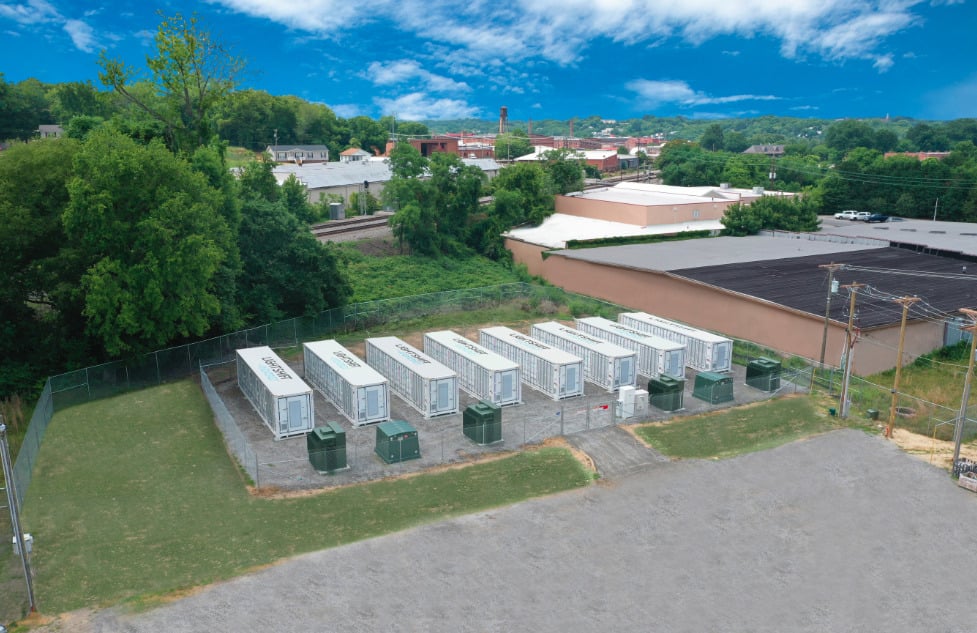
Storage developer and operator Lightshift Energy will deploy numerous distributed battery energy storage system (BESS) projects totalling 50MW for various utilities via the Massachusetts Municipal Wholesale Electric Company (MMWEC).
MMWEC, a joint action agency representing half of the municipal utilities in Massachusetts, chose Lightshift to build and operate the projects following competitive solicitation process launched in late 2022.
Lightshift described the portfolio as the state’s first jointly implemented fleet of BESS projects, and they will number at least 10. The BESS assets will help the utilities manage generation and load, decarbonise their grids and save costs, with a total saving of over US$200 million expected by 2050.
Four are under construction in the towns of Groton, Holden and Paxton for commercial operation this summer, late-stage development is underway for projects in the towns of Peabody, Shrewsbury, Wakefield, Chicopee, Ipswich and Princeton, and mid-stage development is ongoing for projects elsewhere. All will come online in 2024 and 2025.
Try Premium for just $1
- Full premium access for the first month at only $1
- Converts to an annual rate after 30 days unless cancelled
- Cancel anytime during the trial period
Premium Benefits
- Expert industry analysis and interviews
- Digital access to PV Tech Power journal
- Exclusive event discounts
Or get the full Premium subscription right away
Or continue reading this article for free
The BESS will provide peak shaving activities, balancing supply and demand and helping to reduce emissions across the state.
Lightshift Energy, formerly known as Delorean Power, last month raised US$100 million from shareholder Greenbacker for its pipeline which has to-date mainly been in the Northeastern and Southeastern US.
The aforementioned Holden and Groton projects could be the same ones previously announced by Lightshift/Delorean in those towns.
A 5MW/22Wh one that the firm is deploying for utility Holden Municipal Light Department (HMLD) was announced in October last year. In November, it said it would build a 2MW/9MWh system for the Groton Electric Light Department (GELD). Both are roughly 4.5-hour duration systems.
Alongside smaller-scale or distributed projects like these, there are a handful of large-scale BESS projects being developed in Massachusetts. In June last year, two projects totalling 800MWh were granted Zoning Law exemptions to allow their development to progress.