Invinity Energy Systems and Frontier Power have partnered to deploy vanadium flow batteries under the UK Long Duration Energy Storage (LDES) procurement process.
Frontier Power is targeting multiple bids into the first application window of the LDES cap-and-floor scheme using Invinity’s vanadium flow battery technology. Announced in October last year, the cap-and-floor financial support scheme, overseen by UK energy regulator Ofgem, is similar to that available to electricity interconnector projects.
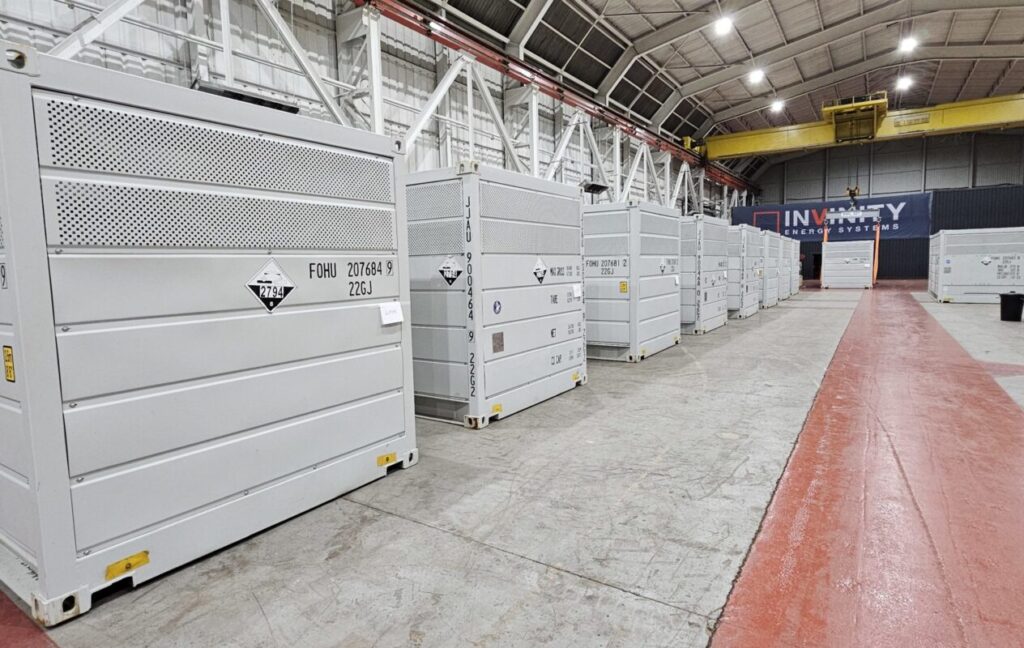
The partnership means up to 2GWh of Invinity’s manufacturing capacity has been reserved by Frontier Power on a right of first refusal basis. The batteries will be manufactured in Britain at the company’s facilities in Scotland.
Speaking exclusively to Energy Storage News at the Energy Storage Summit in London today, Invinity CEO Jonathan Marren, explained: “The Frontier Power team’s impressive track record in the interconnector and offshore transmission asset space makes them an ideal partner for us as we target multiple projects under the LDES cap and floor scheme.”
Try Premium for just $1
- Full premium access for the first month at only $1
- Converts to an annual rate after 30 days unless cancelled
- Cancel anytime during the trial period
Premium Benefits
- Expert industry analysis and interviews
- Digital access to PV Tech Power journal
- Exclusive event discounts
Or get the full Premium subscription right away
Or continue reading this article for free
Invinity has previously claimed its technology could make it possible for renewables to replace conventional generation on the grid 24/7.
Frontier CEO Humza Malik exclusively told Energy Storage News that the collaboration will accelerate the deployment of energy storage in the UK and globally: “Invinity’s technology addresses critical challenges faced by conventional solutions, offering extended asset life, superior recyclability, and enhanced sustainability. Their strong UK presence in R&D and manufacturing aligns with our commitment to supporting local industry and boosting export potential.”
While initially focusing on the UK market, the collaboration between Invinity and Frontier could see the UK become a major exporter of energy storage solutions and help boost foreign direct investments into the UK.