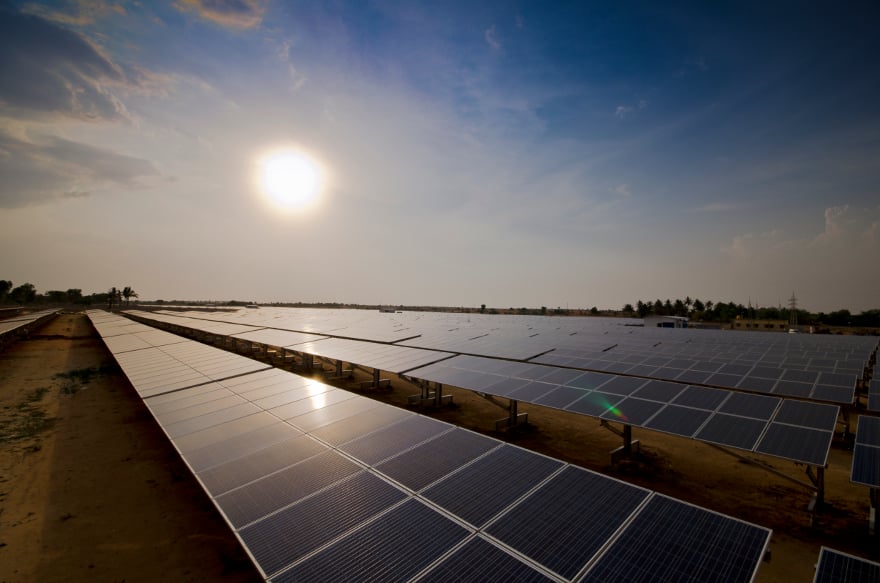
Tata Power Renewable Energy Limited (TPREL) has signed a power purchase agreement (PPA) in India with public sector power company SJVN for firm dispatchable renewable energy (FDRE).
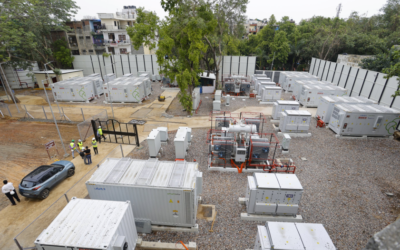
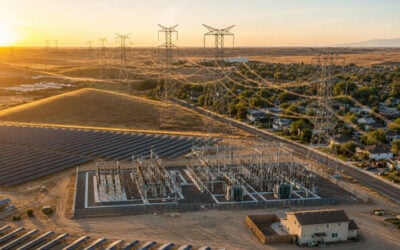
The offtake deal, announced on Saturday (4 May), is for a 460MW renewable energy project combining wind, solar PV, and energy storage, which is being developed by Tata Power’s clean energy subsidiary.
The project will deliver renewable energy to the grid during peak demand hours. TPREL must deliver it to commercial operations within 24 months of the PPA’s signing. Financial terms of the deal have not been disclosed.
TPREL was awarded the contract in a tender hosted by SJVN, a power generation and transmission company owned and operated as a joint venture (JV) between the government of India and the state government of Himachal Pradesh.
Try Premium for just $1
- Full premium access for the first month at only $1
- Converts to an annual rate after 30 days unless cancelled
- Cancel anytime during the trial period
Premium Benefits
- Expert industry analysis and interviews
- Digital access to PV Tech Power journal
- Exclusive event discounts
Or get the full Premium subscription right away
Or continue reading this article for free
SJVN has been selected as one of the public entities to host the FDRE tenders, recently described as the “ideal” structure for encouraging investment in energy storage for India, by the Institute for Energy Economics and Financial Analysis (IEEFA) and JMK Research.
In a report published last December, the research and analysis groups said that energy storage—including pumped hydro energy storage (PHES) as well as batteries—would be the “major disrupter” of India’s power market in this decade.
More than 8GW of tenders to procure energy storage resources were launched during 2023 in India by state and national government agencies, most prominently by the Solar Energy Corporation of India (SECI).
Tender structures have included solicitations for solar-plus-storage projects, peak power supply, ‘round-the-clock’ (24/7) renewable energy delivery and standalone energy storage as well as FDRE tenders, which made their market debut last year.
However, while each structure may be beneficial under different circumstances, it was the FDRE tenders that Jyoti Gulia, JMK Research founder, said could “create a win-win scenario” for developers and offtakers.
This is because, Gulia said, FDRE tenders are tailored to the demand profile of the procuring agency or offtaker. For example, SJVN launched another such tender at the end of March, seeking 600MW of FDRE resources.
While Tata Power’s subsidiary has won tenders under various structures, its deal with SJVN marks the first it has sealed under an FDRE requirement.
“By integrating diverse renewable energy sources and leveraging the importance of firm and dispatchable renewable energy (FDRE), the collaboration will ensure a dependable power supply and also actively contribute to India’s ambitious renewable energy targets,” TPREL managing director and CEO Deepsh Nanda said.
India is targeting the deployment of 500GW of non-fossil fuel energy sources by 2030, and is thought to be just under halfway to that target. Around 15GW of solar PV was deployed in 2023, according to figures from the Ministry of New and Renewable Energy (MNRE).
Integrating new solar and wind as part of that target, as well as achieving other national energy goals such as stabilising the grid and increasing access to electricity for rural populations will require 74GW/411GWh by 2032 from PHES and battery energy storage system (BESS) resources, the country’s Central Electricity Authority (CEA) has projected.