India’s Adani Group has made its first entry into the battery storage market, announcing a ‘flagship deployment’ that will be the country’s largest project so far when completed.
The multinational conglomerate is already a major player in the renewable energy sector, with its subsidiary, Adani Green Energy, holding a 15GW operational portfolio of solar PV, wind and hybrid solar-wind projects in India as of June 2025.
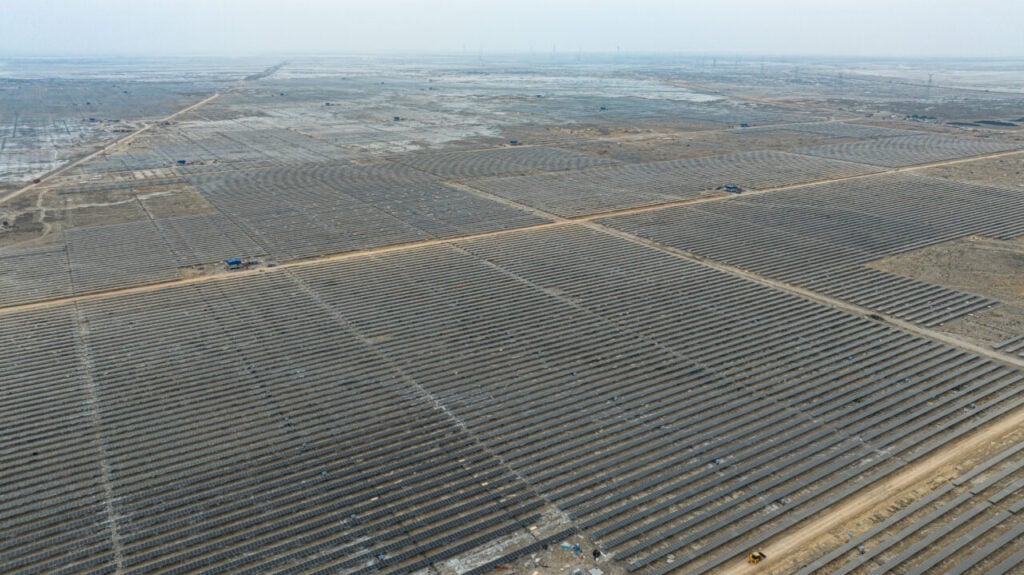
Adani’s first 1,126MW/3,530MWh battery energy storage system (BESS) is already in construction at the site of the company’s Khavda solar PV generation complex in Gujarat, the group said earlier this week (10 November).
Scheduled for commissioning by March 2026, the BESS will support peak load management and provide energy time shifting to the grid. Khavda solar park is being brought online in phases, with plans to add 30GW over five years. The first gigawatt of capacity went into commercial operation in early 2024.
Try Premium for just $1
- Full premium access for the first month at only $1
- Converts to an annual rate after 30 days unless cancelled
- Cancel anytime during the trial period
Premium Benefits
- Expert industry analysis and interviews
- Digital access to PV Tech Power journal
- Exclusive event discounts
Or get the full Premium subscription right away
Or continue reading this article for free
“Energy storage is the cornerstone of a renewable-powered future,” company chairman Gautam Adani said.
“With this historic project, we are not only setting global benchmarks but also reinforcing our commitment to India’s energy independence and sustainability. This initiative will enable us to deliver reliable, clean and affordable energy solutions at scale.”
The announcement comes just a couple of weeks after our publisher Solar Media hosted the inaugural Energy Storage Summit India conference in Greater Noida, Uttar Pradesh.
The promotion of energy storage technologies aligns with India’s national policy strategy, which includes goals of deploying 500GW of non-fossil fuel energy by 2030 and enhancing security and stability in energy networks while keeping costs affordable.
As such, there is a real rush among developers to get a foothold in the market as early as possible, Abhishek Goenka, head of strategy and new business development (BESS and Solar) at HG Infra Engineering, said at the event.
Adani already has an interest in the energy storage market through Adani Green Energy in terms of the other key technology identified in the National Electricity Plan from the Central Electricity Authority (CEA) of India, pumped hydro energy storage (PHES).
In April, the clean energy subsidiary signed a 40-year power purchase agreement (PPA) with Uttar Pradesh Power Corporation for the 1,250MW Panaura Pumped Hydro Storage Project (PSP). It is one of four PHES plants Adani Green Energy currently has in development or construction in India.
The conglomerate now plans to make a significant push into battery storage. It aims to deploy 15GWh of BESS by March 2027 and 50GWh over the next five years.