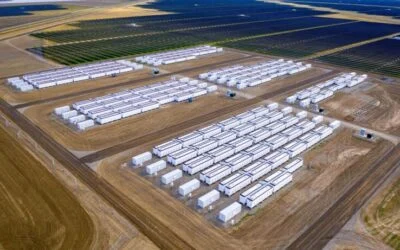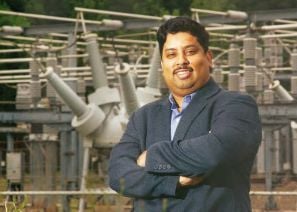
Stationary energy storage will see megawatt-scale deployments in India during 2018 in both renewables integration and C&I (commercial & industrial) applications, according to Dr. Rahul Walawalkar, executive director, Indian Energy Storage Alliance (IESA).
In a series of forecasts for the coming year, Walawalkar said that by mid-2018 India will have more than 1GWh of lithium-ion battery pack manufacturing capacity. Moreover, IESA expects at least two lithium-ion cell manufacturing plants of 500MWh+ capacity to start construction in India this year and these are anticipated to reach completion by the end of 2019 or early 2020.
Walawalkar said this would put India “on the global map of Giga Factories”, a trend that he described in detail to Energy-Storage.News last summer.
Electric Vehicles (EVs), which saw huge backing from the Indian government last year both in rhetoric and target setting, will start seeing adoption at the two, three and four-wheeler levels. Indeed various e-rickshaws, the three-wheeler vehicles common to Indian towns and cities, were displayed at many of the renewable energy expos in the country during the autumn season. The expected take-up will be fueled by procurement led by various state agencies and Energy Efficiency Services Limited (EESL), a joint venture of four major National Public Sector Undertakings (PSUs) in the energy sector, said Walawalkar. This year should also witness the pickup of EV charging infrastructure deployment in various metro cities.
Try Premium for just $1
- Full premium access for the first month at only $1
- Converts to an annual rate after 30 days unless cancelled
- Cancel anytime during the trial period
Premium Benefits
- Expert industry analysis and interviews
- Digital access to PV Tech Power journal
- Exclusive event discounts
Or get the full Premium subscription right away
Or continue reading this article for free
2017 Review
Casting his thoughts back over 2017, Walawalkar noted that India had crossed 2GWh of sales of advanced energy storage solutions, led by eRickshaws and telecom towers in the early deployment stages. Last year, Indian industries also started investing in setting up manufacturing capabilities for developing lithium-ion battery packs in India.
There were also more than 100MWh of grid-scale energy storage project RfPs released during 2017, however, most have been stuck due to mixed signals from the Ministry of New and Renewable Energy (MNRE).
Walawalkar said: “We anticipate most of these projects can move forward in 2018.”
It’s worth noting that state-run coal mining and power firm NLC India did successfully auction a 20MW solar PV project to be combined with 28MWh of energy storage capacity in the Andaman and Nicobar Islands – the first time such an auction for utility-scale storage had been completed in India.