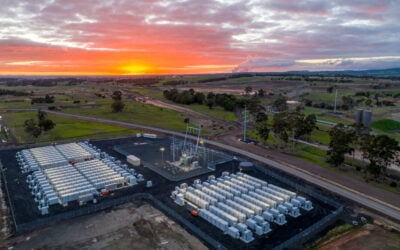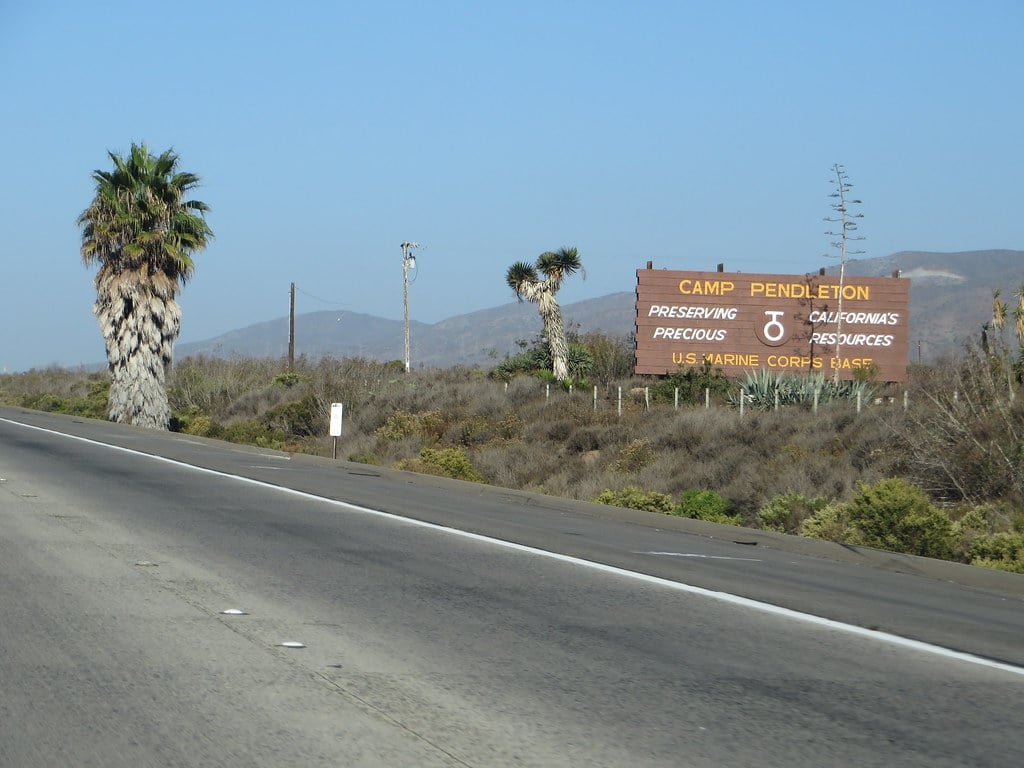
The government of California has approved a US$42 million grant to Pennsylvania-based IPP International Electric Power (IEP) for a long-duration energy storage project at Marine Corps Base Camp Pendleton, in San Diego County.
Energy-storage.news reported on this project in November (Premium access article). IEP was then seeking funding for its 50MW/486MWh Haybarn Energy Reliability Centre, and California state governor Gavin Newsom’s office announced further details on the project this week (11 December).
The project being installed at Camp Pendleton’s Haybarn Energy Reliability Centre will initially provide 6MW/48MWh of long-duration energy storage with plans to later expand the system to 50MW/500MWh.
Energy-Storage.news received further details on the project updates from a representative of the California Energy Commission (CEC):
Try Premium for just $1
- Full premium access for the first month at only $1
- Converts to an annual rate after 30 days unless cancelled
- Cancel anytime during the trial period
Premium Benefits
- Expert industry analysis and interviews
- Digital access to PV Tech Power journal
- Exclusive event discounts
Or get the full Premium subscription right away
Or continue reading this article for free
“Minor changes have been made to the project site plan since the publication of the proposed Mitigated Negative Declaration and Initial Study. These changes include:
- A reduction of the project footprint due to a reconfiguration of the energy storage blocks. The blocks on the southeastern edge of project are now proposed to be moved, thereby eliminating the need for retaining walls on that side of the site. The relocated energy storage blocks will be stacked above other blocks on the site plan. The total height of the stacked storage blocks will be 16 feet. This involves only a small portion of the total number of proposed energy storage blocks.
- Existing 12kV distribution lines that were previously proposed to be relocated and placed underground are now proposed to be relocated overhead on wood poles.
- The collector lines connecting the energy storage block switchgear to the control hut near the Pendleton Substation will also be placed overhead rather than underground.”
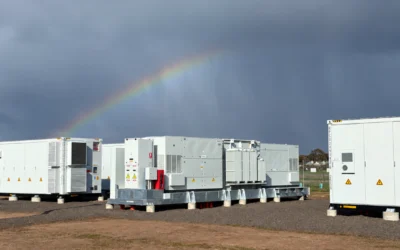
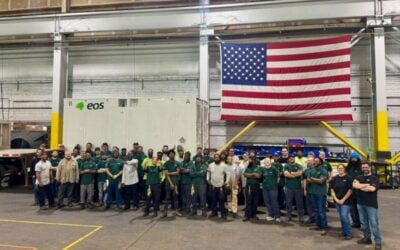
Anticipated to be operational summer 2027, Haybarn Energy Reliability Centre is expected to be made up of 608 Z3.4 Cube energy storage units from Eos Energy. This technology is being used by Virginia-based utility Dominion Energy for a 16MWh battery project announced in 2023.
The zinc hybrid cathode batteries are designed to perform longer duration applications than typically seen using lithium-ion BESS assets. Eos also claims that the batteries are not at risk of thermal runaway due to the non-flammable electrolyte used in the technology.
Haybarn Energy Reliability Centre may be useful for Eos, which saw a low-revenue Q3 this year compared to last year.
The US$42 million grant, part of the CEC’s Long-Duration Energy Storage Program, is the largest of its kind. In December 2023, iron-air battery technology firm Form Energy won a US$30 million grant from the CEC for a 5MW/500MWh energy storage project.
CEC has projected California will need 52,000MW of energy storage capacity by 2045. The state has been working to meet this demand. In a September Energy Storage Survey, CEC reported an installed battery storage capacity of 13,391MW, growing from a reported 500MW in 2018.
Speaking on the deal, Governor Newsom said: “Since the beginning of my administration, California has been on the front lines of the global battery revolution.”
“We’ve ramped up battery storage capacity by more than 1,600% – bringing us a quarter of the way to meeting our projected need. Battery storage projects like this one at Camp Pendleton are vital to building a reliable and resilient electric grid in the face of climate extremes.”
Recently, IPP NextEra Energy Resources (NEER) has sought approval for a renewable energy project from the CEC, submitting an application for a 300MW/1,200MWh BESS (Premium access article) in Solano County.