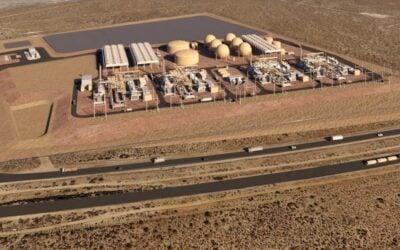
Compressed Air Energy Storage (CAES) company Hydrostor has introduced Hydrostor Terra — a long-duration bulk energy storage system that is expected to compete with new natural gas plants.
By utilizing Terra, utilities and electricity system operators can look at issues such as reserve capacity, peak shaving, transmission congestion and renewables integration while taking cost-effective measures.
Curtis VanWalleghem, president & CEO of Hydrostor, said: “Hydrostor Terra is an industry-changing breakthrough in cost-competitive bulk energy storage. We are engaged with several utilities around the world to deploy systems rated at hundreds of megawatts, delivering gigawatt-hours of storage at durations ranging from four hours up to multiple days.”
VanWalleghem added: “Battery technologies can’t compete with new natural gas plants, but Terra does. The value proposition for utilities is compelling, and for us that’s translating into projects.”
Try Premium for just $1
- Full premium access for the first month at only $1
- Converts to an annual rate after 30 days unless cancelled
- Cancel anytime during the trial period
Premium Benefits
- Expert industry analysis and interviews
- Digital access to PV Tech Power journal
- Exclusive event discounts
Or get the full Premium subscription right away
Or continue reading this article for free
Terra’s design gives it an advantage over traditional CAES systems, which have been limited due to needing underground geological formations for siting, as well as relying on gas to generate heat during operation.
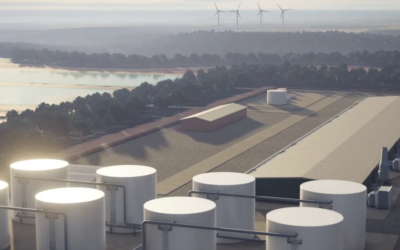
Terra does not feature these limitations, as it can be utilised at any site close to a body of water — including inner-city and urban areas. It’s adiabatic design also recycles the heat it produces, making it emission-free.
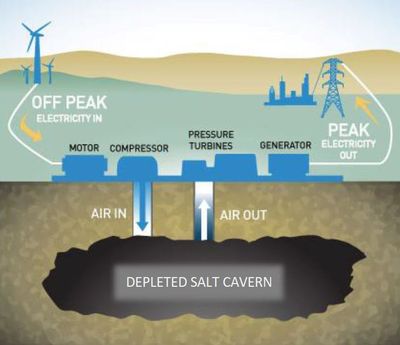
The system works by converting off-peak electricity into compressed air, which is then stored in a proprietary isobaric purpose-built underground area. During charging, the system also stores generated heat in an adiabatic thermal management system and later used to increase air temperature prior to expansion, which boosts the round-trip efficiency of the energy storage.
Hydrostor has an EPC partnership in place with engineering and design firm AECOM, which has conducted a full technical review of the Terra technology.
“Following our due diligence, we are excited to work together with Hydrostor in offering a complete turnkey solution within the growing energy storage market,” Travis Starns, AECOM business development manager for energy storage said.
Hydrostor recently also formed a partnership with Canadian developer NRStor to “jointly develop utility-scale energy storage projects across Canada”.