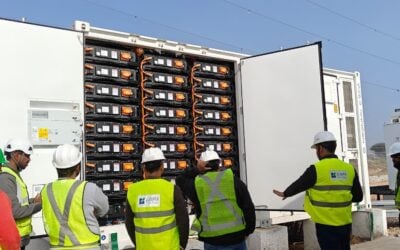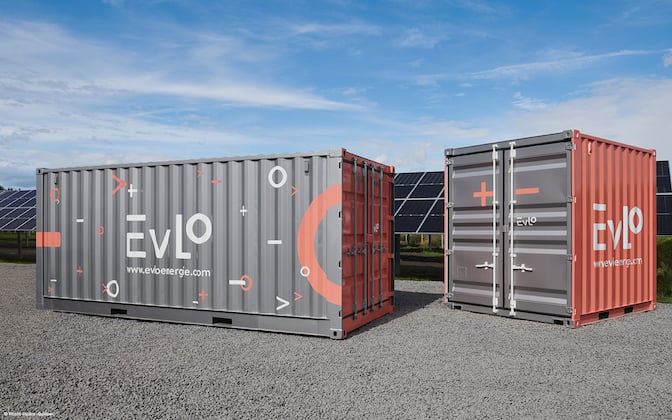
EVLO Energy Storage, a battery energy storage system (BESS) integrator and manufacturer, has been selected to provide 4-hour duration battery storage solutions to three projects in Ontario, Canada.
The BESS company, a subsidiary of Canadian utility Hydro-Québec, said last week (5 September) that it has signed an equipment supply agreement with renewable energy project developer SolarBank Corporation.
EVLO will provide its containerised lithium-ion battery storage solution EVOFLEX to the three equally sized sites of 5MW/20MWh each. SolarBank is an independent company focused on community and distributed solar PV projects which also engineers, builds and operates assets in addition to developing them.
While the developer has solar PV projects in the Northeast US, in Maryland and New York, it has been in Canada after responding to opportunities in the Ontario Independent Electricity System Operator (IESO) Feed-in-Tariff programme, launched in 2009 as part of the province’s Green Energy Act of 2009. Ontario projects listed on its website are mostly rooftop solar installations of under 1MW capacity for commercial buildings.
Try Premium for just $1
- Full premium access for the first month at only $1
- Converts to an annual rate after 30 days unless cancelled
- Cancel anytime during the trial period
Premium Benefits
- Expert industry analysis and interviews
- Digital access to PV Tech Power journal
- Exclusive event discounts
Or get the full Premium subscription right away
Or continue reading this article for free
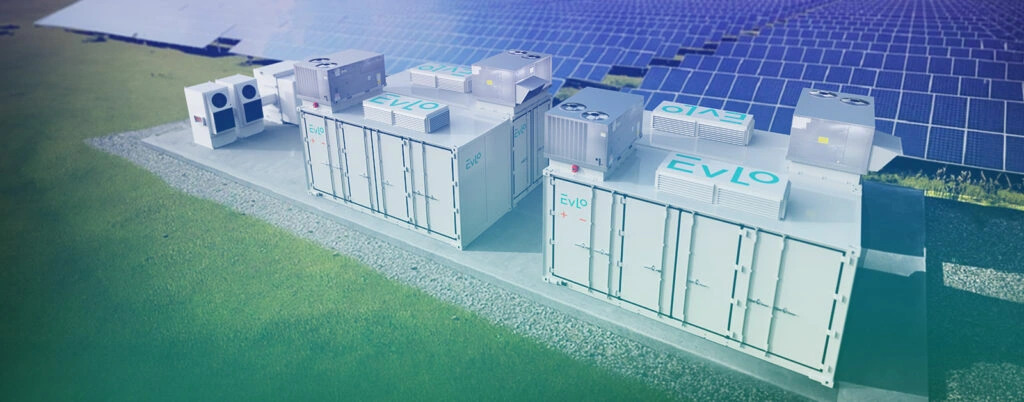
This time out, the projects, for which SolarBank is serving at the engineering, procurement and construction (EPC) contractor, were winning bids from developers in the recent, history-making IESO energy storage procurement, LT-1.
With the ‘LT’ standing for ‘Long Term’, the IESO made 881MW of awards to energy storage project bids earlier this year as the system operator looked to ensure electricity system reliability in the latter half of this decade.
Although the awarded contracts included much bigger BESS assets including French developer Boralex’s Hagersville project which has been contracted for 300MW (1,200MWh), there were also several 5MW/20MWh projects (although nameplate capacity of their contracted output to IESO has been set at 4.99MW).
SolarBank’s customers which EVLO will supply are two First Nations communities, a third-party developer and an investment vehicle called Solar Follow-Through, which won its contracts under the slightly obscure monicker of 1000234763 Ontario Inc.
EVLO meanwhile was launched in late 2020. Its parent company is a public utility and transmission system operator (TSO) owned by the provincial government and in launching Hydro-Québec said it planned to invest around CA$100 million (US$78 million at that time) into EVLO annually.
The system integrator uses lithium iron phosphate (LFP) chemistry cells in its systems, delivering its first completed project for developer Innergex in France, a 9MW/9MWh BESS serving a 7-year capacity contract to the country’s TSO RTE.
In addition to further contracted projects in its home country, EVLO was recently also selected for its first project in the US, a 3MW system in Vermont.