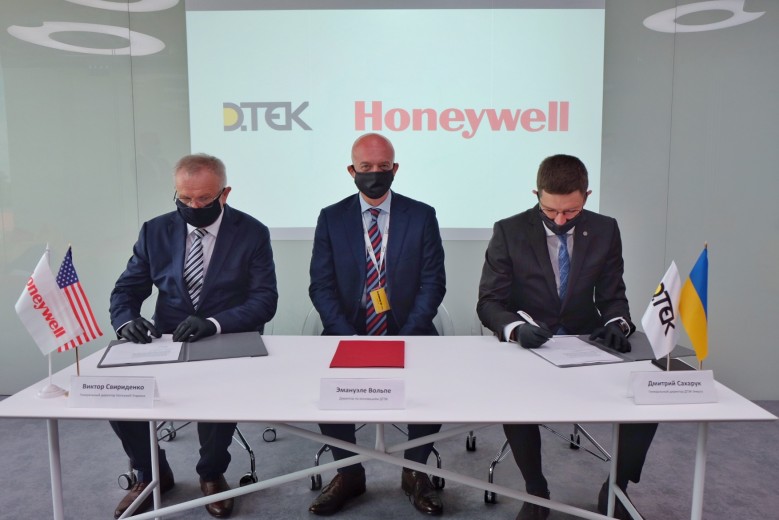
US equipment manufacturer and engineering solutions company Honeywell has signed a contract to supply what is thought to be the Ukraine’s first large-scale battery energy storage system.
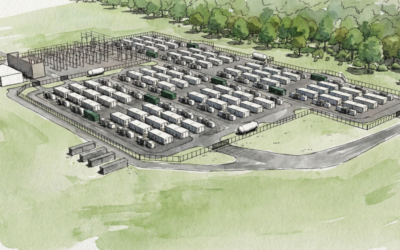
Ukrainian energy sector investment company DTEK announced yesterday that it is executing a pilot project which will see a 1MW / 1.5MWh lithium-ion battery energy storage system (BESS) installed at Zaporizhzhya Power Plant, a thermal power plant site owned by DTEK.
The system will provide frequency containment reserves to the grid, as well as doing energy arbitrage- charging at off-peak times and discharging when demand is higher. DTEK said that as well as enabling the greater integration of renewable energy into Ukraine’s energy mix, the pilot project could “help pave the way” for the country to join the European Network of Transmission System Operators for Electricity (ENTSO-E).
“Balancing, highly maneuverable capacities, and energy storage are essential for the stable operation of the country’s energy system. The energy storage system allows to postpone the consumption and use of electricity until the consumers need it. The batteries will provide ancillary services to the system operator NPC Ukrenergo, guaranteeing the operational safety and independence of the country’s energy system,” DTEK Energy general director Dmytro Sakharuk said in a press release.
Try Premium for just $1
- Full premium access for the first month at only $1
- Converts to an annual rate after 30 days unless cancelled
- Cancel anytime during the trial period
Premium Benefits
- Expert industry analysis and interviews
- Digital access to PV Tech Power journal
- Exclusive event discounts
Or get the full Premium subscription right away
Or continue reading this article for free
DTEK said the deployment of the storage system is a step towards establishing investment priorities for decarbonisation of Ukraine’s energy sector, including gaining knowledge on how to install and scale-up energy storage systems. The company said best practice knowledge gained will be shared with other stakeholders.
While the company wants to use the storage system to learn more about decarbonisation, adding flexibility to the electricity network and increasing quality and stability of grid power, DTEK said that at present, Ukraine’s legislative regulation makes it not possible to connect energy storage devices to the company’s renewable energy sources. The investor is however, considering that possibility, it said in a press release.
The system, based on Honeywell’s Experion Energy Programme solution, will include Honeywell’s remote operations systems and Experion Energy Control System alongside the US provider’s BESS technology. Manufacture, installation and commissioning will take place during the rest of this year and in 2021.
“This ESS will help to ensure the safety of Ukraine’s energy system, enables the smooth integration of renewables and reduces the total cost of electricity through virtually zero variable operating costs, replacing expensive fossil fuel power capacity,” DTEK chief innovation officer Emanuele Volpe said in an update shared with LinkedIn connections.
“Being the pioneer, DTEK will open a completely new segment of the market, the development of which will provide flexibility, reliability, security and independence of the country’s energy system,” Volpe wrote.
Honeywell meanwhile has stepped up its energy storage activities over the past year, including the supply of systems to large projects in other territories including Canada, as well as taking a more segmented approach to technology and equipment sales to the industry, creating an integrated fire and gas detection solution, Xtralis, for storage systems in partnership with Nexceris’ Li-Ion Tamer brand.