Taiwan-headquartered developer and services provider HD Renewable Energy (HDRE) is targeting further overseas expansion in 2026, with energy storage set to play a major role.
When announcing its December 2026 consolidated revenue figures this week (12 January), HDRE said 2026 is the company’s “overseas expansion year,” while a general manager noted that energy storage is set to become a “a key infrastructure supporting power stability, renewable energy integration, and data centre operations.”
HDRE reported NT$1.636 billion (US$52 million) revenue for December 2025 NT$8.78 billion for the full-year 2025. According to figures posted to the Taiwan Stock Exchange Corporation (TWSE), this was a year-on-year decline in annual revenue of 13.29%.
However, the company said that it will expand capacity development in 2026 and has an estimated 897MW of overseas projects due to begin construction this year.
Try Premium for just $1
- Full premium access for the first month at only $1
- Converts to an annual rate after 30 days unless cancelled
- Cancel anytime during the trial period
Premium Benefits
- Expert industry analysis and interviews
- Digital access to PV Tech Power journal
- Exclusive event discounts
Or get the full Premium subscription right away
Or continue reading this article for free
While the company did not disclose the split of technologies this would comprise in a news announcement, HDRE pointed to recent battery energy storage system (BESS) project activities in Australia and Japan and general manager Jason Shih-Chang Chou alluded to the importance of energy storage in a statement.
Shih-Chang Chou said that despite “economic fluctuations and regional challenges” facing the energy industry, HDRE would demonstrate “steady growth momentum” by leveraging its three major business groups’ core strengths. These are site development and construction, power services and asset platform management, the general manager said.
“Facing the arrival of the AI era, energy storage will become a key infrastructure supporting power stability, renewable energy integration, and data centre operations,” Jason Shih-Chang Chou said.
Australia, Japan projects completed, contracts secured
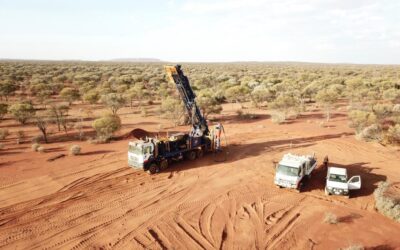
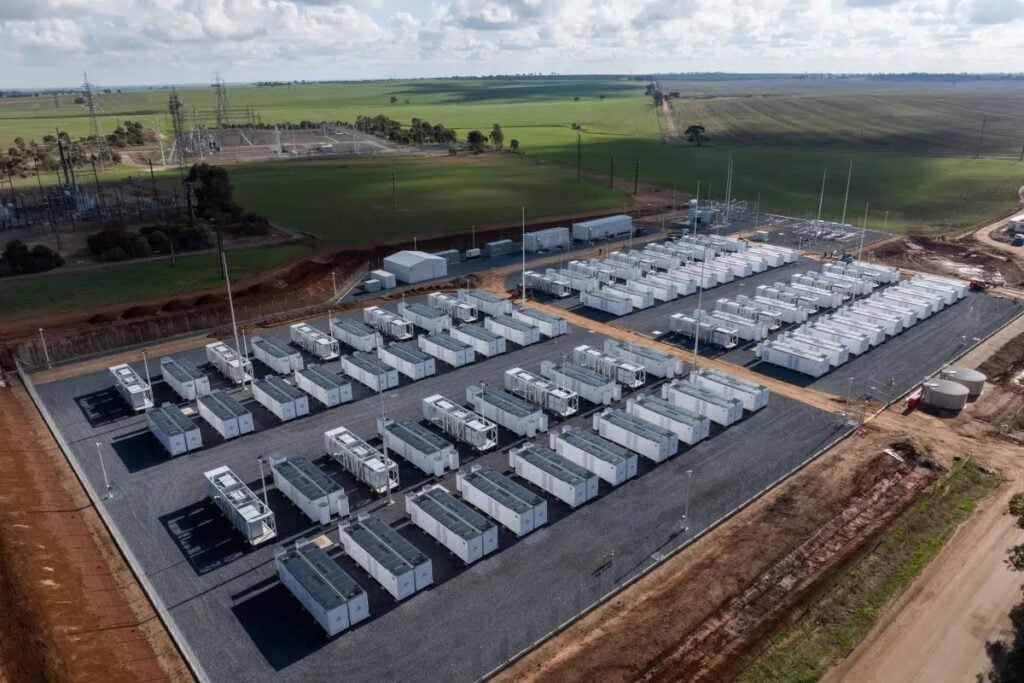
In early December, Templers Battery Project, a 111MW/330MWh large-scale standalone BESS project in South Australia, developed by HDRE in a joint venture (JV) with Australian utility ZEN Energy, went into commercial operation. This followed the signing of a 20-year offtake agreement for the asset in November. BESS technology was provided by Sungrow and the JV, ZEBRE, is working on a secured 695MW energy storage portfolio in the country, as well as acquiring BESS assets in Japan.
At the time that the offtake power purchase agreement (PPA) was reported, HDRE said it expected its combined capacity of large-scale solar PV and energy storage in Australia to reach 2.7GW by 2028.
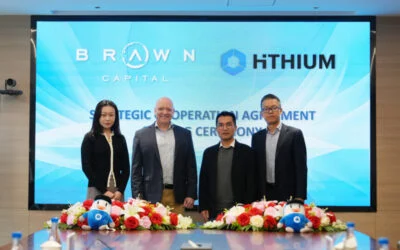
In Japan, a partnership with private equity firm Brawn Capital’s portfolio company Manoa Energy brought into commercial operation a 50MW/104MWh BESS asset in Hokkaido, northern Japan.
The Helios 50MW BESS project is a fully merchant asset, HDRE said, and will stack revenues from wholesale electricity trading as well as grid-balancing and capacity markets. HDRE claimed it could earn up to JP¥2 billion (US$12.8 million) through power trading in its first year of operation.
HDRE has also had successful bids in Japan’s Long Term Decarbonisation Power Source Auction (LTDA), which is a capacity market open to low-carbon energy storage with 3-hour to 6-hour durations (although forthcoming changes look set to make it a 6-hour only market in future runnings).
HDRE’s successful LTDA bids in the auction’s first two years so far include 300MW awarded in 2025. The LTDA offers relatively low returns, but guarantees stable revenues underwritten by the Japanese state and is therefore considered useful to the business case and bankability of energy storage projects.
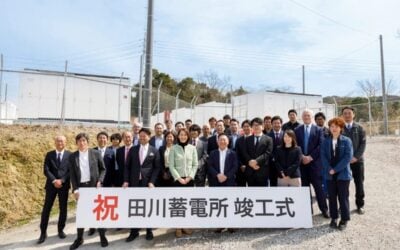
The company also availed of nearly JP¥260 million in subsidies through a Tokyo Metropolitan Government subsidy programme for a 20MW high-voltage BESS project in Gunma Prefecture, through a JV with local partner Tokyu Real Estate.
Although run by the Tokyo government, the subsidy scheme also provides Capex support to projects outside the Japanese capital and is one of two national schemes, along with a national Ministry of Economy, Trade and Industry (METI) support programme.
2026 opening of Taiwan capacity market targeted
Within its home market in Taiwan, HDRE has around 3.3GW of capacity in development over the next three years and recently attracted strategic investment from Japan’s Mitsubishi Electric to further its activities.
In December the company partnered on BESS asset development with fellow TWSE-listed Gigastorage Corporation. Gigastorage, not to be confused with the similarly named Dutch BESS developer Giga Storage, is a subsidiary of Guoshuo Technology, a company active since 1997 in upstream solar PV materials and more recently involved in renewable energy and storage construction and servicing.
The pair have jointly established an energy storage asset platform company, Xingguo Power, targeting business opportunities in Taiwan’s capacity market, which will launch in 2026. To date, most of the rapid growth of energy storage adoption seen in Taiwan has been driven by grid operator ancillary services markets.
Xingguo Power’s first project is a 100MW asset in Taichung City, and it will initially connect to dynamic regulation reserve (E-dReg) frequency regulation and power trading markets.
At the same time, HDRE is stepping up its activities in energy trading, having completed a strategic merger in May last year with StarPower Energy, an electricity trading platform.