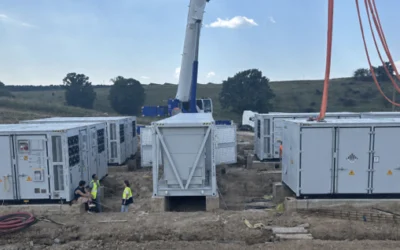
SolarCity’s 12MW Kauai project, connected around this time last year. Image: KIUC.
A solar farm connected to a huge battery will be built on the Hawaiian island of Kauai to use solar in the evenings to meet peak demand, under a 20-year contract between SolarCity and an electric utility co-operative.
As much as 95% of daytime demand on Kauai is met by solar at present but Kaua’I Island Utility Co-operative (KIUC) is keen to extend that further. SolarCity’s grid-connected project still requires approval at county and state level as well as from the state’s regulator, the Public Utilities’ Commission, but if it gets the go-ahead will see a 52MWh utility-scale battery facility built to deal with up to 13MW of solar power.
The project was announced close to the first anniversary of the completion by SolarCity of a 12MW solar farm on the island, which began supplying about 5% of Kauai’s electricity when it was connected in September last year.
The new power plant and storage facility should be able to provide electricity from the solar array between the hours of 5pm and 10pm each day, when the evening peak occurs. It has been well documented that Hawaii, with high dependence on imported fossil fuels and consequently suffering the highest electricity prices in the US, has fostered development of a high penetration of solar, targeting that 65% of its energy will come from renewables by 2030. It is thought that as well as reducing emissions and improving energy security, this would lower the cost of energy for normal consumers.
Try Premium for just $1
- Full premium access for the first month at only $1
- Converts to an annual rate after 30 days unless cancelled
- Cancel anytime during the trial period
Premium Benefits
- Expert industry analysis and interviews
- Digital access to PV Tech Power journal
- Exclusive event discounts
Or get the full Premium subscription right away
Or continue reading this article for free
The island state’s present circumstances, coupled with the relatively high variability of solar and wind resources, has led to Hawaii looking to energy storage as one of the primary resources to help integrate clean energy. The state is one of the world’s 10 leading regions for deployment of storage, according to a US government Department of Energy database, and its island grid situation has led to it being considered something of a global test case and cause celebre for the integration of renewables into energy networks. PV Tech Storage has frequently reported on storage projects, including those paired with solar, on the islands, including off-grid communities and grid-connected storage operating on trial and pilot project terms. In a 2014 Guest Blog for PV Tech Storage, analyst Dean Frankel of Lux Research called Hawaii “the first market to test the limits of renewable integration”.
The Kauai solar-plus-storage project would be built on a 20-hectare site owned by an agricultural company and close to an existing KIUC power station facility. KIUC asked for permission to accelerate development of the project, which must begin work by April next year and be in operation by 31 December 2016 to qualify for the higher rate of investment tax credits (ITCs) at 30%. Currently, storage is eligible for the ITC if it is installed at the same time as a PV array, effectively being characterised as part of the system, along with the inverter and BoS components.
SolarCity had yet to reveal any technical details of the project, although the company’s partner on storage systems is of course the EV maker Tesla, which has supplied the installation and leasing company with energy storage systems for its DemandLogic commercial offering, while SolarCity is already taking orders for Powerwall, Tesla’s forthcoming residential storage product.
‘Price and technology breakthrough’
The cost of energy from the facility sold by SolarCity will undercut “the current costs of conventional generation”, KIUC said, continuing that it will be “only slightly more” expensive than the daytime electricity generated by the co-operative’s two existing 12MW utility-scale PV plants.
“KIUC has been investigating energy storage options for more than two years and price has always been the biggest challenge. This is a breakthrough project on technology and on price that enables us to move solar energy to the peak demand hours in the evening and reduce the amount of fossil fuel we’re using,” KIUC’s president and CEO David Bissell said.