Documents filed with the Hawaiian Public Utilities Commission (PUC) have revealed the impacts of additional import tariffs on a Hawaiian Electric battery storage project.
Documents filed with the Hawaiian Public Utilities Commission (PUC) have revealed the impacts of additional import tariffs to a Hawaiian Electric Company (HECO) battery storage project.
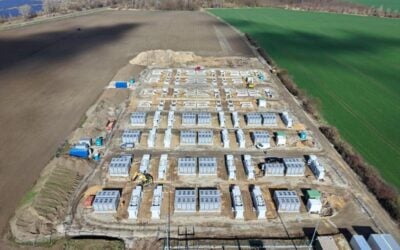
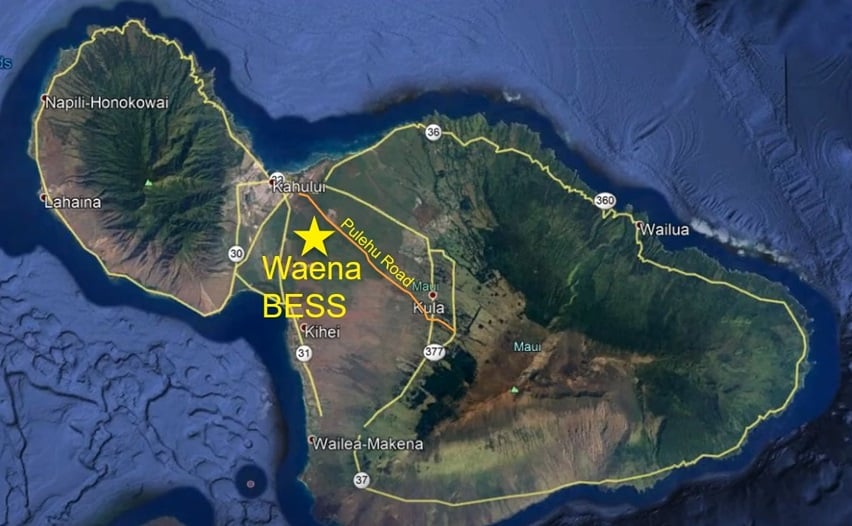
The recent documents pertain to a 40MWh/160MWh HECO battery energy storage system (BESS) project destined for the Hawaiian island of Maui.
Although the state’s energy regulator has already approved costs up to US$82 million for the utility-owned Waena Battery Storage project, Hawaiian Electric is currently seeking permission to increase this figure in anticipation of future import tariff increases.
Try Premium for just $1
- Full premium access for the first month at only $1
- Converts to an annual rate after 30 days unless cancelled
- Cancel anytime during the trial period
Premium Benefits
- Expert industry analysis and interviews
- Digital access to PV Tech Power journal
- Exclusive event discounts
Or get the full Premium subscription right away
Or continue reading this article for free
“Like many others, the dynamic environment with respect to US tariff policy has created great uncertainty in Hawaiian Electric’s material procurement costs,” explained the utility’s Vice President, Michael DeCaprio, in a recent letter addressed to the Hawaiian PUC.As recently reported by Energy-Storage.news, tariff uncertainty has already negatively impacted some of the county’s biggest independent power producers (IPPs), with reports of stockpiling and pricing increases.
Vendor Tesla identified potential price increase
After deciding to own and operate the Waena site through its ‘self-build’ team, Hawaiian Electric solicited bids from vendors as part of a 2019 RfP to supply BESS units.
Despite the successful bidder having been undisclosed until now, one recent filing with the PUC reveals that Tesla is supplying its BESS units for the site, which are the cause of potential cost uncertainty to Hawaiian Electric.
As explained by DeCaprio’s recent letter: “On 2 May 2025, based on tariff changes then anticipated, the vendor [i.e. Tesla] identified a potential price increase.”
Although the US and China have since dropped plans to introduce tariffs of up to 145% on imported goods, the situation still remains volatile. “No one can predict what tariffs will be in effect at the time of anticipated battery delivery in or around July 2026,” explained Hawaiian Electric’s Vice President.
The final cost of the BESS to Hawaiian Electric won’t be known until 30 days prior to the units arriving in the US, when Tesla sends its final Bill of Materials pricing to the utility.
Hawaiian Electric “is concerned about making commitments now that may or may not be recoverable later,” said DeCaprio.
The request is somewhat urgent, with DeCaprio stating that Hawaiian Electric needs to make “further financial commitments” to Tesla as soon as August 2025 to “secure timely delivery of the battery.”
Hawaiian Electric is requesting approval of the additional funds by 15 July so the project “can proceed with contractual progress payments.”
All potential vendors using imported Chinese batteries
Recent filings with the PUC also reveal that Hawaiian Electric received bids to supply BESS from six different vendors (including Tesla), all who planned to to utilise Chinese battery chemistry.
“[Hawaiian Electric] has reached out to these same bidding sources to compare their cost to what was recently submitted by [Tesla],” reveals one filing.
Tesla has since sent pricing updates to the utility, which won’t include any additional overheads, profit or administration fees. Essentially, any additional costs caused by future tariffs will be passed straight onto Hawaiian Electric.
As reported by Energy-Storage.news, Tesla CFO Vaibhav Taneja revealed during a recent earnings call that it expected future tariffs on Chinese imports to have an “outsized impact” to the company’s utility-scale storage division.
Although the company names of the other five vendors were redacted within recent regulatory filings, some information was left visible and offered hints to the identities of the other battery storage suppliers.
One filing contains an email from Hawaiian Electric’s procurement team asking one of the BESS suppliers to resubmit its bid for the RFP, addressed to someone whose name matches that of an executive at Durham, North Carolina-headquartered BESS supplier and software-focused system integrator FlexGen. As reported by Energy-Storage.news, FlexGen has a multi-year battery storage supply deal with China’s CATL.
Tesla, Hawaiian Electric and FlexGen have all been contacted for comment on the situation.
Importance of Waena project to reliability of island’s grid
With Hawaiian Electric striving to reduce its carbon emissions by 70% before the end of the decade, the successful and timely completion of projects like Waena couldn’t be more vital.
“Replacing this capacity [from Waene BESS] via any impending RFPs will take years beyond this project’s completion date, not necessarily result in lower cost, and create reliability challenges on Maui,” explained DeCaprio.
Energy-Storage.news has previously reported on a handful of developers withdrawing projects from Hawaiian Electric’s previous procurement rounds, which only escalates the importance of other projects still under contract with the utility.
Most recently during November last year, Clearway Energy withdrew three hybrid solar and storage projects’ latest renewable energy procurement, citing the utility’s “ongoing financial uncertainty.”
AES Corporation also withdrew a solar and storage project from one of the utility’s procurement rounds last summer, after failing to secure site control, in an announcement that was made just as the company’s Kuihelani solar-plus-storage project on Maui, Hawaii’s biggest project of its kind at the time (60MWac PV, 240MWh BESS) went online.