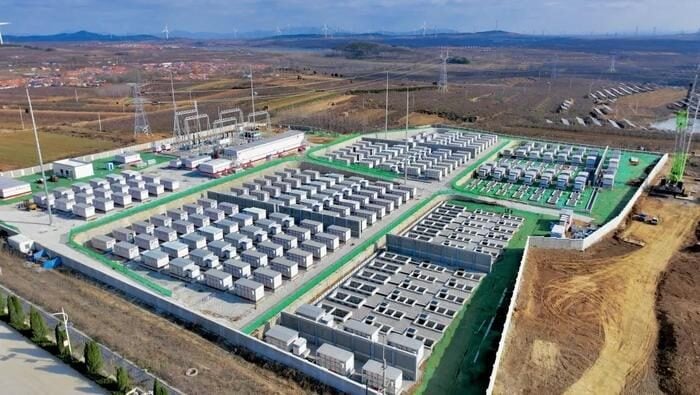
A large-scale hybrid project has been connected to the grid in China, combining BESS and supercapacitor technology to provide numerous services to the grid including black start.
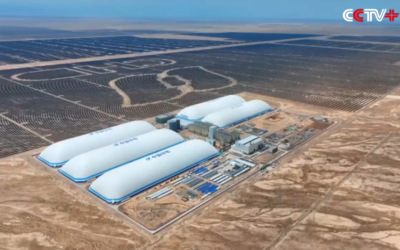
Longyuan Power, a subsidiary of China’s state-owned mining and energy company CHN Energy, has connected its Zhaoyuan energy storage project to the grid in Fushan Town, Zhaoyuan City, Shandong Province.
At full capacity, it will combine 320MW/640MWh of battery energy storage system (BESS) technology with a 3MW supercapacitor system capable of discharging for six minutes, implying an energy storage capacity of around 187kWh.
It will will be cycled at least 300 times a year, and provide various services such as peak shaving, frequency regulation, backup power, black start and demand response. Black start involves getting power back online on the grid after a blackout, and typically requires grid-forming inverters.
Try Premium for just $1
- Full premium access for the first month at only $1
- Converts to an annual rate after 30 days unless cancelled
- Cancel anytime during the trial period
Premium Benefits
- Expert industry analysis and interviews
- Digital access to PV Tech Power journal
- Exclusive event discounts
Or get the full Premium subscription right away
Or continue reading this article for free
The project’s first phase is 200MW/400MWh, however. Its reporting made it slightly unclear what part is online and operational, but most outlets have interpreted the announcement as saying the first phase is online, and the project has yet to be ramped up to full capacity.
A supercapacitor is an alternative form of energy storage, which can charge and discharge much faster than electrochemical batteries and suffers virtually no degradation. However, its energy density is just a fraction of electrochemical batteries like lithium-ion. This makes it applicable for high-power, low-duration activities like frequency response.
Proponents say it can be deployed in combination with BESS to provide an optimal energy storage solution for both power-intensive and energy-intensive applications.
The BESS array for the project is made up of 61 containerised units of 3.35MW/6.7MWh each. Longyuan Power didn’t reveal the BESS provider, but a power and energy figure for each unit implies they are AC blocks.