Green Charge to install 1.6MWh of storage with PV at California’s Visalia Unified School District

LinkedIn
Twitter
Reddit
Facebook
Email
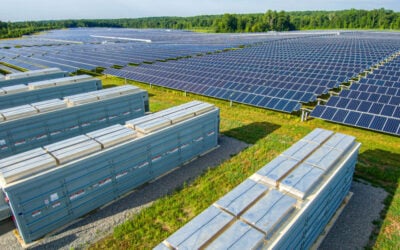
There have been several US schools of late benefitting from storage systems. Credit: Green Charge

Green Charge, a subsidiary of Engie, will install 1.6MWh of energy storage alongside solar at five schools in California’s Visalia Unified School District.

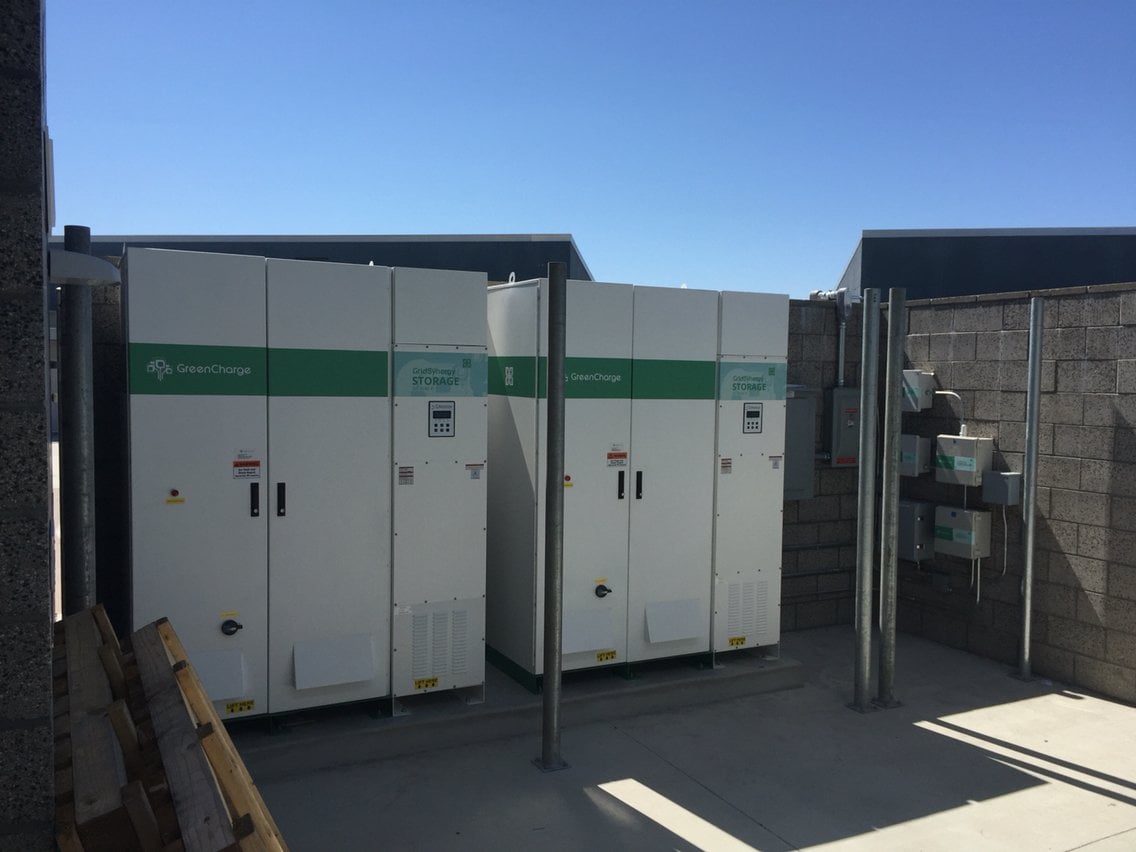
The project includes Green Charge’s lithium-ion battery storage system GridSynergy as well as GridSynergy Software, which can analyse performance indicators such as cost savings from the system. Indeed, the school district is expected to save more than $1 million over the 10-year contract.

Vic Shao, president and CEO at Green Charge, said: “What is significant for cash-strapped schools is that funds generated from energy storage can be made available almost as soon as the energy storage system is installed, thanks to California’s Self-Generation Incentive Program (SGIP).”

Rick Brown, president of advisory firm and project manager Terra Verde Renewable Partners, said: “Some K-12 school districts do not realize that deploying an energy storage system will save significant money. Savings generated from demand charge reduction are an indirect boon to education, since paying less for electricity leaves more in the operational budget.”

This article requires Premium SubscriptionBasic (FREE) Subscription

Try Premium for just $1

  • Full premium access for the first month at only $1
  • Converts to an annual rate after 30 days unless cancelled
  • Cancel anytime during the trial period

Premium Benefits

  • Expert industry analysis and interviews
  • Digital access to PV Tech Power journal
  • Exclusive event discounts

Or get the full Premium subscription right away

Or continue reading this article for free

There have been several US schools of late benefitting from storage systems, including Jigar Shah’s Generate Capital taking on six solar-plus-storage projects in California. Energy-Storage.News interviewed Jigar Shah on the subject last month.

Back in February, Green Charge also said it would provide a 1MW/2MWh energy storage system to liberal arts college in California that could save the facility US$800,000 over its lifetime.

Green Charge is the top provider of storage systems to California schools with a portfolio of more than 100 schools.

15 September 2026
San Diego, USA
You can expect to meet and network with all the key industry players again in 2025 from major US asset owners, operators, RTOs and ISOs, optimizers, software and analytics providers, technical consultancies, O&M technology providers and more.
3 November 2026
Málaga, Spain
Understanding technology and supplier selection for Europe’s utility-scale PV market in 2027. PV ModuleTech Europe 2026 is a two-day conference that tackles these challenges directly, with an agenda that addresses all aspects of PV module, inverter and battery supplier selection; product availability, technology offerings, supply chain traceability, quality assurance, factory auditing, system reliability, and supplier bankability.

Read Next

September 10, 2026
Developer SMT Energy and Software-focused energy storage system integrator FlexGen have announced the start of operations of a 160MW/320MWh energy storage facility Houston, Texas, US.
September 10, 2026
Second-life battery energy storage system (BESS) firms B2U, Moment and Rebaba are advancing project operations in Texas, US compliance, and new financing in Europe, respectively.
Premium
September 10, 2026
We hear from Angus Gordon Lennox, chair of the Gore Street Energy Storage Fund (GSF), which faces a shareholder vote next week on its future. 
September 9, 2026
Utility Black Hills Energy has announced it will move forward with the construction of a 50MW/200MWh energy storage facility at its Pueblo Airport Generating Station (PAGS) in Colorado, US.
Premium
September 8, 2026
PJM has proposed a major overhaul of how it procures power capacity in response to surging data centre demand that has driven auction prices up more than 1,000% in two years and threatens to add US$70 per month to average household electricity bills by 2028.