Renewable energy developer Neoen last month published its plan for a new project in New South Wales, Australia, called the ‘Great Western Battery’ which will be among the country’s largest battery energy storage system facilities to date.
Neoen hired infrastructure services company AECOM to write a Scoping Report which outlines what the project would do and why it could be a vital asset for the region’s energy network. The system would have a “generation capacity of about 500MW” (rated output) and up to 1,000MWh capacity, capable of supporting stability of the local electricity network as New South Wales continues its transition to a greater reliance on renewable energy sources like wind and solar.
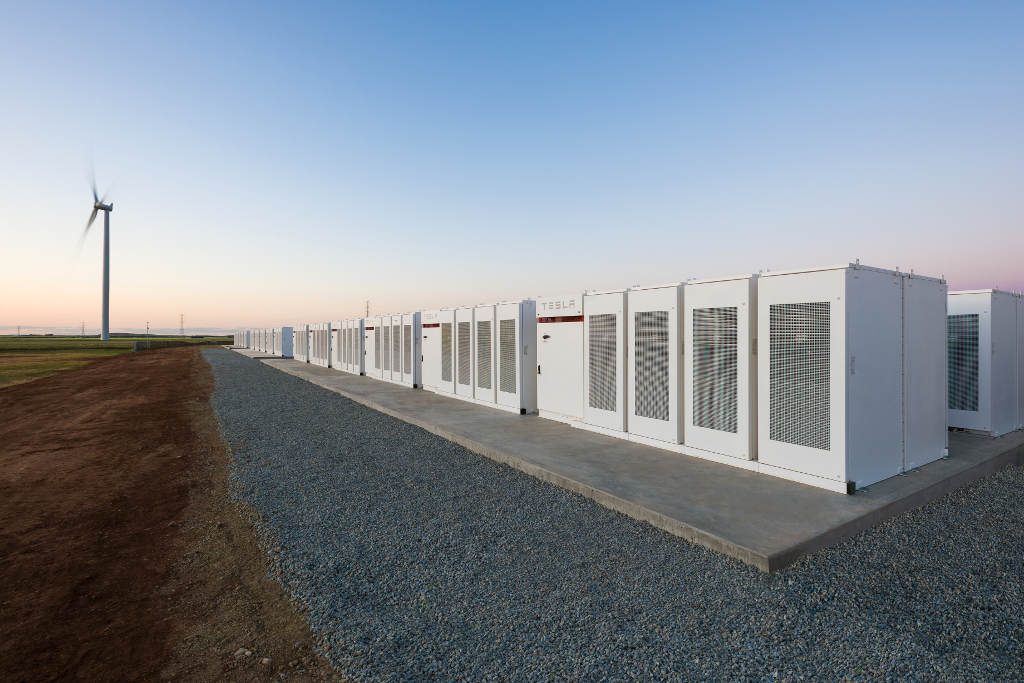
The France-headquartered firm was behind the largest such system built in Australia to date, the Hornsdale Power Reserve (150MW / 194MWh) project in South Australia which was famously delivered in just 100 days following a pledge by equipment provider Tesla’s CEO Elon Musk.
The system has since been outdone for size by a couple of more recent lithium-ion battery projects including the Moss Landing Energy Storage Facility completed by Vistra Energy in California that, at 300MW / 1,400MWh, is now the world’s largest. Other very large-scale projects have been put forward by various entities in Australia too in the past few months, including a 700MW battery system at a coal plant operated by electricity generator and retailer Origin Energy which could have up to 2,800MWh capacity and several projects in the pipeline totalling 850MW by the 2024 financial year from AGL, another major utility in the country. Recent studies into the first years of operation of two large-scale energy storage facilities showed that they had lived up to their billing and delivered both economic and environmental benefits, as well as outperforming initial expectations.
Try Premium for just $1
- Full premium access for the first month at only $1
- Converts to an annual rate after 30 days unless cancelled
- Cancel anytime during the trial period
Premium Benefits
- Expert industry analysis and interviews
- Digital access to PV Tech Power journal
- Exclusive event discounts
Or get the full Premium subscription right away
Or continue reading this article for free
The Great Western Battery, proposed to be built in Wallerawang, NSW, qualifies as a State Significant Development due to its size, economic value and/or potential positive impacts, which means it could bypass certain local planning barriers. The project will include the building of a new transmission line to connect the system to the existing local 330kV substation operated by transmission network operator TransGrid.
According to the developer’s report, the battery system will support the integration of new energy sources in one of the major multi-gigawatt Renewable Energy Zones (REZ) that NSW is supporting. The system will also help prevent load shedding and potential blackouts – something which Neoen said there is a strong value associated with energy storage for doing with the region looking to phase out the use of coal generation in the coming years.
Neoen said it wants to reach roughly AU$6 billion (US$4.6 billion) in investment value of its projects in Australia by 2022 and install around 6GW of renewable energy and storage in the country by that time. The scoping report said that the Great Western Battery will have an estimated capital expenditure (CAPEX) cost of between AU$300 million and AU$400 million based on current plans, with construction estimated to begin in 2022 for the system to go into operation the following year.
Read AECOM’s full Scoping Report on the project, prepared for Neoen and currently hosted on the New South Wales government’s planning portal website, here.