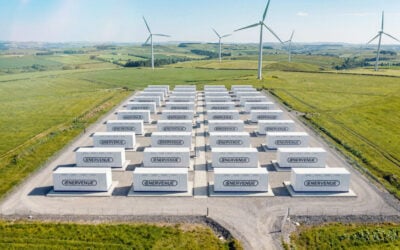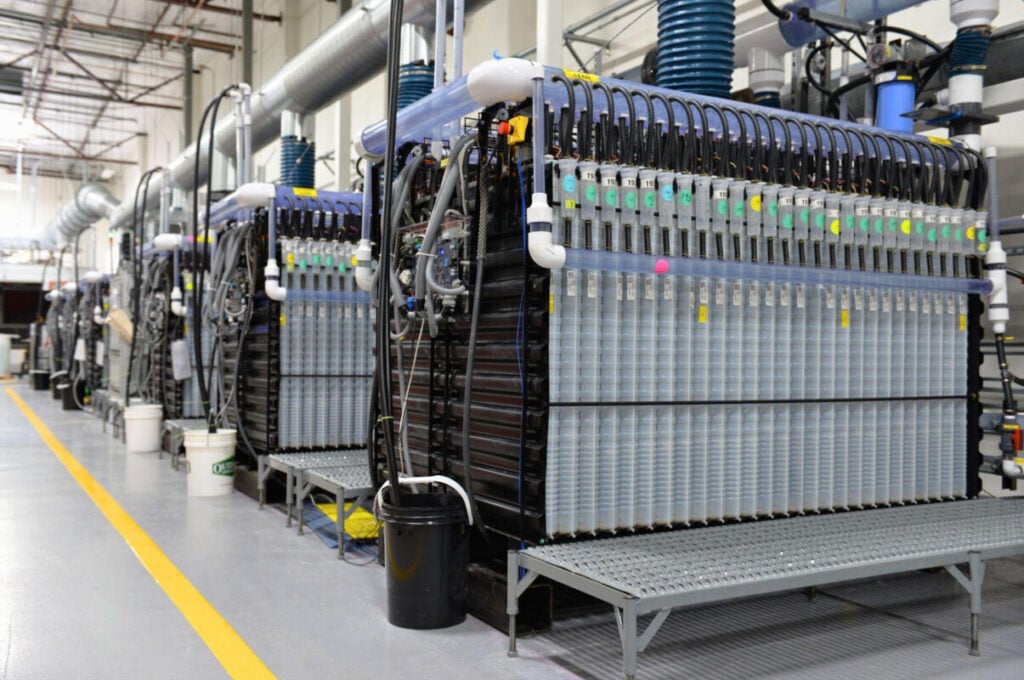
Utility Xcel Energy will install 30GWh of US startup Form Energy’s iron-air batteries for a data centre in Pine Island, Minnesota, belonging to tech giant Google.
Xcel claims that the data centre and its electric service agreement (ESA) will notably boost Minnesota’s economy. This includes extensive development of new clean energy projects that support the state’s clean energy objectives, while also ensuring that Xcel’s existing customers benefit from the expansion.
Under the agreement, Google will cover all costs for its new service according to its usual practices and comply with Minnesota’s regulatory and legislative requirements for large loads.
Xcel also claims that the 300MW battery energy storage system (BESS) installation is “the largest battery project by GWh energy capacity announced to date in the world.”
Try Premium for just $1
- Full premium access for the first month at only $1
- Converts to an annual rate after 30 days unless cancelled
- Cancel anytime during the trial period
Premium Benefits
- Expert industry analysis and interviews
- Digital access to PV Tech Power journal
- Exclusive event discounts
Or get the full Premium subscription right away
Or continue reading this article for free
The 100-hour battery system stores energy during times of high production and low demand, then releases it to the grid during peak demand. This helps to ensure reliable power supply and bolsters grid stability, even over several days.
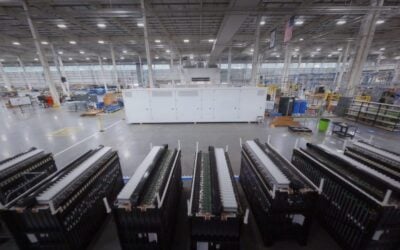
Form Energy’s CEO, Mateo Jaramillo, noted on the social media site LinkedIn, “The batteries for this project will be made in America at Form Factory 1 in Weirton, West Virginia. FF1 has already started commercial production and is on track to reach a production capacity of 500MW per year by 2028.”
In 2024, Form Energy secured a US$405 million Series F funding round, with investors including Bill Gates’s Breakthrough Energy Ventures.
Additionally, the company launched its West Virginia factory, where, in September 2024, state senator Joe Manchin announced that it would receive up to US$150 million from the US Department of Energy’s (DOE) Battery Materials Processing and Battery Manufacturing and Recycling programmes.
Form, founded out of MIT labs and led by ex-Tesla Energy executive Mateo Jaramillo, asserts that its battery can be produced cost-effectively using plentiful materials, providing the grid with a feasible ‘multi-day’ energy storage solution.
“We’ve been heads down on news for a while as we crank away at scaling up the operation and get through the first system deployments, but big news for Form Energy today: we will deploy a 300 MW / 30 GWh multi-day iron-air battery system with Xcel Energy to help power a new Google data center in Minnesota,” Jaramillo posted to LinkedIn yesterday.
“At 30GWh, this is the largest battery system by energy capacity ever announced globally. It also marks Form Energy’s first direct deployment for a data centre — demonstrating the unique value of a 100-hour firm capacity resource in meeting the 24/7 energy needs of the AI economy while keeping costs low and reliability high,” Jaramillo wrote.
In a recent Guest Blog for Energy-Storage.news, a team from European energy consultancy Open Energy Transition wrote that energy system modelling studies indicate multi-day duration energy storage “reduces curtailment, flattens electricity prices, cuts resource dependence, and helps achieve emission targets.”
As part of the agreement between Xcel and Google, the companies will add 1,900MW of renewables to the grid. Google will cover any new infrastructure costs related to the project and claims it has collaborated closely with Xcel to maintain reliable, affordable electricity for all of Xcel’s customers.
A Clean Energy Accelerator Charge (CEAC) will support 1,400MW of wind and 200MW of solar, in addition to Form’s 300MW of long-duration energy storage (LDES). It also includes a US$50 million investment in Xcel’s Capacity*Connect Programme, aimed at enhancing grid reliability.
The Electric Service Agreement will be submitted for review to the Minnesota Public Utilities Commission (MPUC) in the next few weeks. The MPUC needs to formally approve the agreement between Xcel Energy and Google for power supply to the site.
In 2023, Xcel received approval from Minnesota state regulators to build a 1GWh project using Form’s BESS technology. That project will cover five acres and be built alongside Sherco Solar, Xcel’s 710MW solar plant.
Google has also helped to fund multiple LDES projects recently. In Arizona, the company has a partnership with utility Salt River Project (SRP) to help accelerate the commercialisation of non-lithium LDES.
It also partnered with and invested strategically in Energy Dome, a company specialising in carbon dioxide-based LDES. In July 2025, it established a global commercial partnership with the Italy-based startup, potentially leveraging Energy Dome’s CO2 Battery to support large-scale carbon-free energy.
The Energy Storage Summit USA will be held from 24-25 March 2026, in Dallas, TX. It features keynote speeches and panel discussions on topics like FEOC challenges, power demand forecasting, and managing the BESS supply chain. ESN Premium subscribers can get an exclusive discount on ticket prices. For complete information, visit the Energy Storage Summit USA website.
This article has been updated since the time of publication to better reflect the location of Form’s technology.