G7 nations have agreed a new global energy storage target of 1500GW by 2030, a six-fold increase from today’s levels.
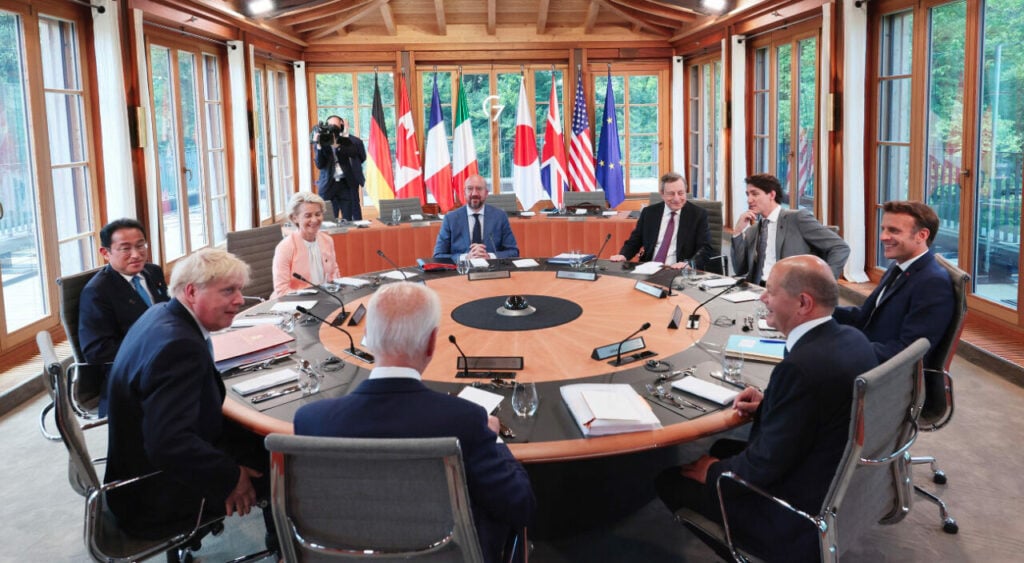
The new target for cumulative deployments was agreed to in a G7 Ministerial Communique for Climate, Energy, and Environment in Turin, Italy, yesterday (30 April).
The deployment of energy storage at that scale will transform the availability of renewable energy resources to better compete with fossil fuels and strengthen energy security, the US Department of Energy (DOE) said in a ‘US-UK Strategic Energy Dialogue 2024: Joint Statement’. The G7 comprises the UK, US, France, Germany, Italy, Canada and Japan.
Two hundred countries agreed at COP28 last year to triple renewable energy capacity to 11TW by 2030, as reported by our sister site PV Tech.
Try Premium for just $1
- Full premium access for the first month at only $1
- Converts to an annual rate after 30 days unless cancelled
- Cancel anytime during the trial period
Premium Benefits
- Expert industry analysis and interviews
- Digital access to PV Tech Power journal
- Exclusive event discounts
Or get the full Premium subscription right away
Or continue reading this article for free
Note that the G7 does not include China, which is currently the world’s largest energy storage market by annual deployments by some distance, adding around 22GW/49GWh in 2023, ahead of the US’ 8.7GW/26GWh, the next-largest.
The 1500GW figure covers all energy storage technologies including battery energy storage system (BESS), pumped hydro energy storage (PHES) as well as hydrogen and water-based technologies.
The 1500GW target is double what BloombergNEF has forecast is scheduled to be online based on current deployment pipelines, as reported by Energy-Storage.news this week.
Energy-Storage.news’ publisher Solar Media will host the 1st Energy Storage Summit Australia, on 21-22 May 2024 in Sydney, NSW. Featuring a packed programme of panels, presentations and fireside chats from industry leaders focusing on accelerating the market for energy storage across the country. For more information, go to the website.
Energy-Storage.news’ publisher Solar Media will host the 2nd Energy Storage Summit Asia, 9-10 July 2024 in Singapore. The event will help give clarity on this nascent, yet quickly growing market, bringing together a community of credible independent generators, policymakers, banks, funds, off-takers and technology providers. For more information, go to the website.