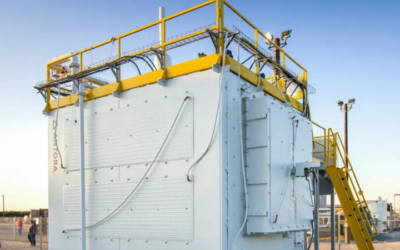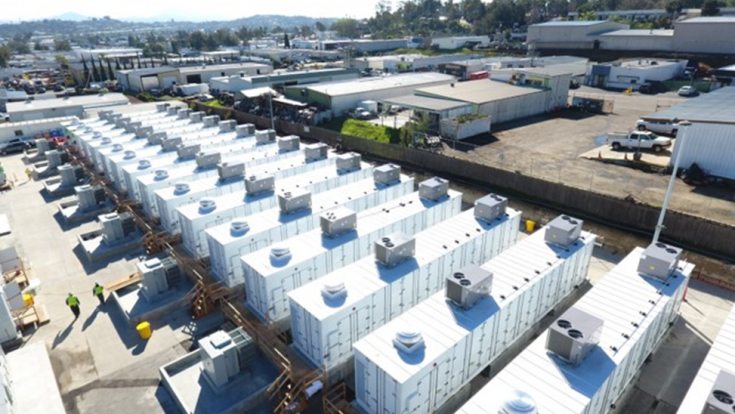
Siemens’ international financing arm, US development bank NADBank and energy storage developer EnerSmart Storage have signed a US$78.2 million loan facility to finance a fully merchant battery storage project in California totalling 165MW.
The debt facility from NADBank (North American Development Bank) and Siemens Financial Services will finance the design, construction and operation of a portfolio of utility-scale energy storage projects totalling 165MW/330MWh at nine sites in San Diego county. EnerSmart Storage is the developer, owner and operator of the projects, which are in the service territory of utility SDG&E.
The deal is thought to be the first reported project debt financing of fully merchant battery energy storage system (BESS) projects in the US, which means the BESS project does not have any long-term resource adequacy agreements with utilities in place, yet. The press release did say that the projects may provide energy through resource adequacy agreements in the future.
Resource adequacy is the California independent system operator’s (CAISO) way of ensuring load-bearing entities like utilities have enough power to meet demand, and provides a framework for utilities to procure power over 10-20-year agreements from BESS projects.
Try Premium for just $1
- Full premium access for the first month at only $1
- Converts to an annual rate after 30 days unless cancelled
- Cancel anytime during the trial period
Premium Benefits
- Expert industry analysis and interviews
- Digital access to PV Tech Power journal
- Exclusive event discounts
Or get the full Premium subscription right away
Or continue reading this article for free
The vast majority of BESS projects have these agreements before being launched, which provides long-term revenue guarantees required by debt financing providers. For example, the state regulator just approved five projects, which have long-term resource adequacy agreements with utility Southern California Edison, reported on Energy-Storage.news.
NADBank, which focuses on investments along and near the US-Mexico border, said the BESS will provide energy and ancillary services through CAISO’s wholesale energy and ancillary services markets.
The bank’s MD Calixto Mateos-Hanel commented: “As a development bank, NADBank has proven time and again that innovative financing of environmental projects in promising sectors is one of its core strengths. This energy storage project portfolio confirms the Bank continues to play a critical role in the development of sustainable infrastructure while tackling climate change and meeting the needs of the US-Mexico border.”
Speaking on a panel at the Solar and Storage Finance USA conference in November 2021, hosted by our publisher Solar Media, several investment figures explained why merchant BESS projects might struggle to get debt financing.
“Lenders like revenue certainty, so contractual revenue is great,” Louise Pesce of Japanese-based global bank MUFG said. Merchant “doesn’t give the lender much certainty”, she added, explaining that forecasting revenues over 15 or 20-year battery lifetimes is difficult.
But Lance Jordan, senior vice president for energy and infrastructure investments at Pacolet Milliken, a family-owned investment group said that merchant battery storage projects were starting to get more debt financing opportunities, especially after events like Texas’ devastating February 2021 winter storm.