Germany’s Fraunhofer ISE institute is leading a research project into the development of solutions for a ‘super grid’ that would allow intercontinental transmission of power from renewable energy plants in Africa to Europe.
The Freiburg-based body is working with other of the Fraunhofer institutes to explore what technologies would be needed to enable power generated from renewable energy plants in North Africa to be used to support electricity supply in Europe.
The project echoes the objectives of the Desertec initiative, which was set up with the aim of linking large-scale wind, PV and solar thermal projects in desert regions of countries such as Morocco to a pan-European electric grid. The project has been beset with difficulties.
The Fraunhofer project has begun with detailed computer modelling of the regions of North Africa and southern Europe to simulate interaction between power plants and identify possible new plant locations.
Try Premium for just $1
- Full premium access for the first month at only $1
- Converts to an annual rate after 30 days unless cancelled
- Cancel anytime during the trial period
Premium Benefits
- Expert industry analysis and interviews
- Digital access to PV Tech Power journal
- Exclusive event discounts
Or get the full Premium subscription right away
Or continue reading this article for free
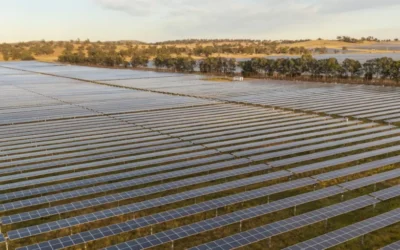
This has revealed that large PV plants in North Africa are more profitable when located close to loads, while concentrating solar power plants are advantageous in conjunction with large thermal storage capacities to secure grid stability.
“It is important that the power supply remains reliable when using renewable energy sources,” said Dr. Werner Platzer, division director, solar thermal and optics and Fraunhofer ISE and co-ordinator of the project.
“Electricity from North Africa can, for example, fill gaps in the European power supply which occur due to site-dependent fluctuations in renewable energy sources. Balancing electricity demand and surplus over a large range of locations is one of the central ideas behind the super grid.”
The project has also looked at the optimal configuration for a super grid and concluded that because of the expense of connecting new projects to the grid and due to transmission losses, not all renewable energy projects should be grid connected.
Instead, the electricity from several plants should be “bundled” at the medium voltage level, stored in batteries and fed into the high voltage grid at a central station for further transmission.
For this element Fraunhofer ISE said it had developed a demonstration high-efficiency DC converter that uses silicon carbide semiconductors to make direct connection to the medium voltage distribution grid possible.
In addition to Fraunhofer ISE, which has a coordinating role, the project is being run by the Fraunhofer institutes for Optronics, System Technologies and Image Exploitation IOSB, for Mechanics of Materials IWM, for Integrated Systems and Device Technology IISB and for Systems and Innovation Research ISI.
Its goal is to develop key technologies for the interface between electricity production and grid feed-in and to optimise these technologies.