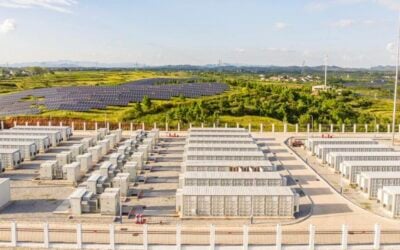
Iron-air battery technology firm Form Energy has won a US$30 million grant for a new 5MW/500MWh energy storage project in California.
The California Energy Commission (CEC) has awarded the company the grant for the multi-day energy storage system, which Form will deploy at a substation in Mendocino County run by utility PG&E.
The project is expected to come online in 2025 and is the company’s first in the state, which is the largest state for battery energy storage system (BESS) deployments in the US.
Its proprietary battery chemistry is based around the oxidisation (i.e. rust) of iron that can store electrical energy and discharge it at 100 hours or more cost-effectively, the company has claimed.
Try Premium for just $1
- Full premium access for the first month at only $1
- Converts to an annual rate after 30 days unless cancelled
- Cancel anytime during the trial period
Premium Benefits
- Expert industry analysis and interviews
- Digital access to PV Tech Power journal
- Exclusive event discounts
Or get the full Premium subscription right away
Or continue reading this article for free
The grant funding has come from the CEC’s US$380 million long-duration energy storage (LDES) programme which it launched last year with the first project going to a project combining vanadium redox flow (VRFBs) and zinc-hybrid batteries.
After voting to approve the grant yesterday, David Hochschild, CEC chair commented: “Long-duration and multi-day energy storage are critical to achieving California’s clean energy goals.”
“Just like the state has done through its pioneering policies and investments to rapidly scale project deployment and jobs in the solar, lithium-ion battery storage, and other industries, California is continuing to accelerate the path to market for emerging technologies that are critically needed to address climate change, air pollution, and equity in our state and globally.”
Form Energy has also won grant funding from similar LDES programmes at the Federal level and in New York in the past few months. The Federal programme funding is going to Form’s two, 1GWh projects with utility Dominion Energy in Minnesota and Colorado, which were its first major projects when announced in January 2023.
Energy-Storage.news’ publisher Solar Media will host the 5th Energy Storage Summit USA, 19-20 March 2024 in Austin, Texas. Featuring a packed programme of panels, presentations and fireside chats from industry leaders focusing on accelerating the market for energy storage across the country. For more information, go to the website.