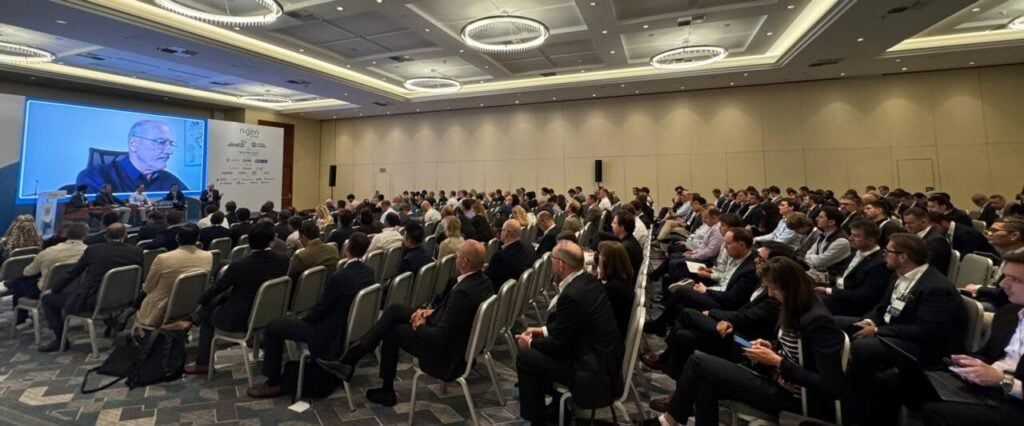
Flexibility will be a critical piece of the grid of the future and energy storage will play a central role in that, keynote speakers said at Solar Media’s Energy Storage Summit Central and Eastern Europe (CEE) 2024 today.
The two-day event kicked off today (24 September) in Warsaw, Poland, bringing together energy storage technology suppliers, policymakers, advisors, developers and operators active in the burgeoning CEE market.
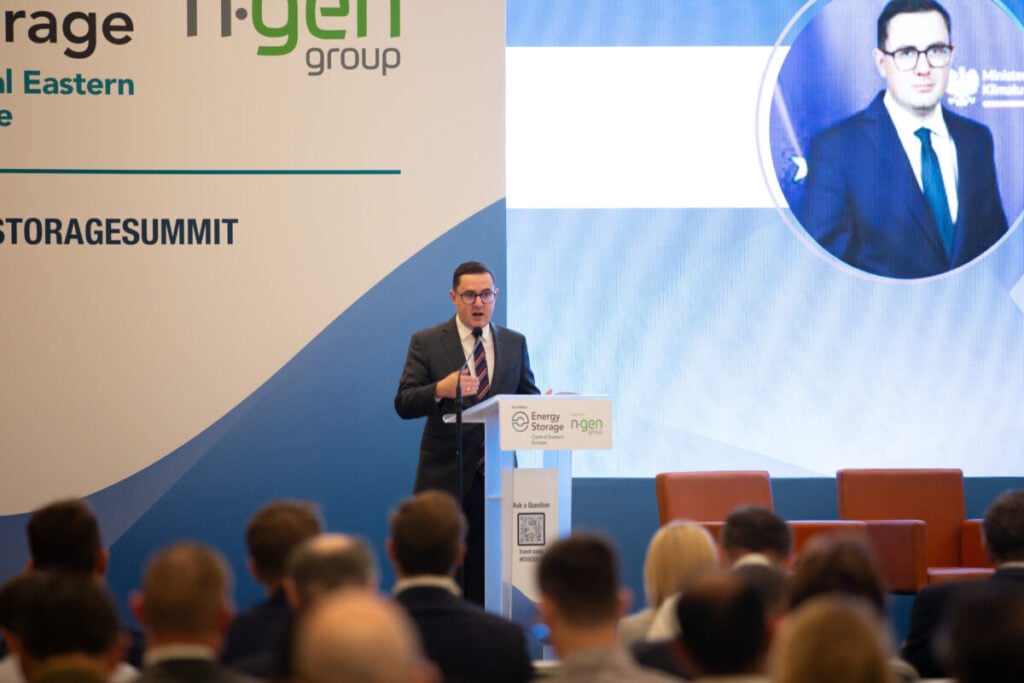
Energy storage will be key to balancing and maintaining the stability of the grid, said keynote speaker Miłosz Motyka, Polish undersecretary of state, ministry of climate and environment. His government is keen to to work with the industry on the best possible solutions, he added.
He was followed by Remigiusz Warzywoda, member of the board for European transmission system operator (TSO) association ENTSO-E, and also deputy director in international cooperation for the Polish TSO, PSE.
Try Premium for just $1
- Full premium access for the first month at only $1
- Converts to an annual rate after 30 days unless cancelled
- Cancel anytime during the trial period
Premium Benefits
- Expert industry analysis and interviews
- Digital access to PV Tech Power journal
- Exclusive event discounts
Or get the full Premium subscription right away
Or continue reading this article for free
ENTSE-O wants to reinforce the framework to identify adequacy and flexibility needs, and ensure appropriate measures to address those needs, as one of its nine priorities, Warzywoda said. Flexibility will be a critical element of the grid of the future, as electrification and renewables increase and primary generation falls.
The association has assessed the suitability of different types of flexible generation, energy storage and aggregated smart technologies like bidirectional EV charging for different flexibility needs. Steps currently being taken include a public consultation into a network code for demand response (DR) and assessing future flexibility needs.
Poland has little grid-scale battery energy storage system (BESS) capacity online today but deployments look set to grow substantially over the next few years, with capacity markets forming the basis of the business case.
The most recent auction, in late 2023, handed out contracts to 1.7GW of BESS projects, and the number could be higher for 2024’s. However, a de-rating factor of 57% for energy storage in the upcoming 2024 auction was said by one developer to be a potential ‘lethal blow’ to the market.
The country is nonetheless expected to lead energy storage deployments in the CEE region, according to research from LCP Delta. However, large-scale projects are being built across the region, with major announcements covered by Energy-Storage.news in Romania, Ukraine, Slovenia and Estonia.